
In this article we cover:
- What the new Planning and Infrastructure Act means in practice
- How it could affect self-builders, renovators and homeowners
- Whether planning decisions are likely to become faster and more predictable
- What the new law may mean for land, smaller plots and problem sites
- How environmental and energy-related reforms could affect future projects
- Where the opportunities and uncertainties lie
The UK’s new Planning and Infrastructure Act represents one of the most significant overhauls of the planning system in a few decades. It’s easy to focus only on media coverage of major housing schemes and infrastructure projects, but the changes will also affect self-builders and homeowners looking to extend, retrofit or install renewable technologies.
The headlines report that the new laws are about improving the speed of decisions, giving investors more certainty and about scale (of ambition) – but the ramifications for small schemes also need attention.

How the Planning and Infrastructure Act could affect self-build projects
For self-builders, the planning system changes are intended to speed up the process and make it more predictable. This could mean fewer months waiting on decisions from Local Planning Authorities (LPAs) and a greater chance of approval.
The Act encourages greater use of professional planning officers and limits delays caused by committees or prolonged consultation processes. Some authorities already do this, such as the use of ‘triage’ planning expertise at the beginning of the process. This notion is not new; it is based on the work of the 2008 Book, Systems Thinking in the Public Sector by John Seddon. But the Act seeks to grow the use of ‘joined up thinking.’ The objective is to improve the user experience of the planning system ‘end-to-end.’
Access to land, the raw ingredient to all projects, may also improve. The government is seeking for local authorities to make better use of existing powers to become involved in land assembly and unlocking problem sites, perhaps by releasing the burden of a problematic access or a ransom strip. While mainly aimed at major urban extensions, the proposed measures could increase the availability of smaller plots, particularly where local authorities take a more proactive role.
Unpopular environmental rules are being reformed. The new Nature Restoration Fund allows developers to meet environmental obligations through strategic contributions, rather than site-by-site mitigation. This can avoid the need for legal agreements, sourcing off-site ecological sites, and other time-consuming measures. For now, the details of how this will work in practice are still awaited, with small-scale developers keen to avoid new costs or added uncertainty – particularly given that Biodiversity Net Gain was also presented as straightforward at the outset.

What the new law may mean for home improvements and retrofit projects
For homeowners, the new law’s impact is less direct but still significant. The government’s push to “get Britain building” includes laudable reforms to improve consistency and clarity in planning decisions. This could make planning outcomes for home improvements more consistent across local authorities, though many in the industry will hope for additional support in this area, potentially through the government’s Planning Advisory Service.
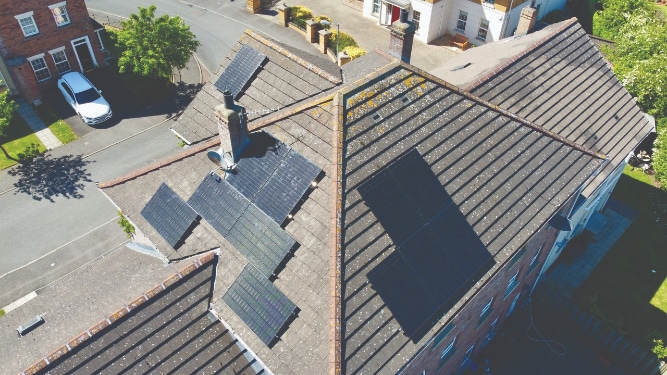
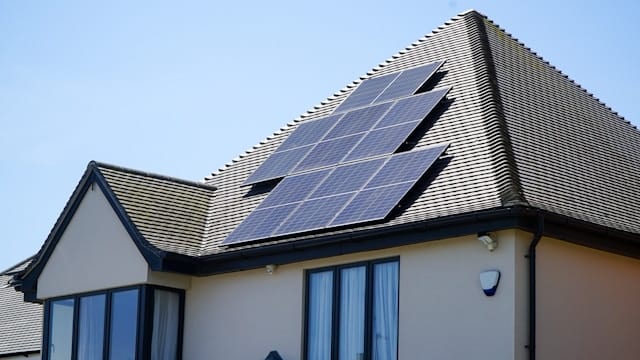
One of the most important changes relates to energy and infrastructure. The government is acting upon criticism that there are scores of large-scale solar schemes ‘ready to go’ but awaiting grid connections. For homeowners installing solar panels, battery storage or heat pumps, a more responsive and better-connected grid would be to the benefit of UK PLC. That said, in most parts of the country, small-scale solar installations do not usually pose a problem for DNO applications.
The government are also supporting the slow migration to EVs by boosting measures to accelerate the installation of more charging points.
How changes to land, energy and environmental rules could affect smaller schemes
By accelerating large-scale renewable projects – such as wind and solar farms – the Act aims to stabilise our energy supply (and independence) and reduce costs over time; something which regulators (and suppliers such as Octopus’ Greg Jackson) have been calling for some time. For households, lower bills may be some years away, but our grid is being assisted by provisions in the Act.
The new law is not popular with all quarters, though, and critics are concerned that the measures will give less weight to environmental matters at the cost of economic growth. Arguably, the Act is more of a “rebalancing” against a swing in the other direction over the last 10 years or so.
Overall, for self-builders and renovators, the new law promises a more efficient system, clearer rules and better alignment with modern priorities such as sustainability and energy efficiency. But it also introduces new frameworks – particularly around environmental contributions and strategic planning – that will require navigation.
Ultimately, the Planning and Infrastructure Act signals a shift in how the UK approaches development: to one which is more overtly (and unashamedly) pro-growth.
Like all such reforms, there are often unintended consequences, some positive and some negative, but the key message is that the government understand that a well-regulated development market need not be a ‘handbrake’ on the economy; as such, I am cautiously optimistic of the changes.
Mark Doodes, MRTPI
Mark is a Chartered Town Planner and Director of Mark Doodes Planning, with over 24 years’ experience advising homeowners, self-builders and developers across England. He specialises in securing planning permission for new homes, rural projects, heritage work and strategic sites.
Mark Doodes Planning provides clear, practical planning advice from initial feasibility through to submission and negotiation, helping clients navigate the planning system with confidence.
For more information, visit markdoodesplanning.co.uk, email: [email protected], phone: 01865 600555