In this article we cover:
- How solar PV can help self-builders generate clean electricity at home
- Why rainwater harvesting can reduce mains water use and lower bills
- How ground source heat pumps use energy stored in the earth
- Ways smart home technology can improve efficiency and comfort
- When biomass heating may offer a renewable alternative to fossil fuels
From solar power and heat pumps to rainwater harvesting and smart controls, there are now more options than ever for homeowners who want to build responsibly.
In A Comprehensive Guide to Sustainable Self Build Homes, Sean Ronnie Hill, founder of RISE Design Studio, looks at some of the key technologies to consider when planning a sustainable self-build home.
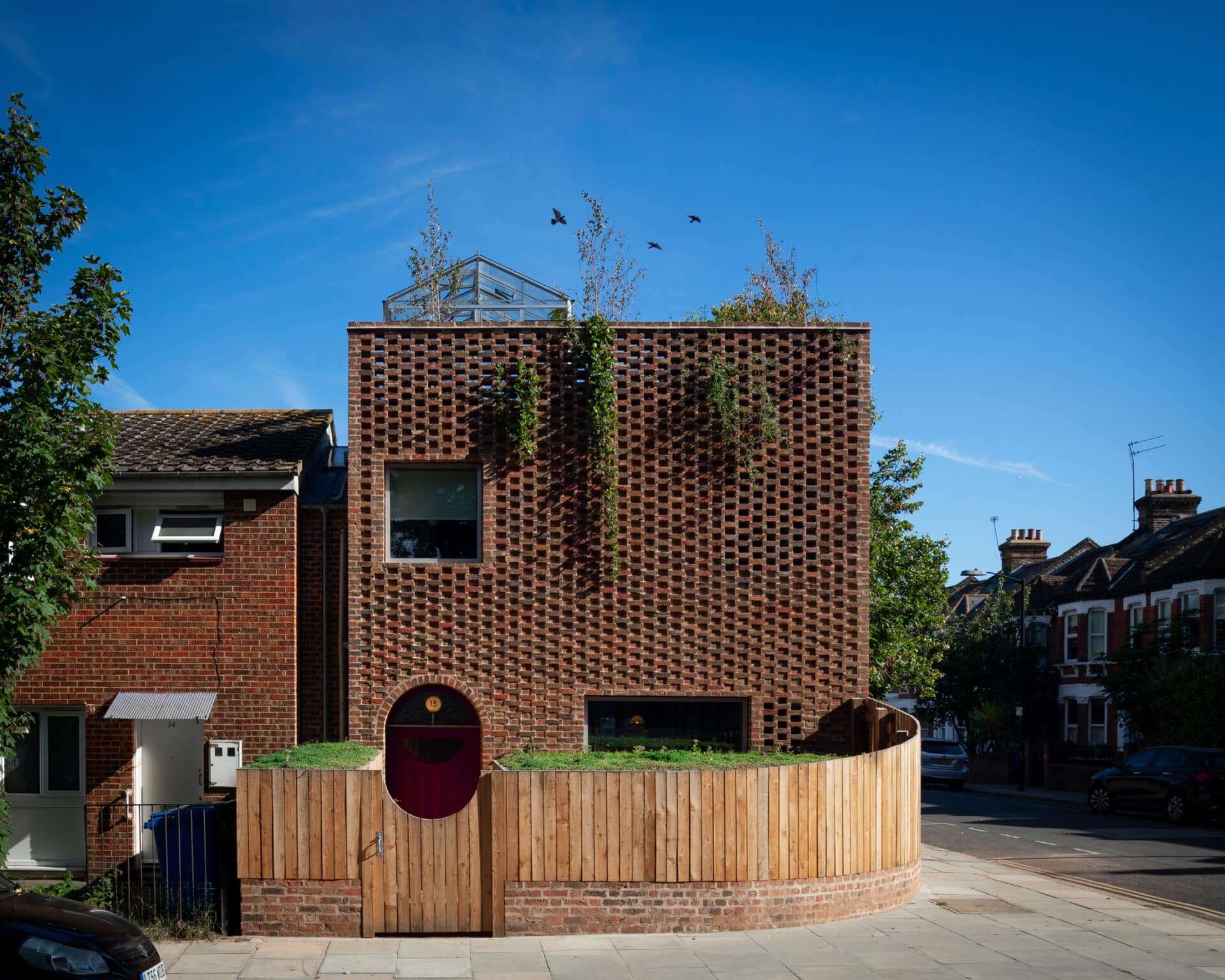
Embracing renewable energy and sustainable technologies is not just a trend; it’s a commitment to a healthier planet and a more efficient way of living.
Solar power: generating clean electricity at home
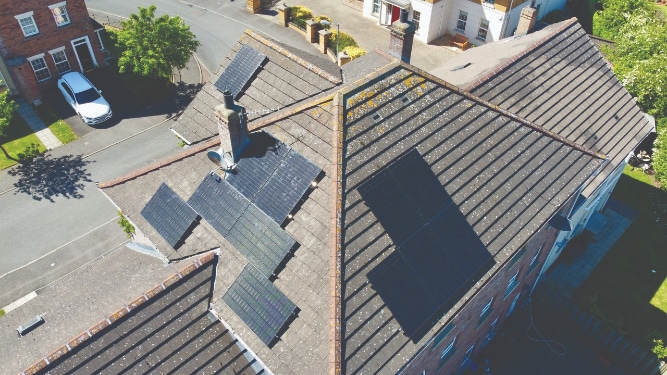
Solar photovoltaic panels, often known as solar PV, are one of the most familiar renewable energy technologies for self-build homes. They work by converting sunlight into electricity, helping to power the home using a clean, renewable source of energy.
For self-builders, one of the biggest advantages is the opportunity to design the house with solar performance in mind from the start. Roof orientation, pitch, shading and available roof space can all influence how effective a solar PV system will be.
A south-facing roof will often provide the best exposure, but east- and west-facing roofs can also be useful depending on the household’s energy use patterns. It is also important to think about nearby trees, neighbouring buildings or roof features that could cast shade over the panels.
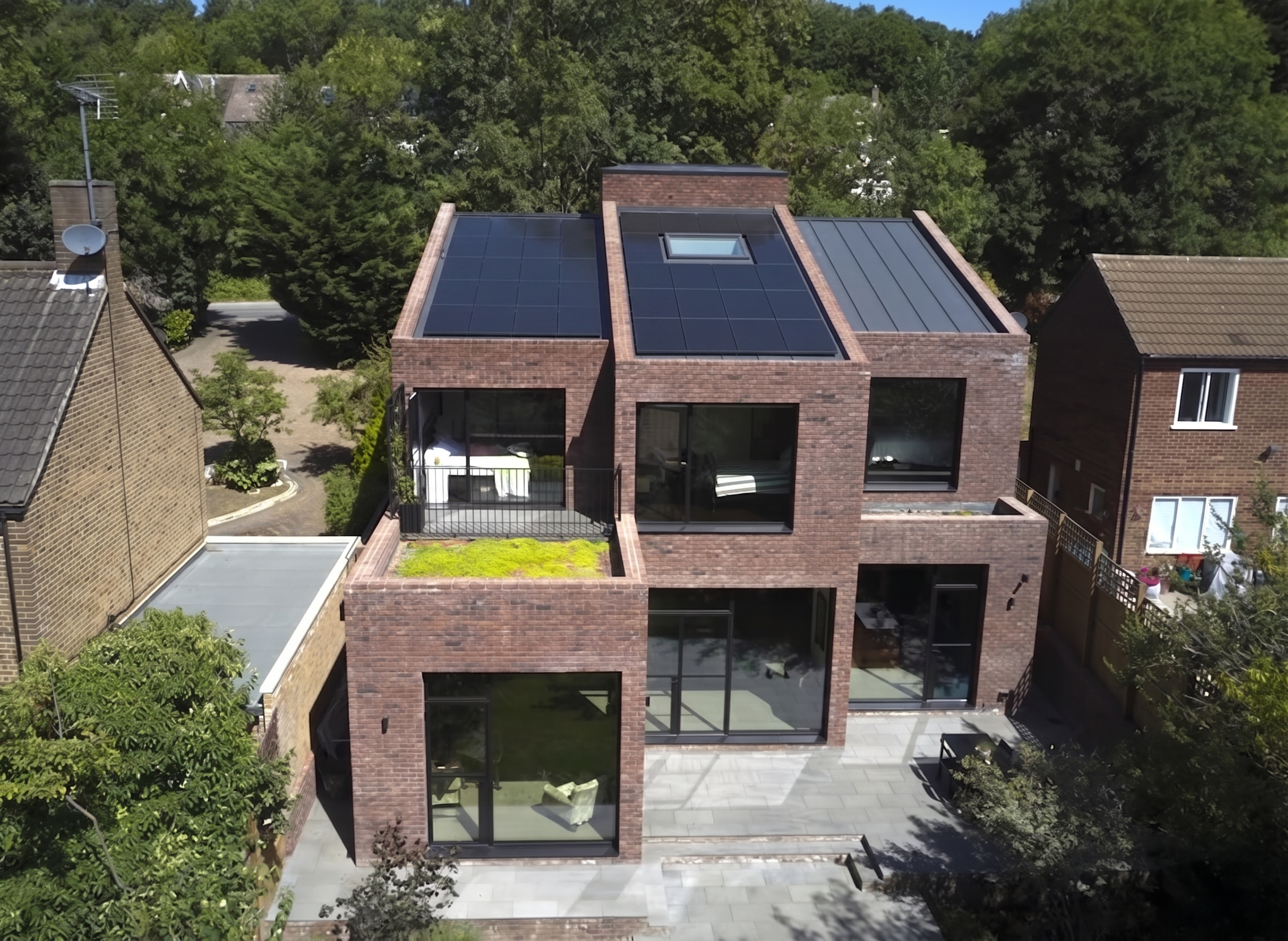
Solar panels have also become more visually refined. While traditional roof-mounted panels remain common, there are now integrated solar tiles and low-profile systems designed to sit more discreetly within the roof finish. This can be particularly useful for homeowners who want renewable energy without compromising the appearance of the building.
Modern solar panels come in various designs, including sleek, integrated tiles that blend seamlessly with your roof.
Rainwater harvesting: reducing reliance on mains water
A sustainable home is not only about energy use. Water efficiency also has an important role to play, particularly as changing weather patterns, summer droughts and local water restrictions become more common.
Rainwater harvesting systems collect rainwater from the roof and store it for use around the home and garden. Depending on the system, harvested water can be used for watering plants, flushing toilets and, in some cases, supplying washing machines.
A typical rainwater harvesting system includes gutters, pipework, a storage tank and filtration. The tank may be located underground or above ground, depending on the site and design.
For self-builders, the benefit is that this infrastructure can be planned into the project early, rather than retrofitted later. This makes it easier to allocate space for tanks, integrate pipework and ensure the system works efficiently with the overall layout of the house.
While rainwater harvesting will not usually replace mains water entirely, it can reduce demand, lower water bills and make the home more resilient.
It reduces your dependence on mains water and can significantly lower water bills.
Ground source heat pumps: using heat from the earth
Heating is one of the biggest energy demands in most homes, so choosing an efficient heating system is central to sustainable self-build design.
Ground source heat pumps use low-level heat stored in the ground to help heat the home and provide hot water. A network of pipes is buried in the garden or ground surrounding the property. A fluid circulates through these pipes, absorbing heat from the earth before passing through the heat pump, where the temperature is increased for use in the home.
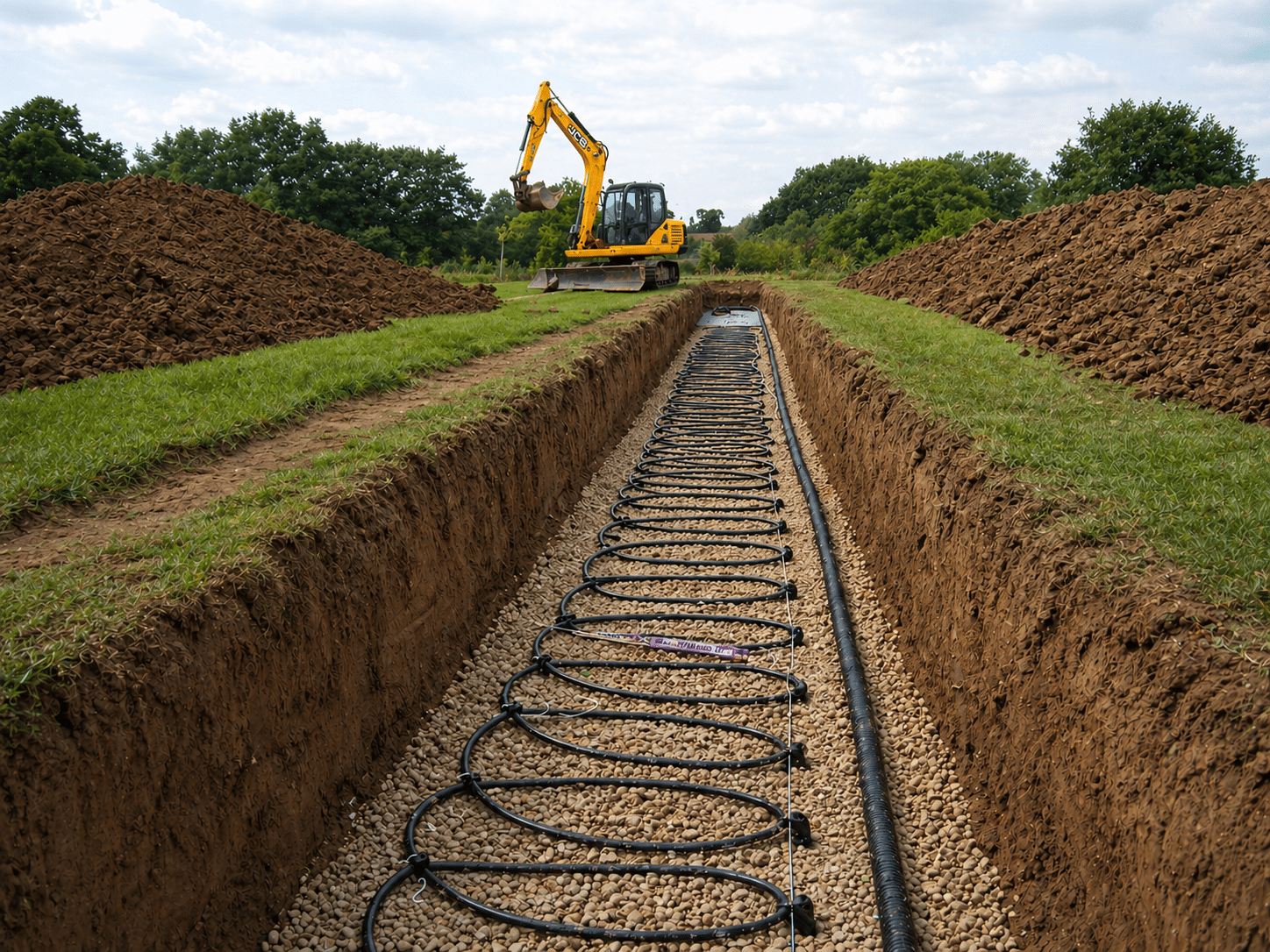
Ground source heat pumps can be highly efficient, especially when combined with a well-insulated, airtight building fabric and low-temperature heating systems such as underfloor heating.
They do, however, require careful planning. The site needs enough external space for the ground loop, or suitable conditions for a borehole system. There is also a higher upfront cost compared with some conventional heating systems. However, for the right project, the long-term benefits can include lower carbon emissions, reduced running costs and a more future-proof heating solution.
…the long-term savings and environmental benefits are significant.
Smart home technology: using less energy without losing comfort
Smart home systems can help homeowners understand and control how energy is used day to day.
Smart thermostats, for example, can learn household routines and adjust heating patterns accordingly. This can reduce wasted energy while keeping the home comfortable. Zoned heating controls can also allow different parts of the house to be heated only when needed.
Lighting is another area where smart technology can make a difference. Motion sensors, timers and efficient LED systems can reduce unnecessary electricity use, particularly in circulation spaces, bathrooms, utility rooms and outdoor areas.
For self-builders, the key is to decide early which systems are genuinely useful. Smart technology should make the home easier to live in, not more complicated. The best results often come from simple, well-integrated controls that support the building’s wider energy strategy.
…these innovations offer unparalleled control over your home’s environment and energy consumption.
Biomass heating: a renewable alternative to fossil fuels
Biomass heating systems use organic material, such as wood pellets, logs or wood chips, to provide heating and hot water. For some rural self-build projects, biomass can offer an alternative to oil, LPG or other fossil fuel-based systems.
A biomass boiler works in a similar way to a conventional boiler, but uses renewable fuel. The carbon dioxide released when the fuel is burned is broadly balanced by the carbon absorbed while the plants or trees were growing, making it a lower-carbon option when the fuel is sourced responsibly.
However, biomass is not suitable for every home. It requires space for the boiler and fuel storage, as well as regular fuel deliveries and maintenance. Homeowners also need to think about air quality, emissions, local restrictions and the sustainability of the fuel supply.
“This technology is a sustainable alternative to traditional fossil fuels”
For self-builders, the message from RISE Design Studio is clear: the earlier sustainable technologies are considered, the more successfully they can be integrated. A truly sustainable home starts with good design, careful planning and a clear understanding of how the building will perform once it is lived in.
Source & credits
Based on RISE Design Studio’s A Comprehensive Guide to Sustainable Self-Build Homes. © RISE Design Studio. Reproduced with permission.

Sean Ronnie Hill is a RIBA/ARB-registered architect and Certified Passivhaus Designer, and the founder of RISE Design Studio (London & Barcelona). RISE specialises in low-energy homes, deep retrofits (EnerPHit) and thoughtfully detailed new builds that use low-carbon materials and rigorous building-physics.