In this article we cover:
- Why the architects bought an infill plot at auction without planning permission
- The risks of buying land without planning approval and how they assessed viability quickly
- Securing early confidence through a fast pre-application with the council
- Delays caused by undocumented services crossing the site
- How the design evolved from an early concrete concept to a brick house
- Designing a compact three-bedroom family home on a tight Peckham plot
- Balancing the roles of architect, builder and client in one self-build project
- Why traditional cavity wall construction was chosen over prefab systems
- Using brick, blockwork and recycled-content materials to reduce impact
- Incorporating thermal mass, a heat pump and MVHR into the design
- Reusing site waste, from timber offcuts to reclaimed bricks
- Lessons learned from managing subcontractors, budgets and trust on site
- Designing the roof garden and rooftop greenhouse as usable outdoor space
- What Percy learned from living in the house after completion
- Supplier details, specifications and professional photography
General Overview
Size of house: 100sqm
Number of bedrooms: 3
Size of plot: 150sqm
Heating system: Air source heat pump
Ventilation: Mechanical Ventilation with Heat Recovery (MVHR)
Build method: Brick and cavity blockwork
When architect Percy first raised his hand at a London land auction, he expected, as usual, to be outbid within seconds. “The auction started, one person put their hand up, then I put my hand up just above the guide price,” Percy recalls. “And then no one else bid. Suddenly it was, ‘It’s yours,’ and I had this bolt of panic because I’d just put my name down for a piece of land that didn’t have planning permission and could potentially be basically worthless.”
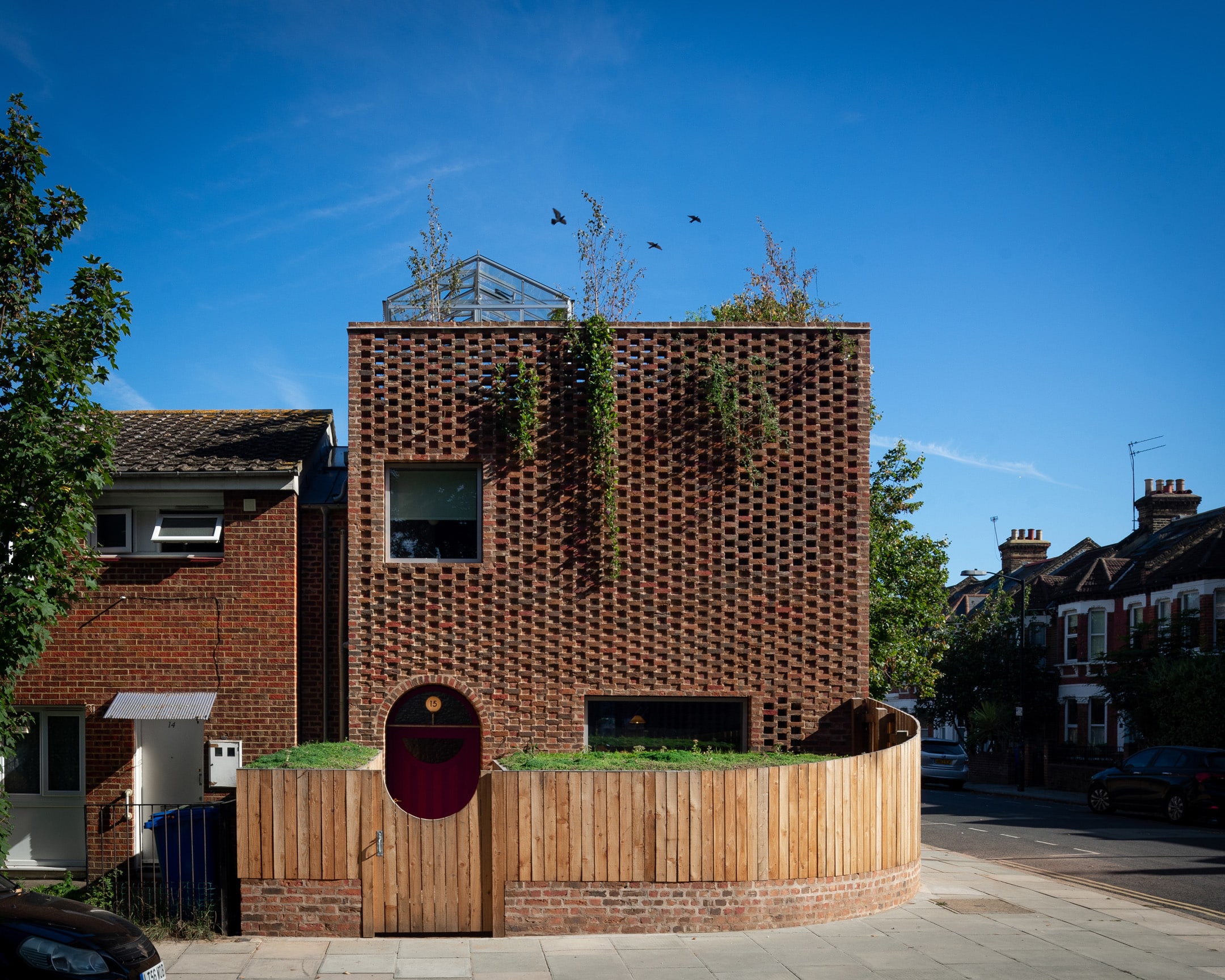
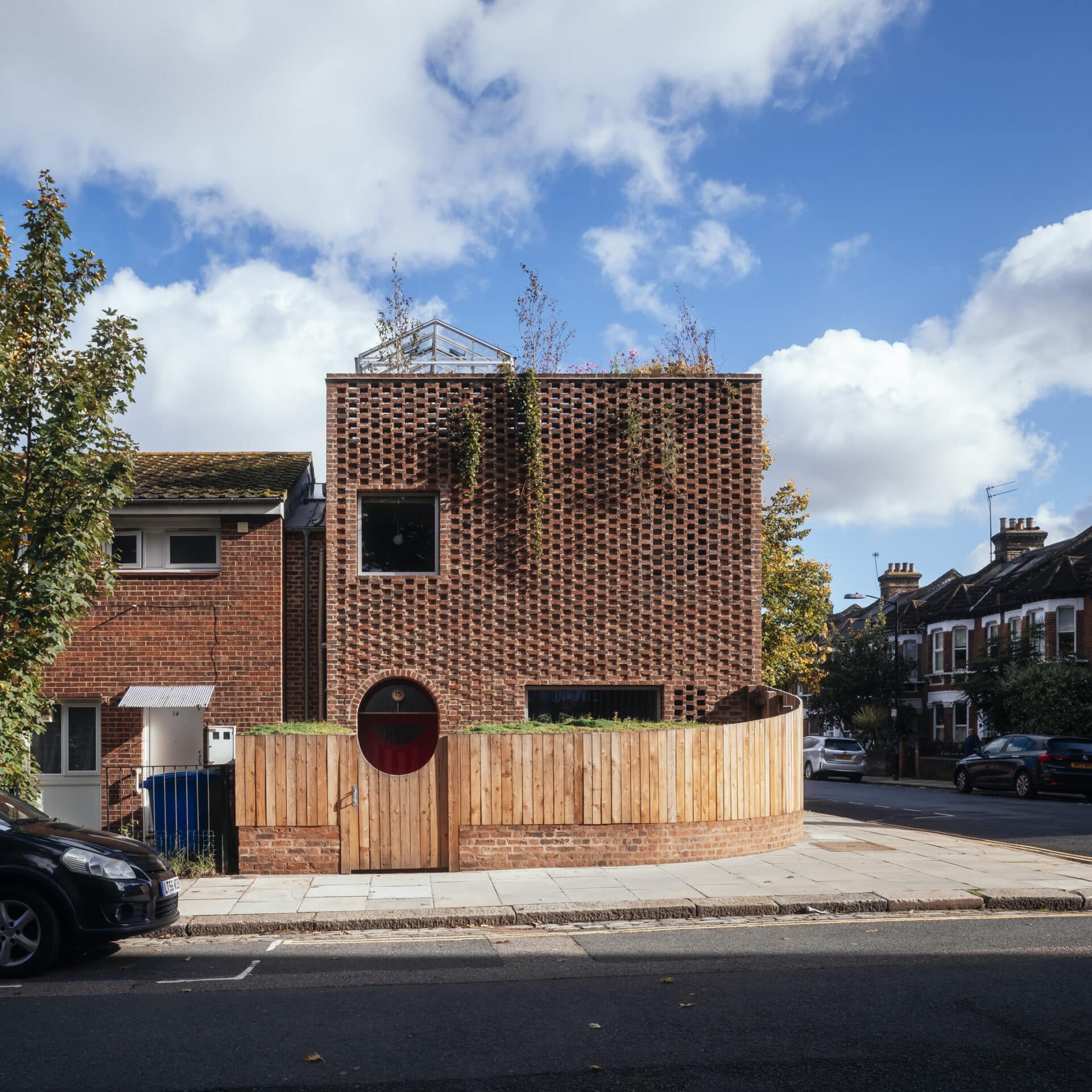
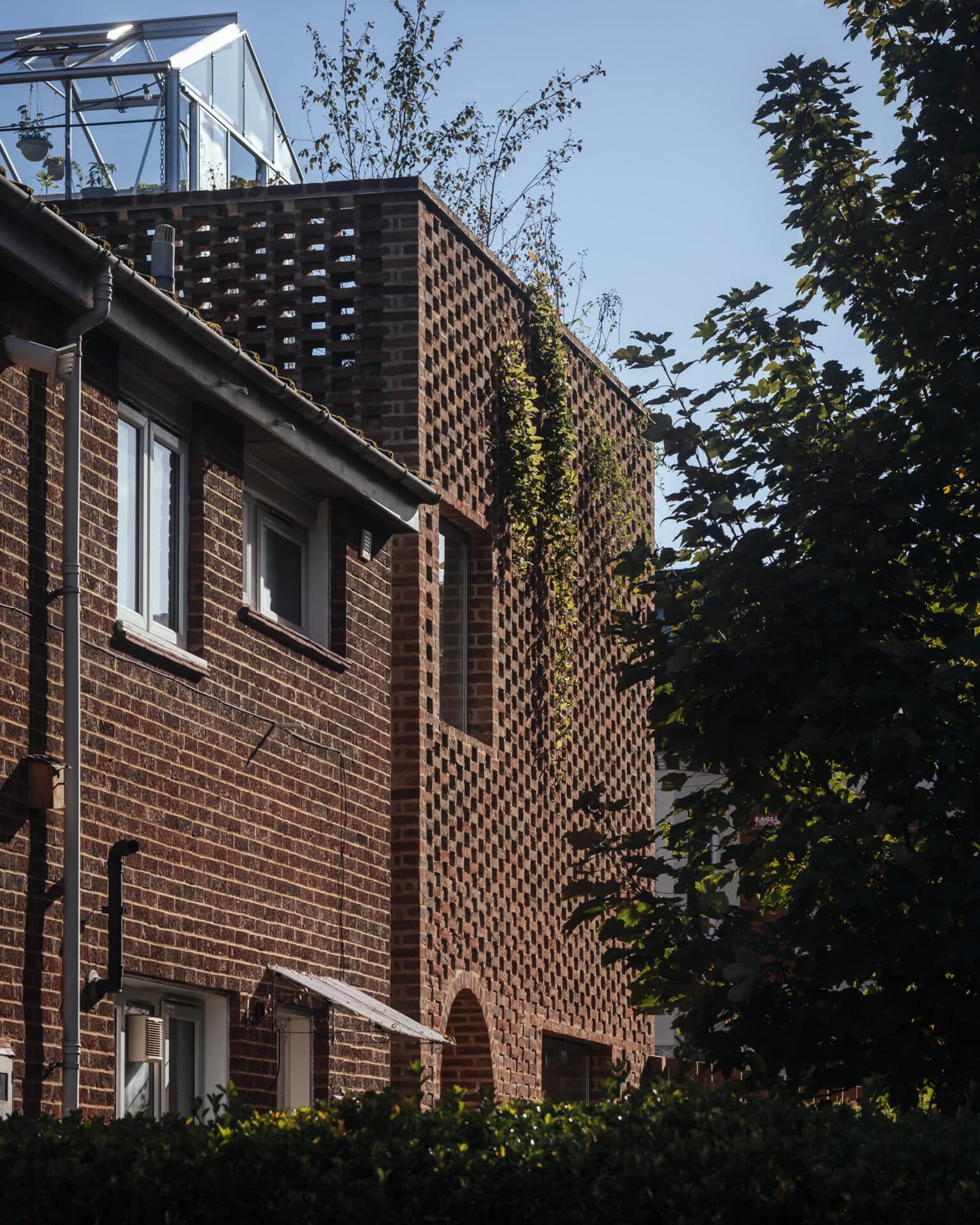
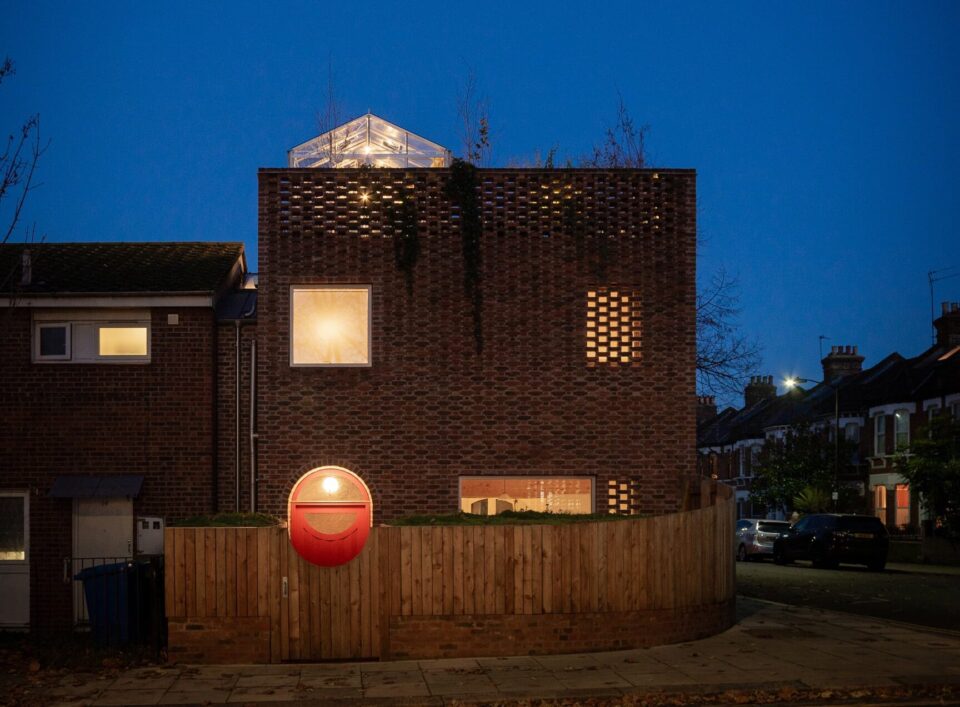
That plot, a small infill site in Peckham, London, would eventually become a 100sqm, three-bedroom family home; a compact, self-build home with a lush roof garden and a greenhouse perched above the city. It would also go on to win the Manser Medal – Architectural Journal House of the Year Award in 2024 for Percy and his studio co-director Tom Surman.
Percy and Tom had set up their architecture practice with a hands-on ethos. “When we started our practice, we built our first five projects,” Percy explains. “We always enjoyed having that level of control of designing and building, but we found it was a limitation in terms of scale. The projects we were getting in were bigger than we could handle as a very small contractor.”
At the same time, he says, traditional architectural fees rarely reflect the value architects can add. “As an architect, it’s quite hard to get decent fees on projects. We felt that if we were designing and building for ourselves, we’d get the added value of our own design and build quality.”
The self-build offered a way to step onto the property ladder and to “secure our futures a little bit in terms of living in London.” Initially, the financial arrangement between the two directors was shared; later, Percy bought Tom out and moved in with his family. “It helped us both,” he says. “Although I’m the one who lives there now, it was always conceived as a way for both of us to invest in our futures.”
Buying without planning
The bravest – or perhaps most reckless – moment in the project came right at the start. The Peckham site was being sold without planning permission. “We spent a good year or two going to auctions and just getting blown out of the water,” Percy says. “This plot came up with no planning, so there was obviously a lot of risk.”
Winning the auction meant an immediate 10 per cent deposit and an expectation to complete within 30 days. The only way to manage that risk was to move fast.
“From that point we did a very, very quick pre-application to Southwark Council,” he says. “Usually, planning is incredibly slow, but we managed to find a planner who actually cooperated and turned the pre-app around really quickly. By the end of the 30 days, they were basically saying, ‘In principle you can build a house here.’ That gave us enough confidence to complete.”
Even then, complications emerged. Undocumented services crossing the land delayed completion by roughly a year and a half, as they negotiated with the council over who would pay to resolve them. In parallel, they pushed the full planning application forward.
Looking back, Percy is blunt about the risk: “I would be very, very cautious about buying at auction without planning. We were lucky – we’re architects, we could do a feasibility study quickly and we had a cooperative planner. In hindsight, it was a bit crazy.”
The design evolved significantly between the first sketches and the final built form. Early on, the architect as client freedom almost went too far.
“Because we were our own clients, I think we went a bit too ‘architect-ey’ and came up with a quite brutal concrete scheme,” Percy admits. “Now I’m quite pleased we didn’t do that.”
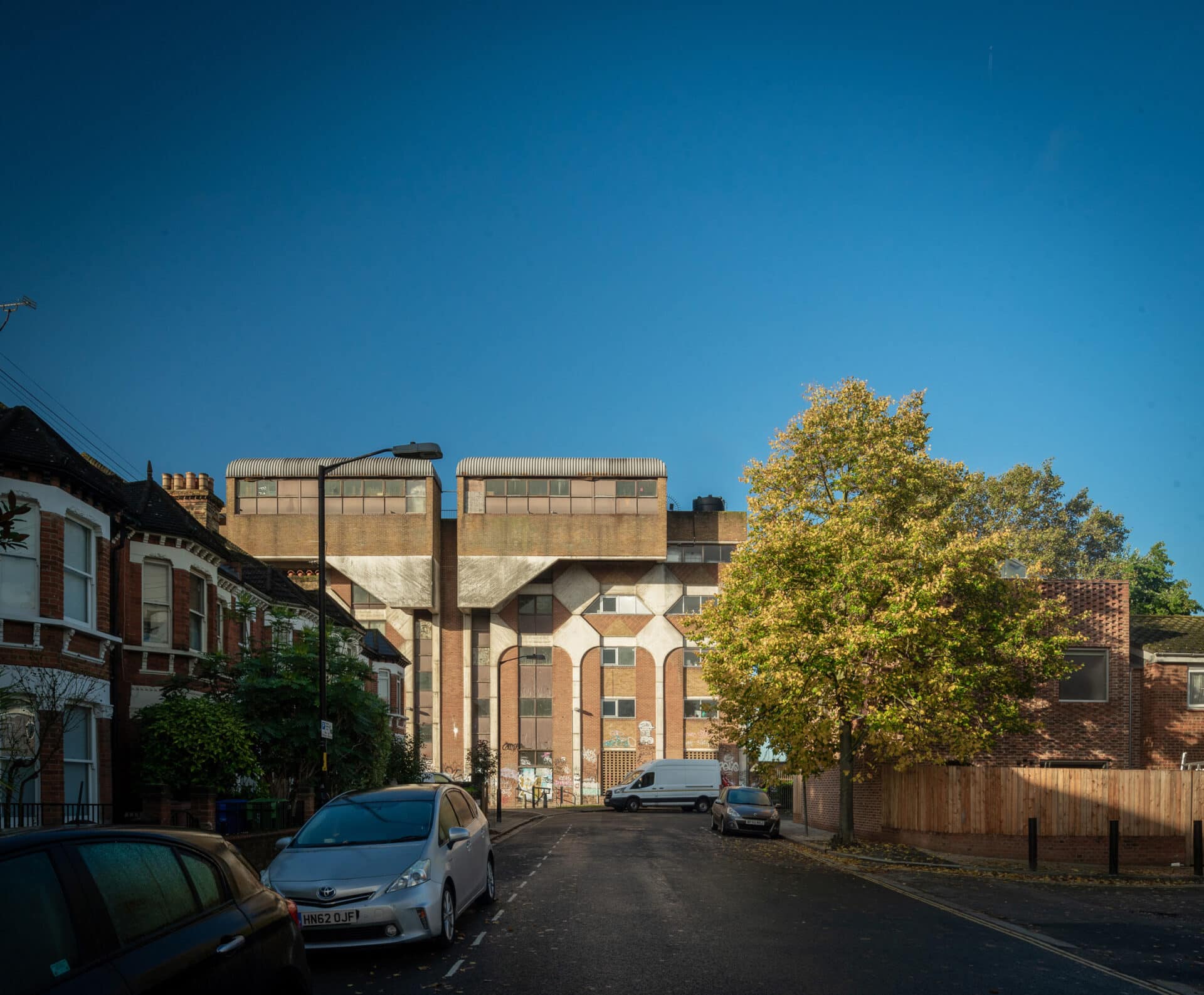
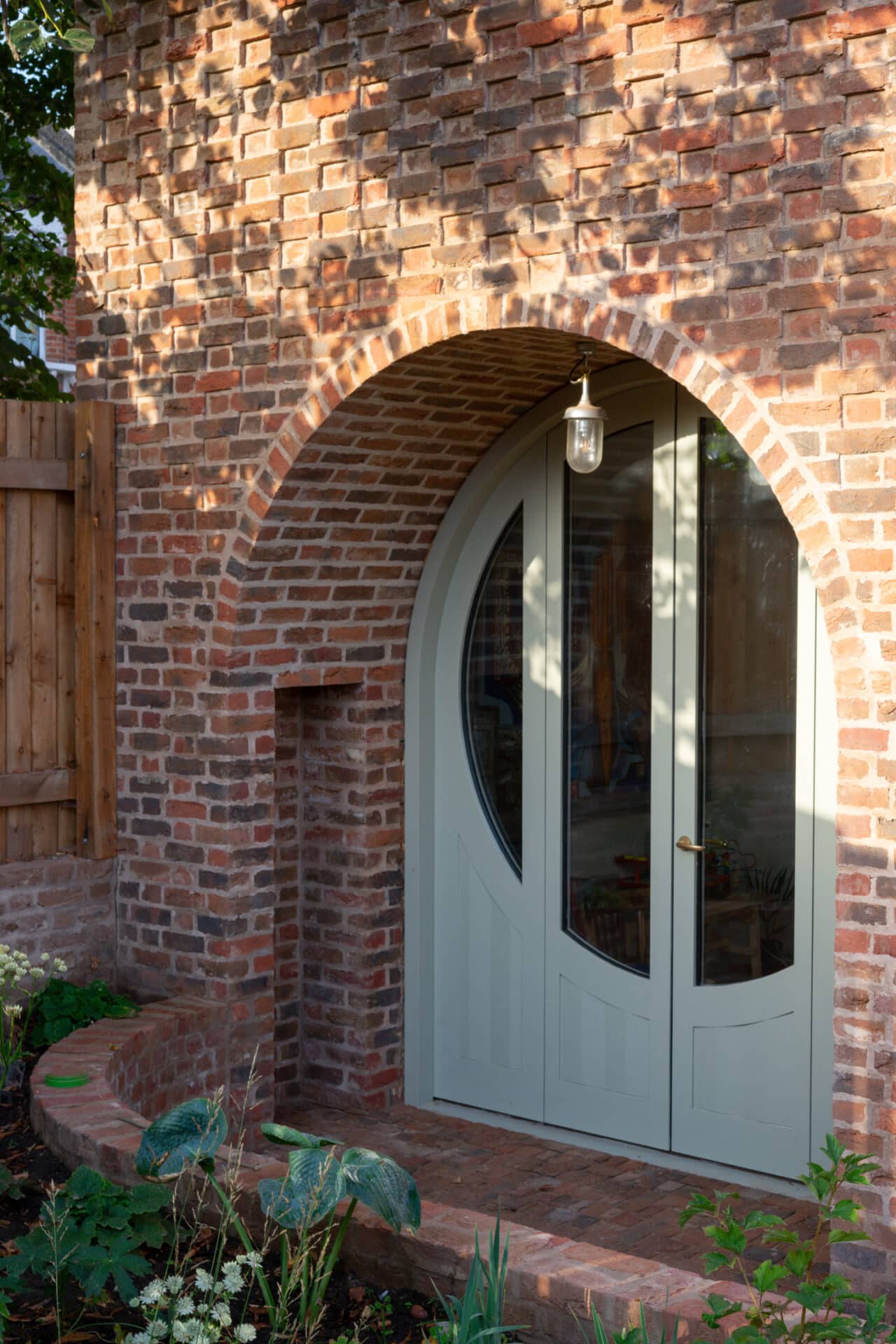
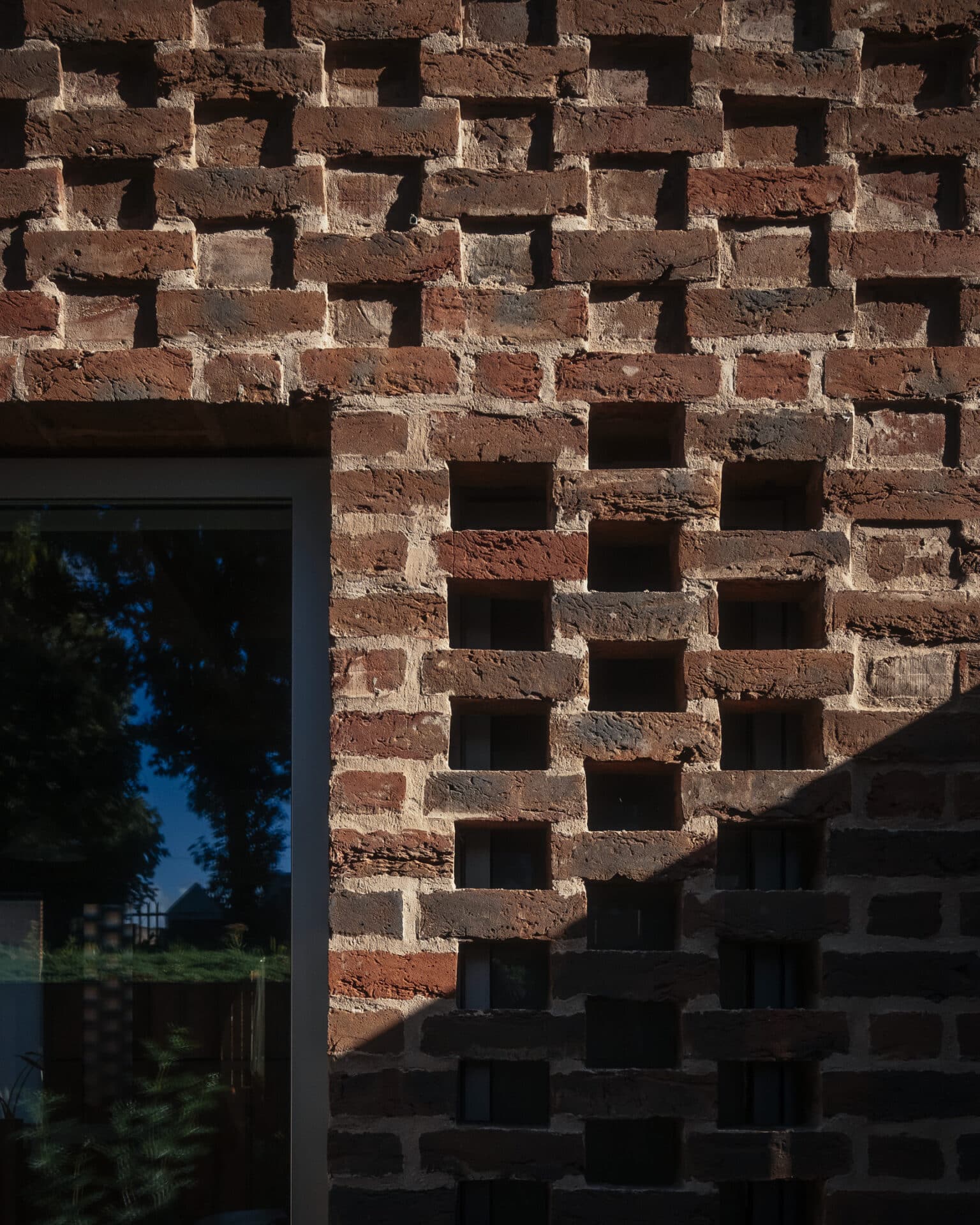
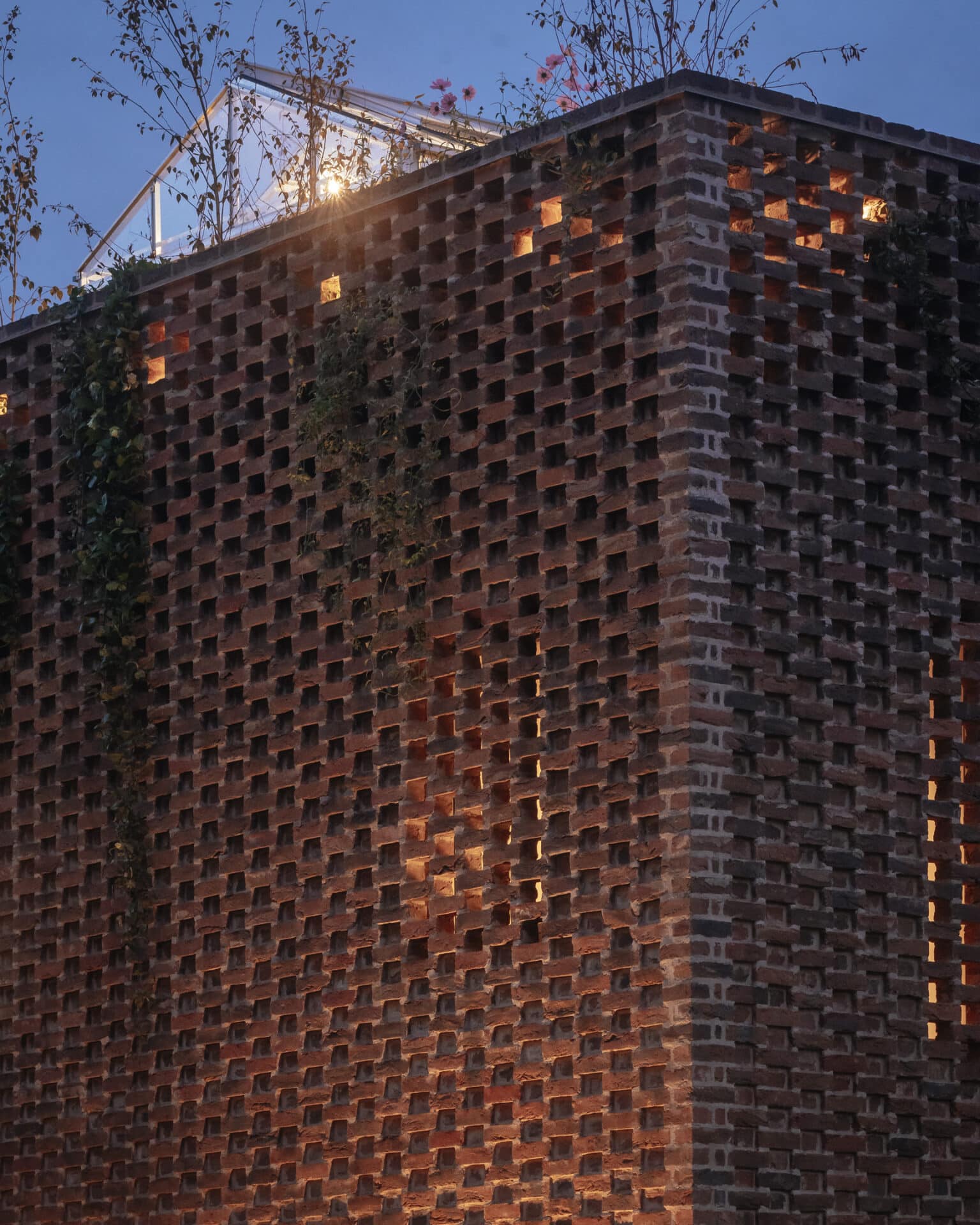
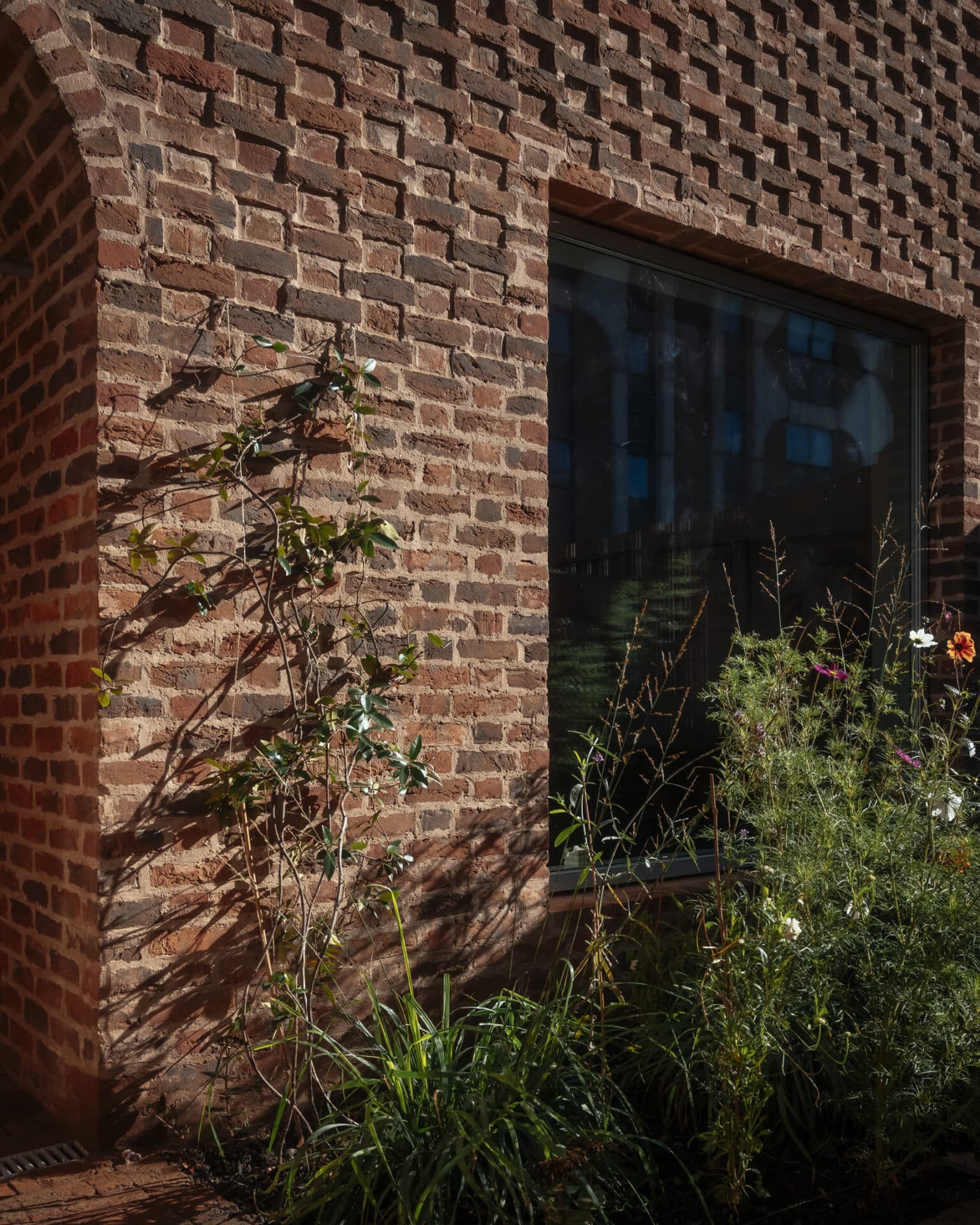
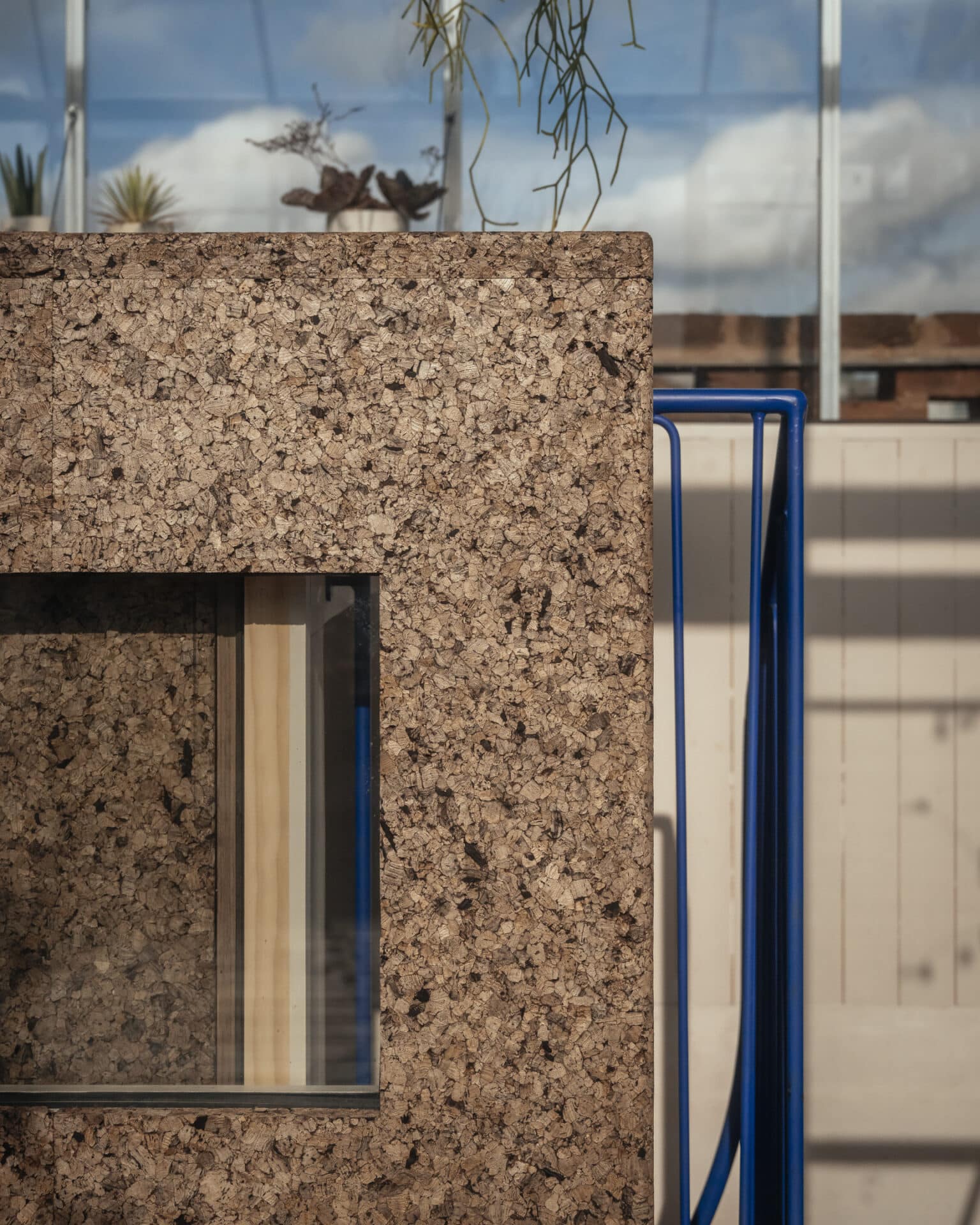
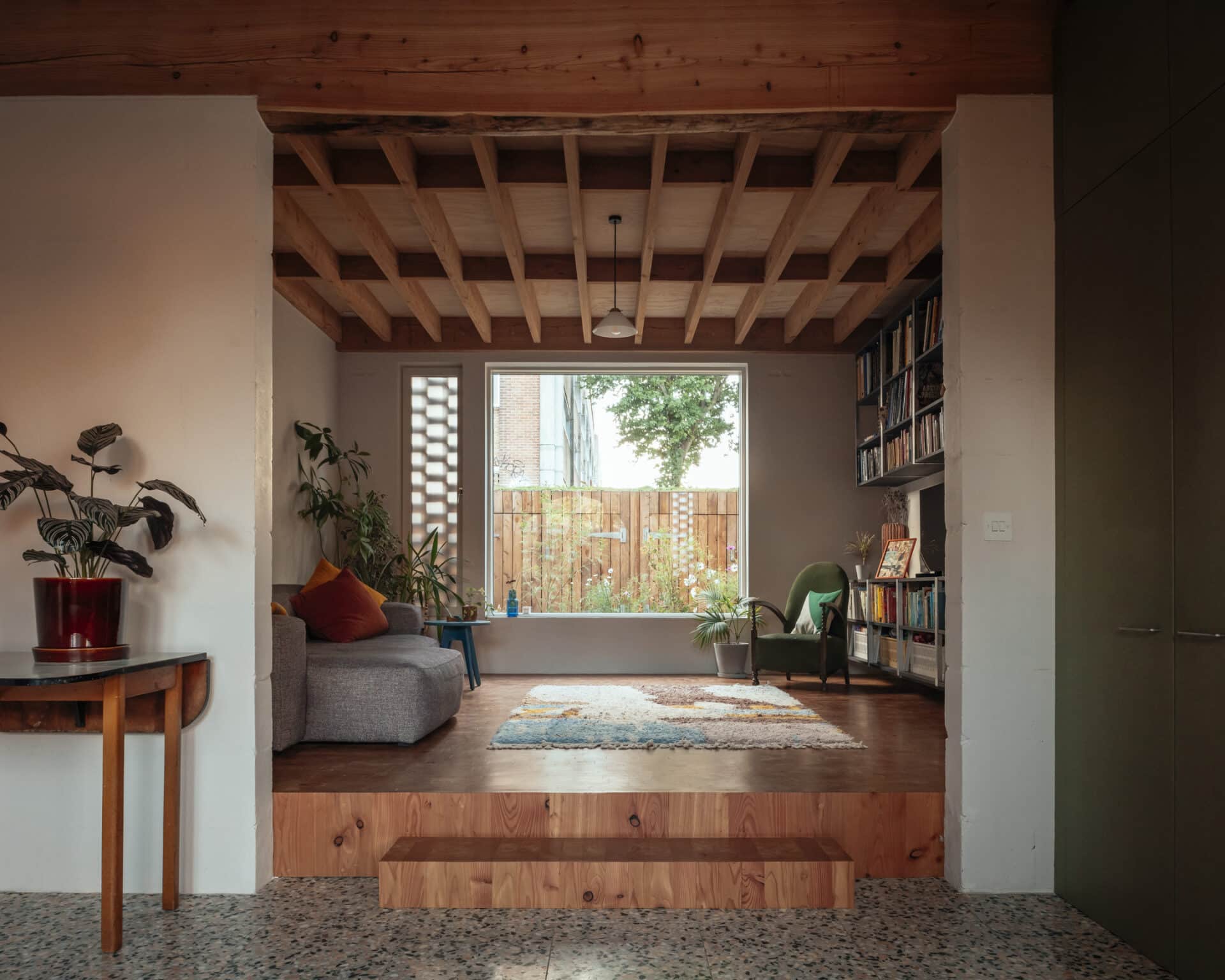
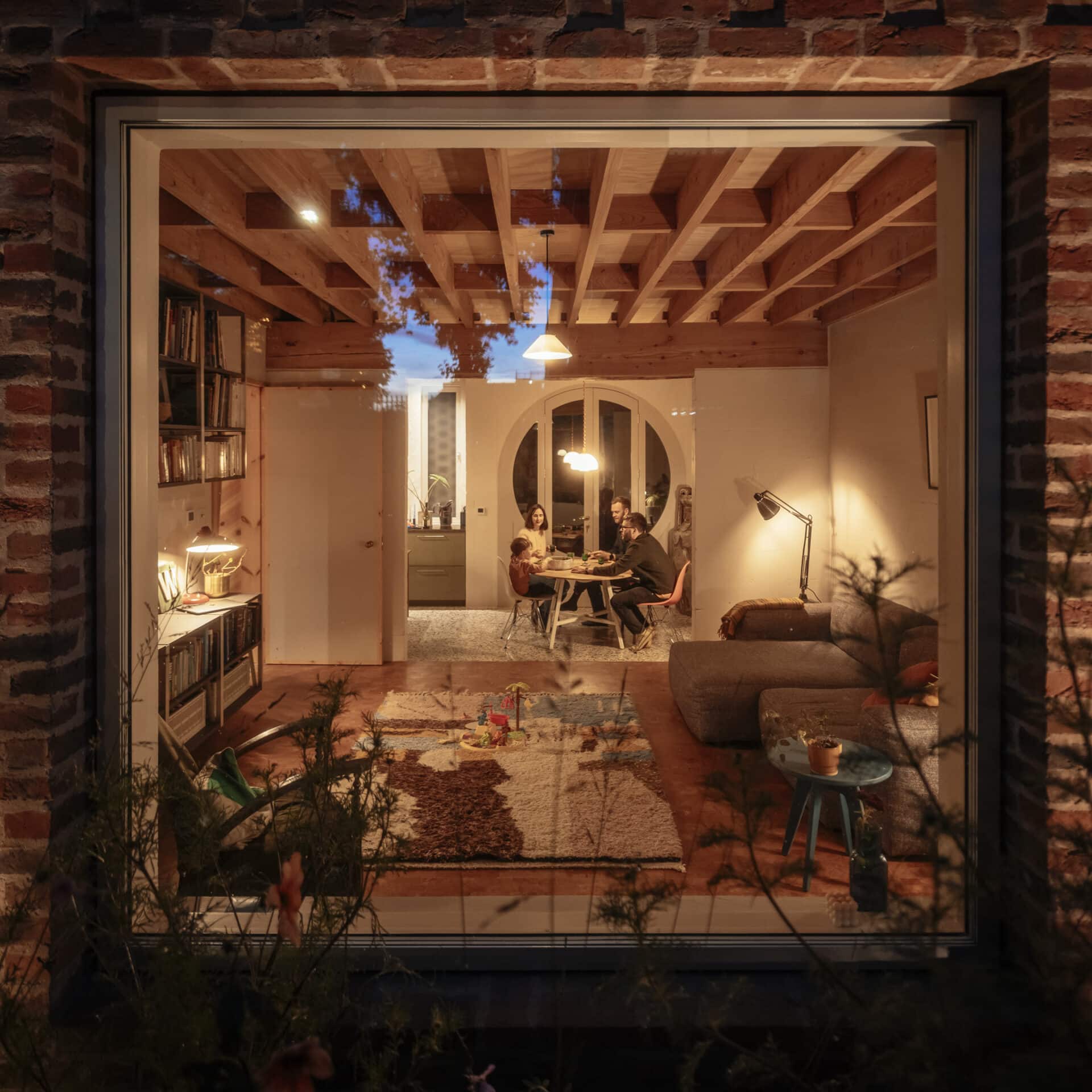
Through discussions with planners and their own reassessment, the project shifted towards a masonry brick house. The final design – a cavity wall construction with brick externally and blockwork internally, insulation in between – sits more comfortably in its surroundings.
“It felt like a more fitting choice for the area and worked well with the surrounding architecture,” he says.
The relationship to the neighbouring house is careful and precise. “It’s semi-attached,” Percy explains. “It’s not a shared party wall because the house next door is pre-existing, but the boundary line runs on the outside of their wall. One of the stipulations was that we weren’t allowed to physically tie into their structure. So, we’re very close, and it reads as attached, but structurally it’s independent.”
Percy was effectively the project architect, but he and Tom always design collaboratively. Percy says. “We go backwards and forwards, discuss ideas and come to a decision generally together. Sometimes one of us just says, ‘You choose,’ but often it’s about being a sounding board – ‘I’ve got these two options, I don’t know which is better’ – and working it through.”
If buying without planning was the first big risk, the timing of construction was the second. The build began in March 2021, just as a series of geopolitical shocks collided with the tail end of the pandemic.
“When we started the build, it was the beginning of 2021 – the aftermath of Covid, we’d left the European Union after Brexit, the Ukraine war kicked off, and material prices just shot up almost as soon as we started,” Percy says. “We had this graph of material prices at the time and basically everything went skywards.”
Initially, Percy planned to be on site three days a week, with Tom visiting as needed while they kept the architecture studio running at near full strength. However, that plan didn’t survive long.
“Because of all the cost increases and cash flow issues, we had to spend a lot more time on site doing the work ourselves,” he explains. “By the end, I was there full time, Tom was there two or three days a week, and we were just about keeping the architecture business going on the side.”
The build ran from March 2021 until the family moved in at Christmas the following year, meaning the better part of two years of intense hands-on work.
“It was amazing,” Percy says, “but it was also the best part of two years of my life on site, and the business really suffered.”
Doing the work yourself
Acting as main contractor, the pair took on far more than a typical architect might. “We really took on a lot of responsibility,” Percy says. “We tendered smaller packages to subcontractors, but we did a huge amount ourselves.”
A mason was brought in for the brickwork, and a carpenter helped with some elements, but otherwise Percy and Tom were heavily involved in the making of the house. Friends with previous building site experience also worked on a significant portion of the project, in paid roles, and became an invaluable part of the team.
“Having trusted, all-rounder builders on site was huge,” Percy says. “By the end, it was me, a couple of friends, the jobbing carpenter and Tom when he was available. When we worked on things like the planters or the roof, it was that team doing it – not just Tom and me.”
“We did a lot of carpentry alongside the jobbing carpenter,” Percy notes. “We did labouring, laying floors, fitting kitchens and bathrooms, finishing things off where subcontractors hadn’t quite linked one bit to another – a huge amount of snagging and finishing.”
They also built the roof structure before bringing in a roofer for the waterproofing and warranty. This level of involvement brought deep understanding, and some hard-won lessons.
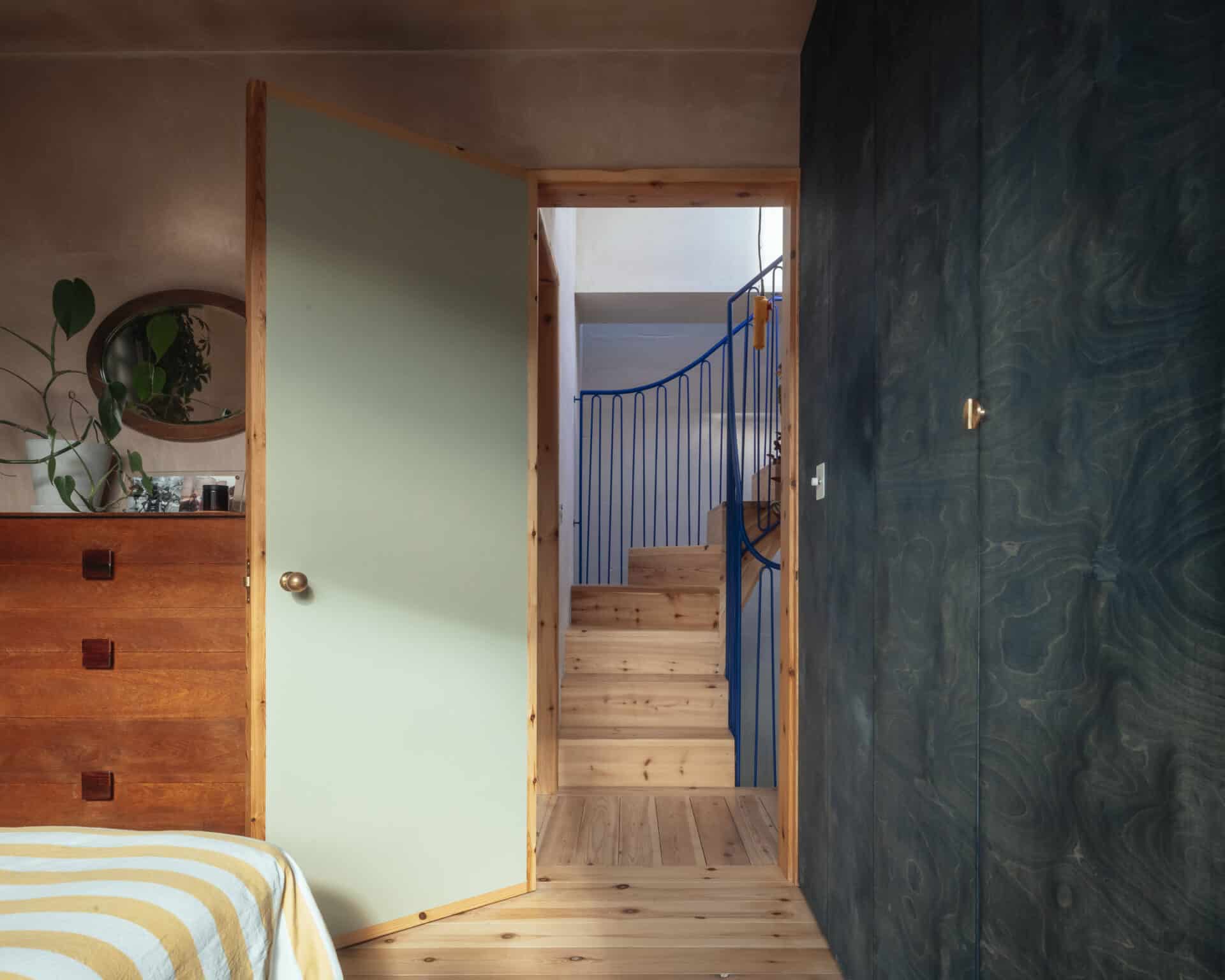
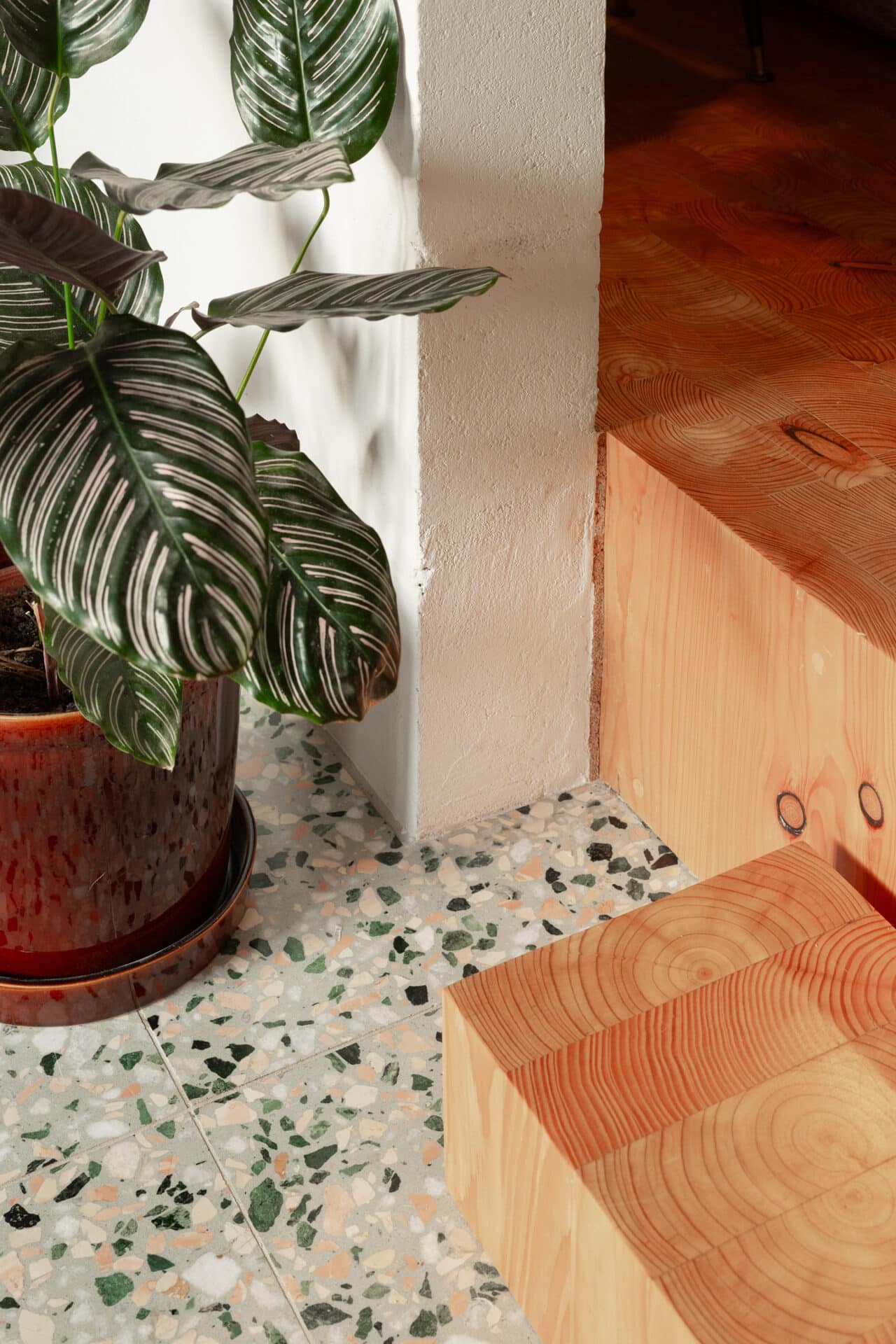
For example, the living room’s distinctive end grain timber floor started as a sustainability move, reusing offcuts of larch. “We had loads of waste larch from floor joists,” Percy recalls. “We ended up chopping it up into little bits and making an end grain floor in the living room.”
It was beautiful, but laborious. “We weren’t precise enough with chopping the pieces,” he says. “When we laid it, we spent about a week trying to level it with the sander when it should have taken a day. That’s the kind of thing you only really learn by doing.”
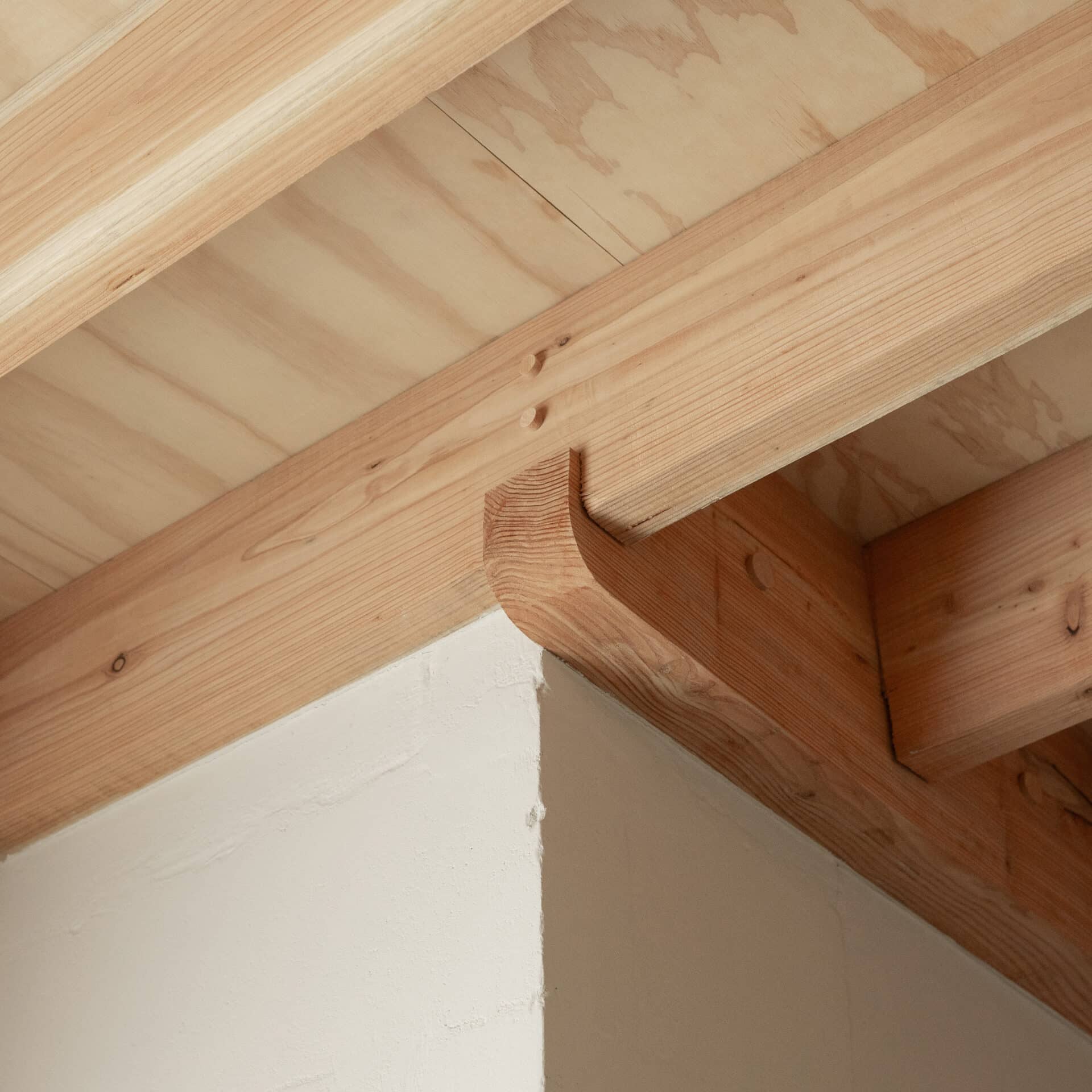
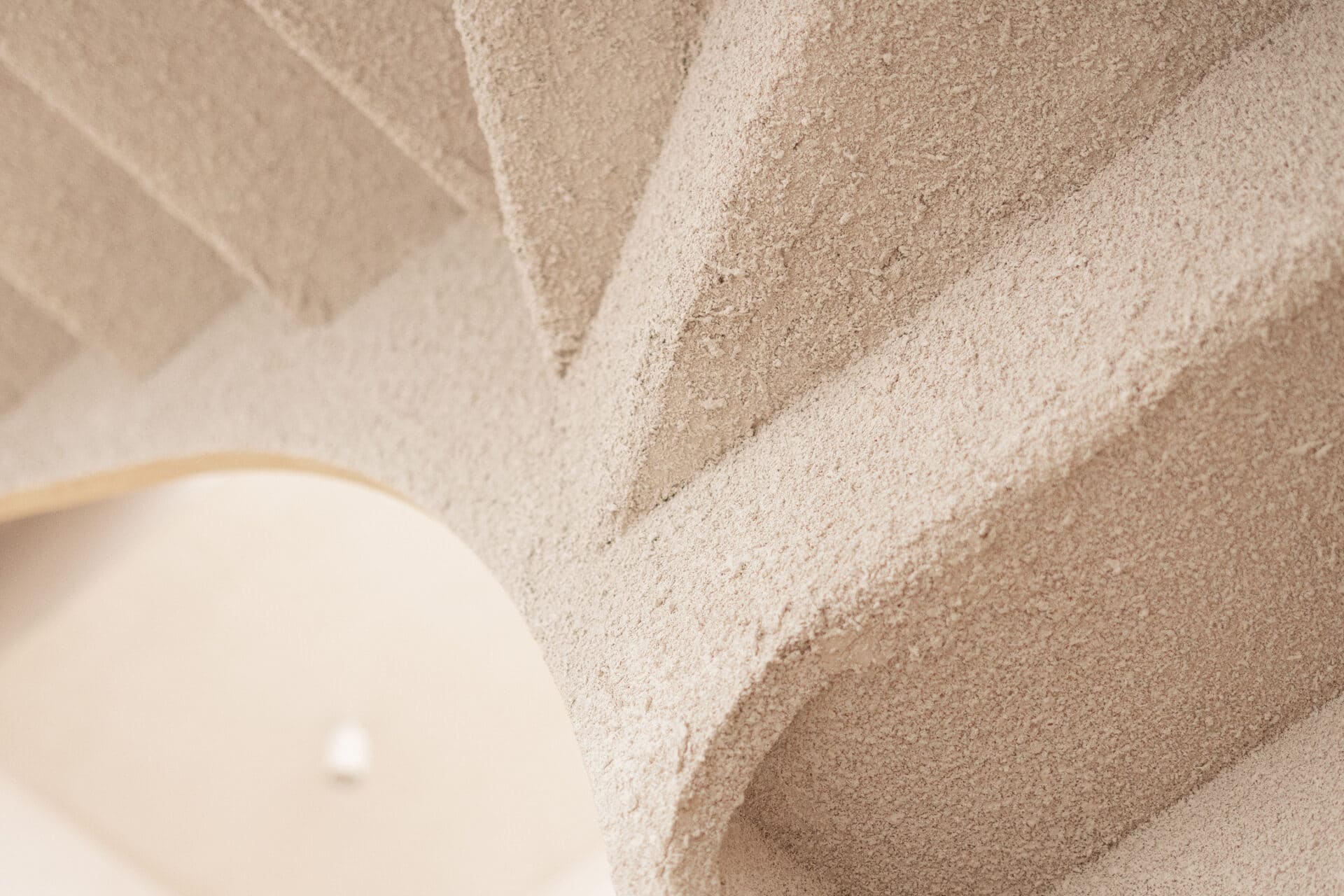
Behind the crafted finishes is a quietly robust and considered structure. “The structure is a cavity wall construction, which is fairly traditional – blockwork on the inside, brickwork on the outside, with insulation in between,” Percy explains. “We looked at prefabricated methods like cross laminated timber, but at this scale – a 100sqm house – it was quite hard to find a prefabricated method that was cost effective. It was much more expensive than the traditional way.”
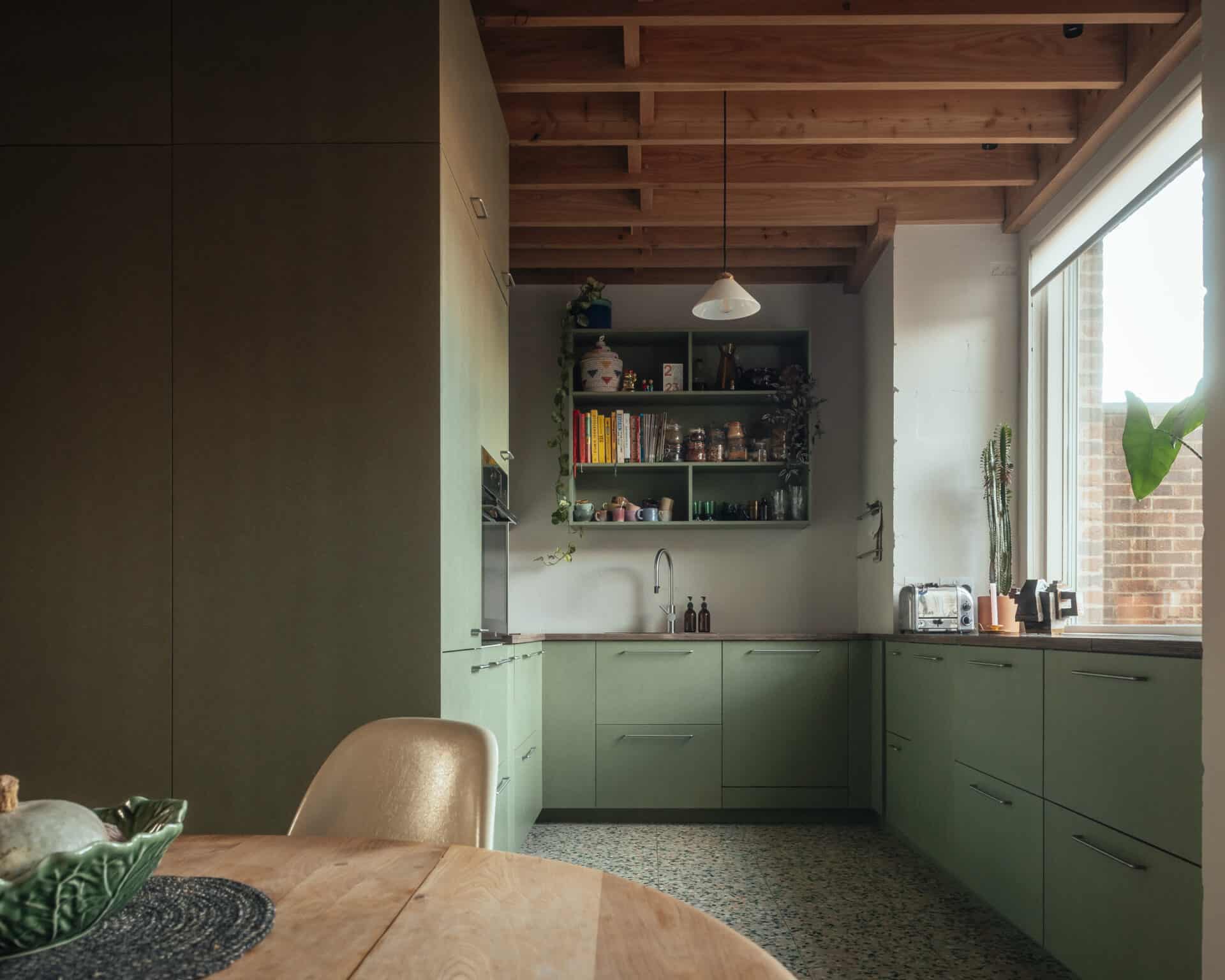
Given that masonry is a heavyweight material with an embodied carbon cost, the design team looked for ways to mitigate its impact. “We used a local brick and blocks with recycled content in them to reduce carbon in that respect. And we exposed the blockwork internally to give us thermal mass, which helps heating and cooling in winter and summer.”
At a time of labour shortages, choosing familiar construction methods was also pragmatic. “A brick and block cavity wall is something it’s quite easy to get a bricklayer to do,” Percy adds. “They all know how to do that. Specialist systems were much harder to secure.”
Mechanical ventilation with heat recovery, an air source heat pump and PV solar panels provide efficient fresh air, heating and energy. The house uses approximately 80 per cent less energy than what current UK Building Regulations require. Performance data shows that it exceeds LETI’s (London Energy Transformation Initiative) ambitious operational energy targets.
However, much of the sustainability story is about reuse and waste reduction. “Being on site so much, you get a real idea of where the waste is coming from,” Percy says. “We tried to reuse where possible. The end grain floor is one example. We also had lots of offcuts of bricks, and we ended up using those for the external landscaping, which worked really well. Otherwise, you can end up with a huge amount of stuff going to waste.”
The garden in the sky
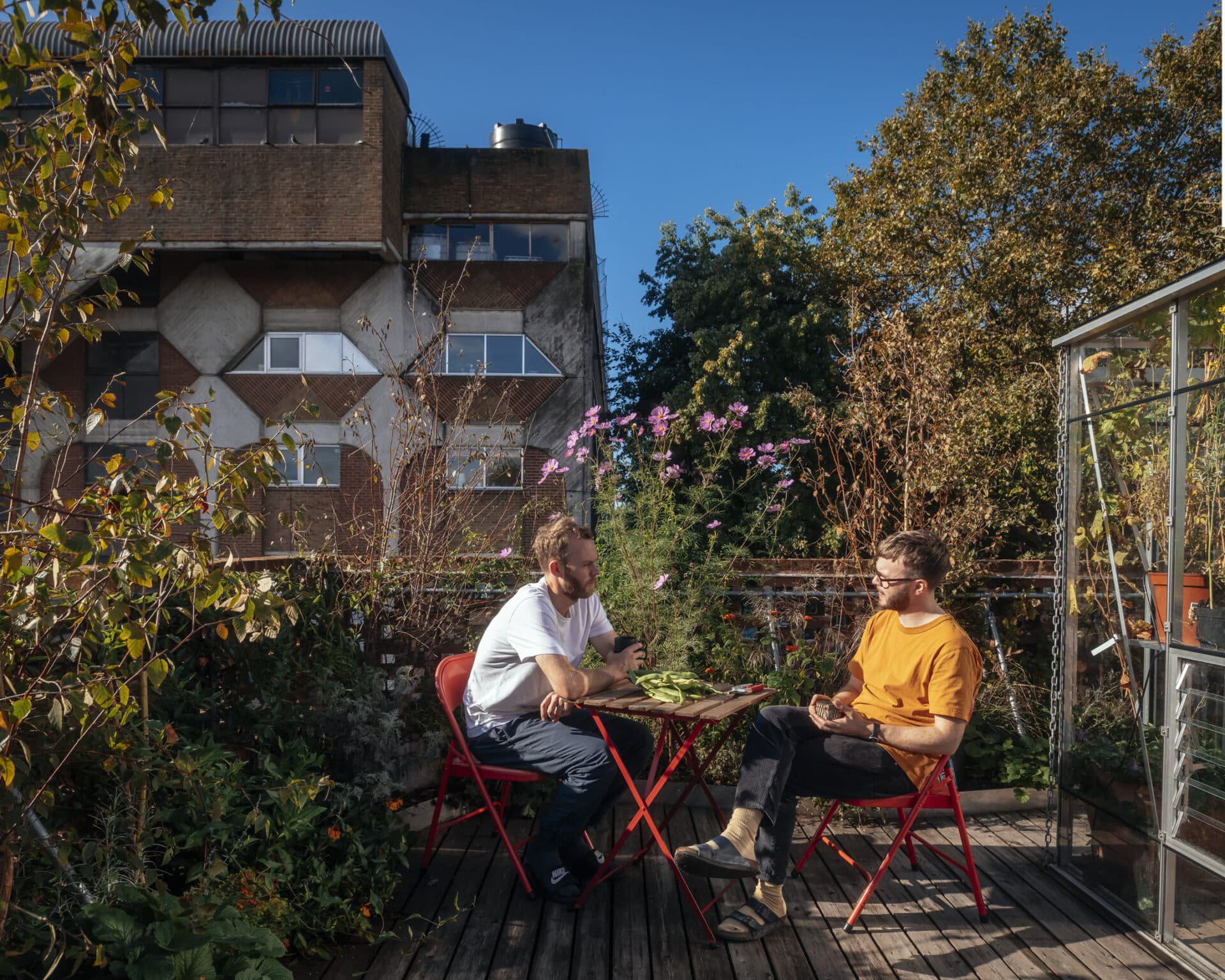
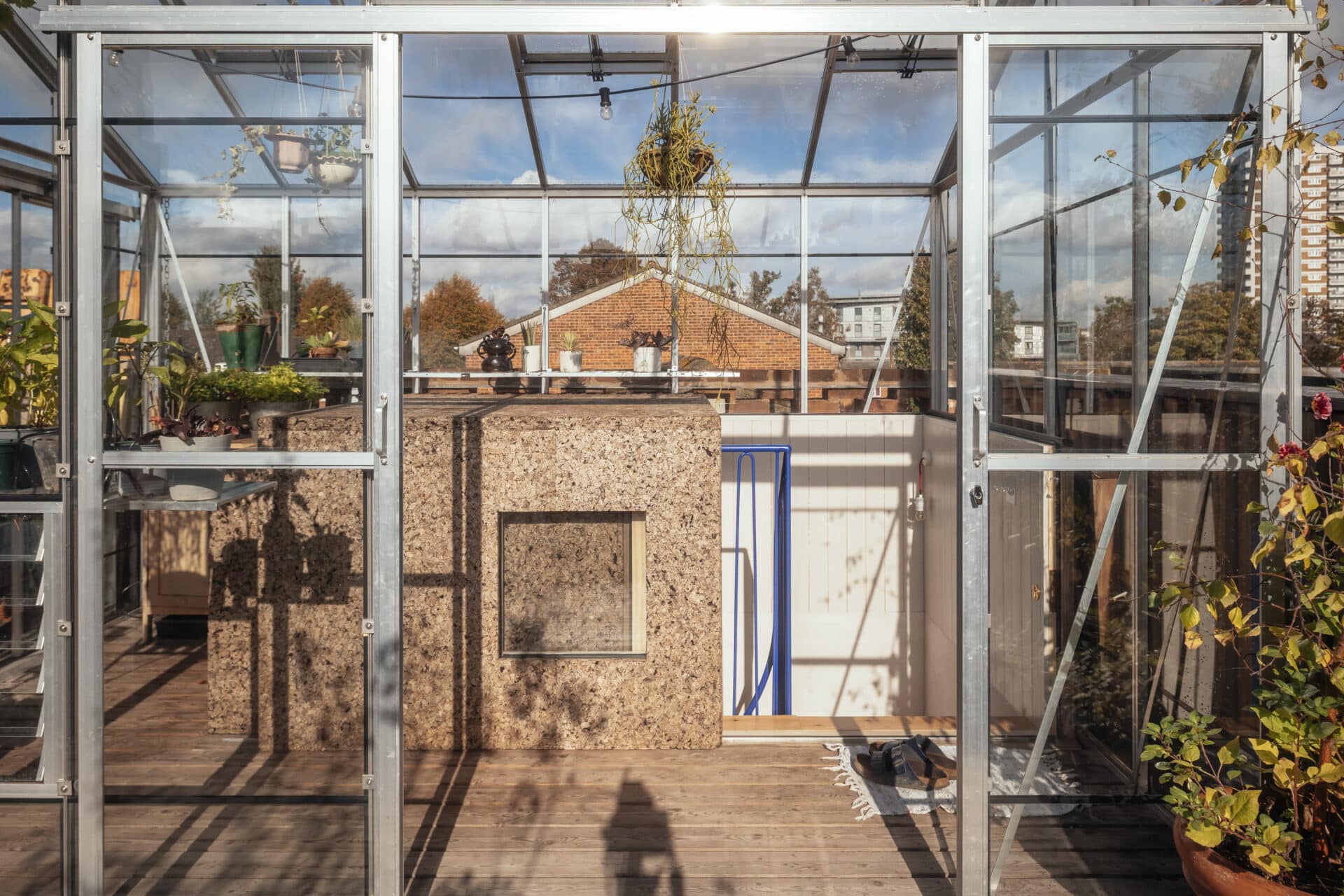
The most striking feature of the house is perhaps the roofscape: a planted flat roof with a greenhouse that turns the top of the building into a sky garden room. “We wanted enough soil that you can actually grow plants,” Percy explains. “Around the edge of the roof garden, we’ve got about 300–400 mm of soil, and where we’ve got trees, we’ve got bigger planters with much deeper areas of soil.”
He and Tom fabricated the aluminium planters themselves, bending sheet metal to shape. Planting design came from Lidia, a garden designer they’d previously worked with on the Hackney School of Food. “She was great at helping us pick plants that would be suitable for that environment.”
At the heart of the roof garden is a small greenhouse that doubles as a wind sheltered dining and growing space; it’s Percy’s favourite space. “It gives you an opportunity to be outside when you wouldn’t necessarily be able to, and it’s quite an unusual place in London. You can propagate plants – I’ve got a vine growing in there – and you can go up there when it’s a bit cold, but you want to have dinner on the roof and be semi outside. It’s very special.”
Garden design continues at ground level, where Lydia also helped shape the landscaping and seating areas. Within about five months of moving in, the family had usable outdoor space, completed with the help of a trusted contractor the studio often works with.
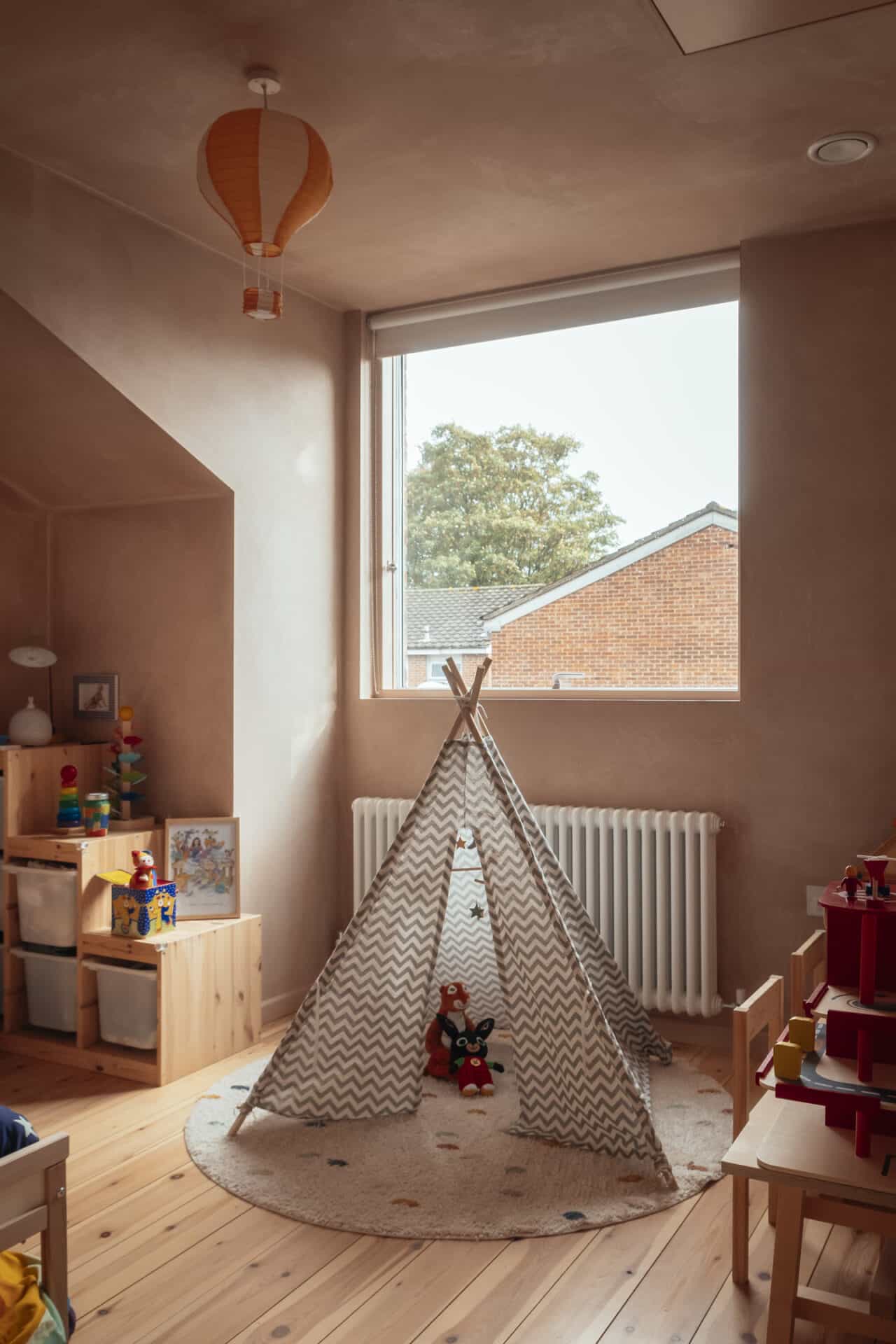
When Percy first bought the plot, he had no children. By the time the house was complete, he had two young children, and their needs inevitably reshaped aspects of the design.
Navigating the roles of architect, builder and client in one body turned out to be one of the most subtle challenges of the project. “I realised it can be quite useful to have a client,” Percy reflects. “They give a final decision on something and then you can move on. The challenge of being your own client is you can change your mind. It’s both a benefit and a drawback.”
That experience has left him with a healthy respect for decision making discipline. “Sometimes there are three options and they’re all good,” he says. “You’re not going to improve it by changing to another one – you’re just burning time. Knowing when a decision is made and when to stop messing around with it is really important.”
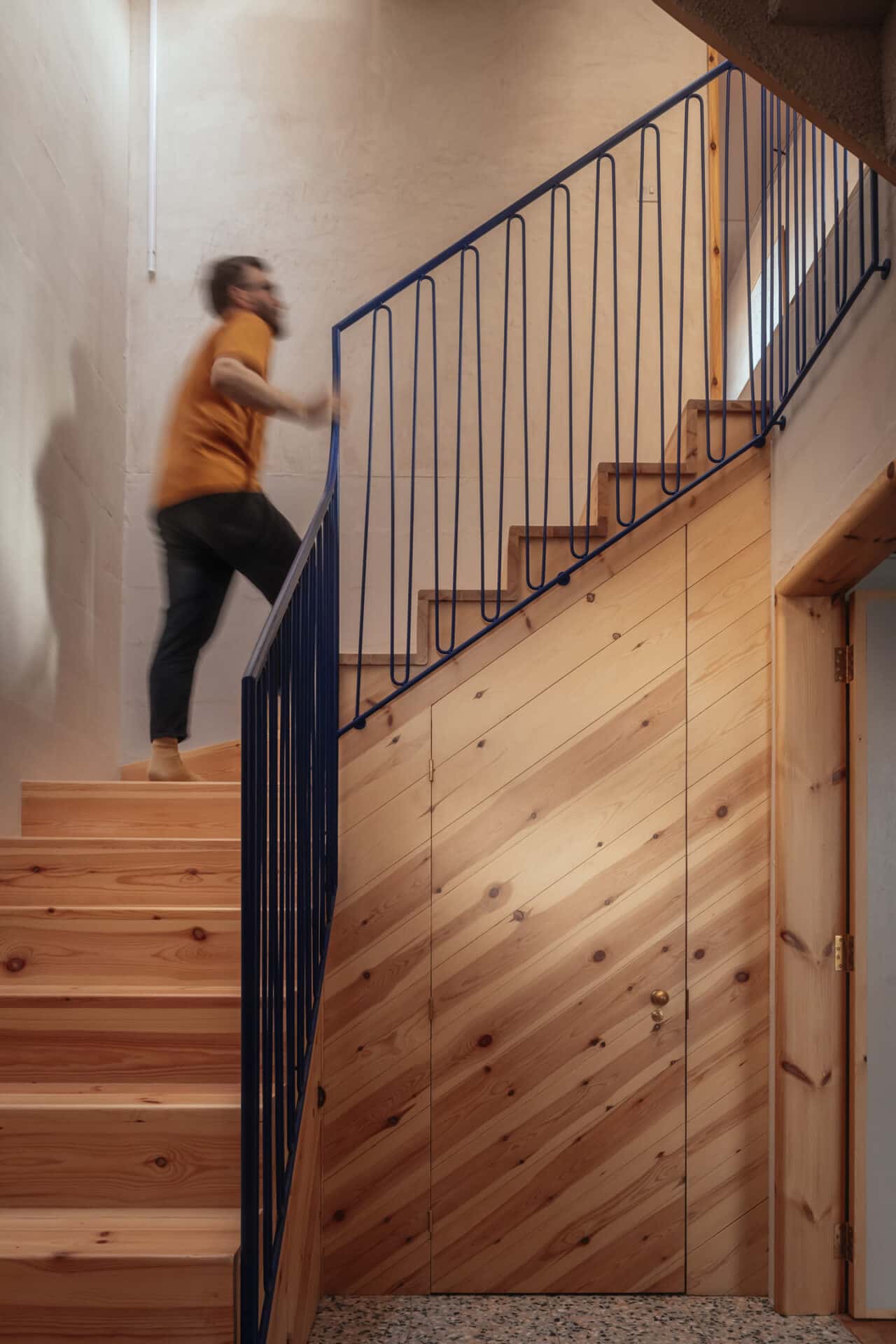
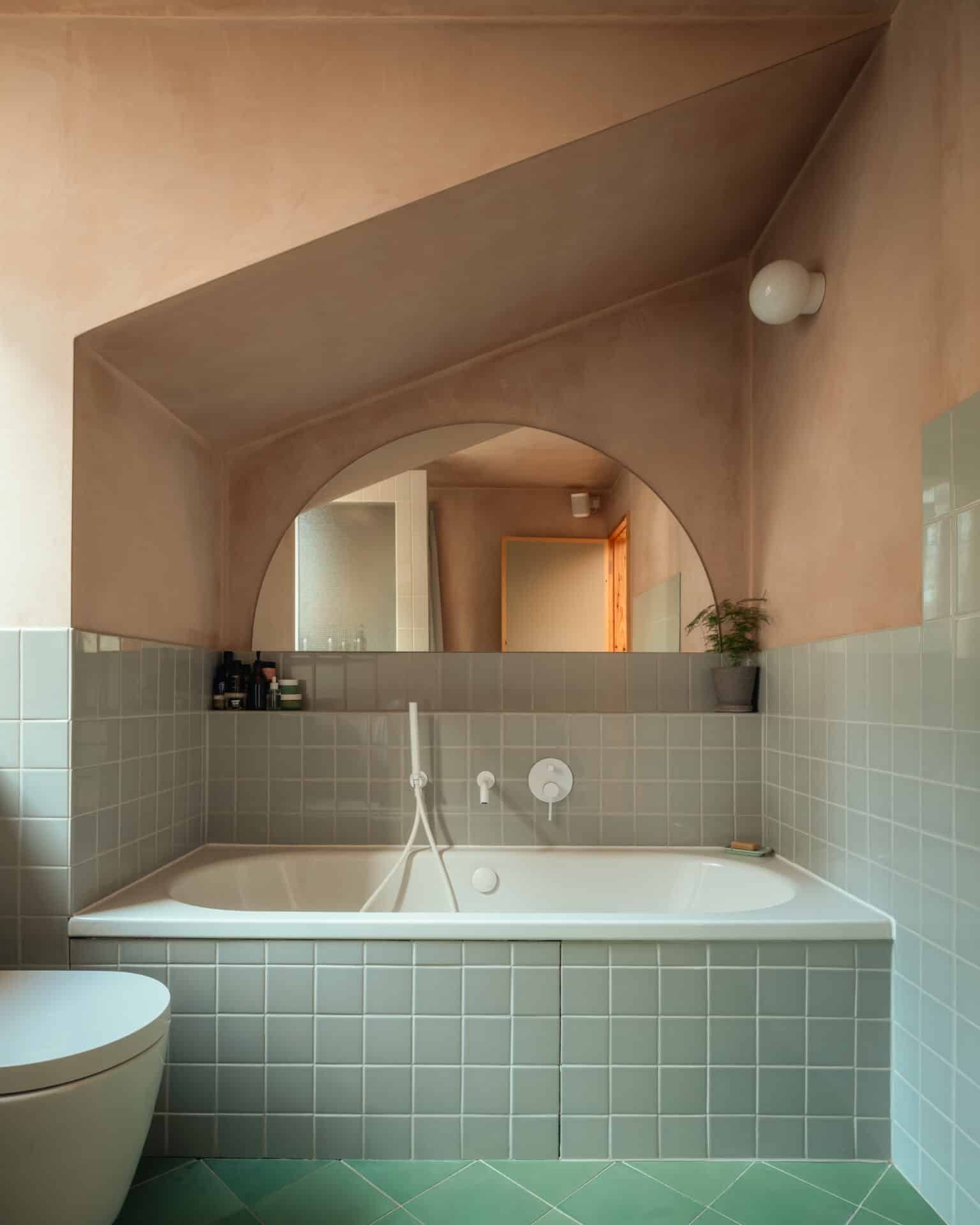
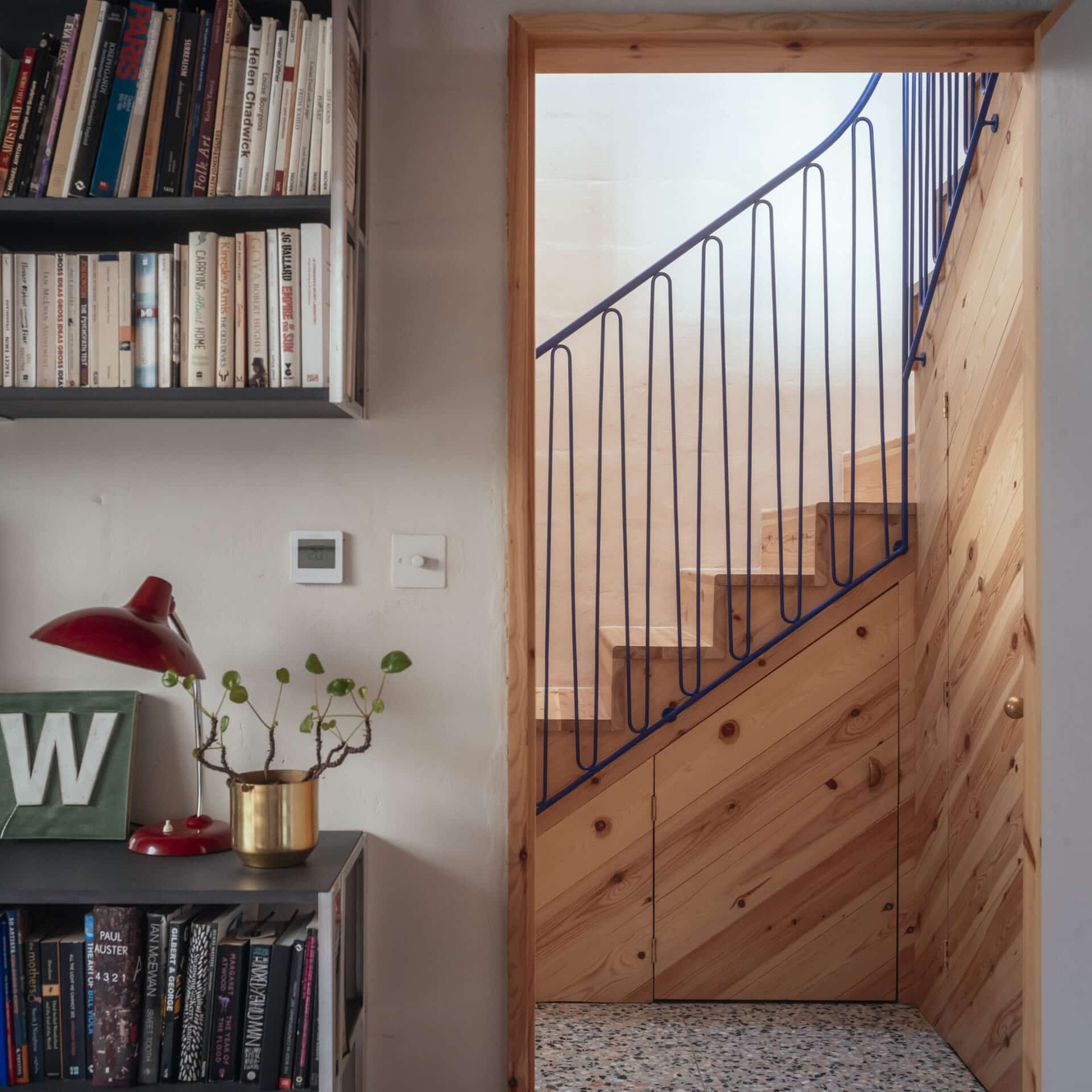
For all the technical complexity, Percy says the hardest part of the project was managing people. “Dealing with subcontractors was quite a challenge,” he admits. “When you have a main contractor, they’re a barrier between you – the client/architect – and the subcontractors. Without that, you’re the one in the middle.”
Starting without a deep network of trusted trades meant learning fast. “We struggled a bit with finding people we felt could do a good job and we could trust,” he says. “At the beginning, because money was tight, we were tempted to go for the lowest bid. By the end, trust overrode all of that.”
His advice is clear: “Don’t necessarily be tempted by low quotes when you’re building with a contractor. Go with people who are trusted – people you know, or who have a good reputation. It might cost more up front, but that money is worth it to save your nerves. Quite often, if you go for the lowest quote, you end up paying in some other way – either to fix things or to finish them off yourself.”
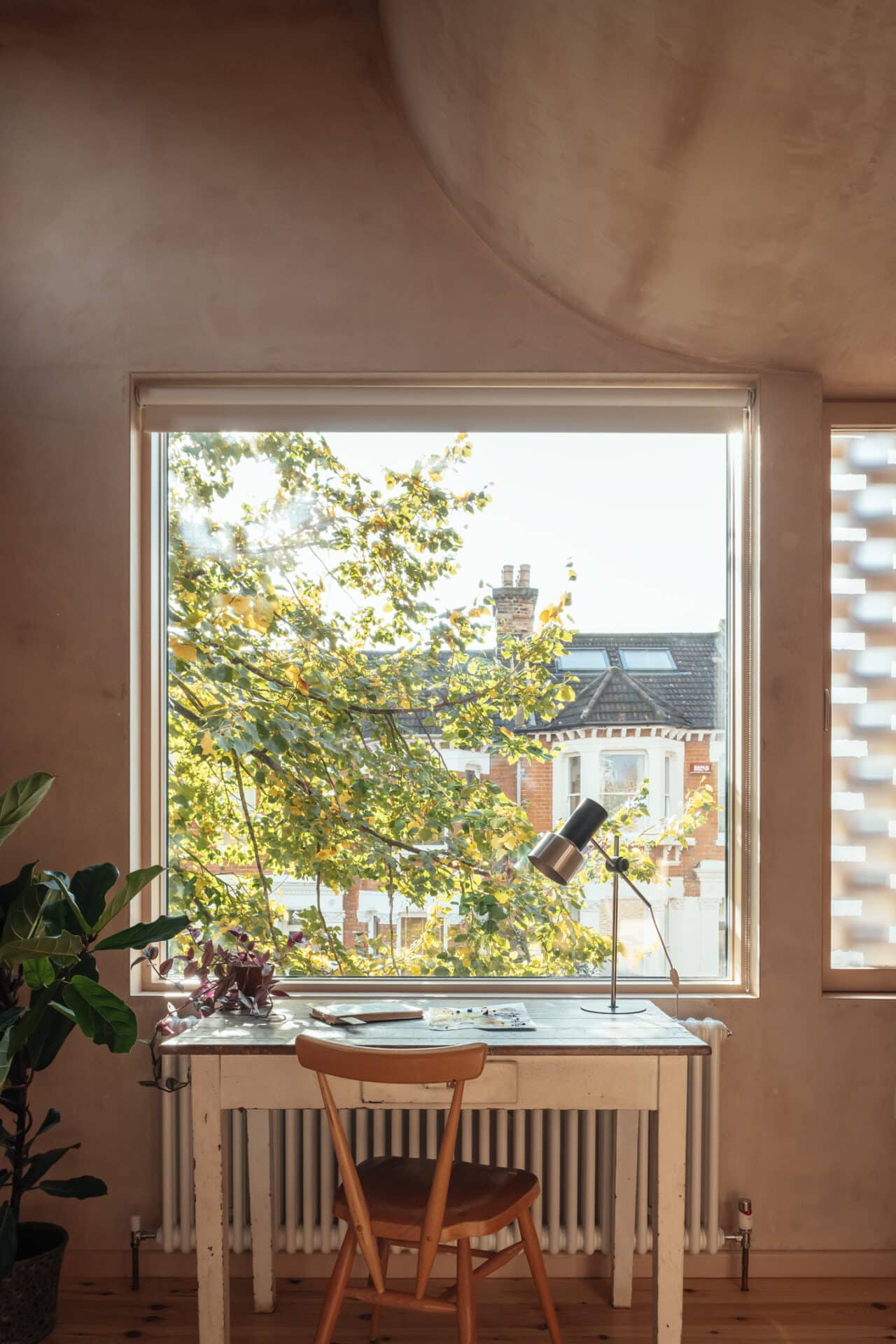
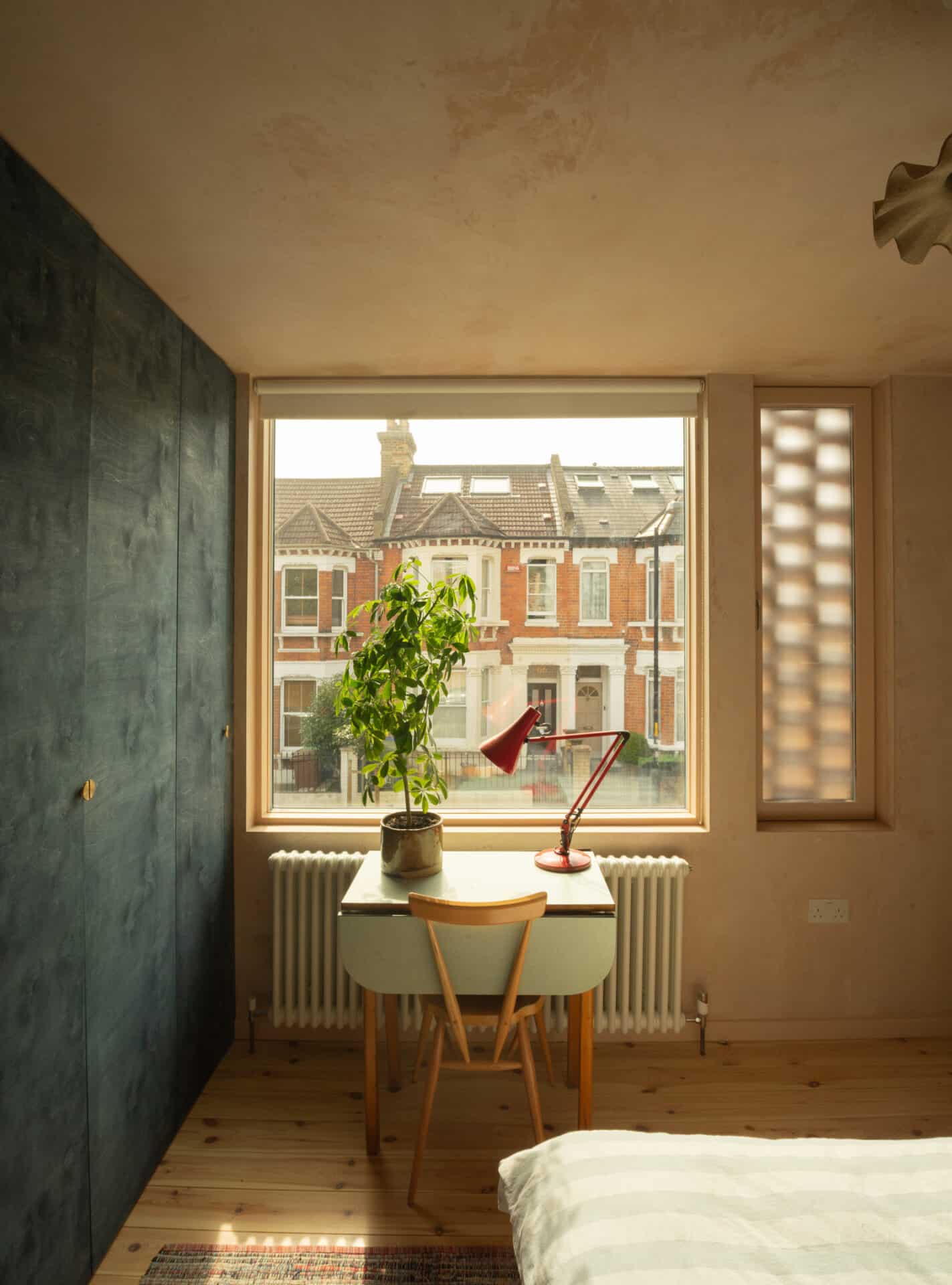
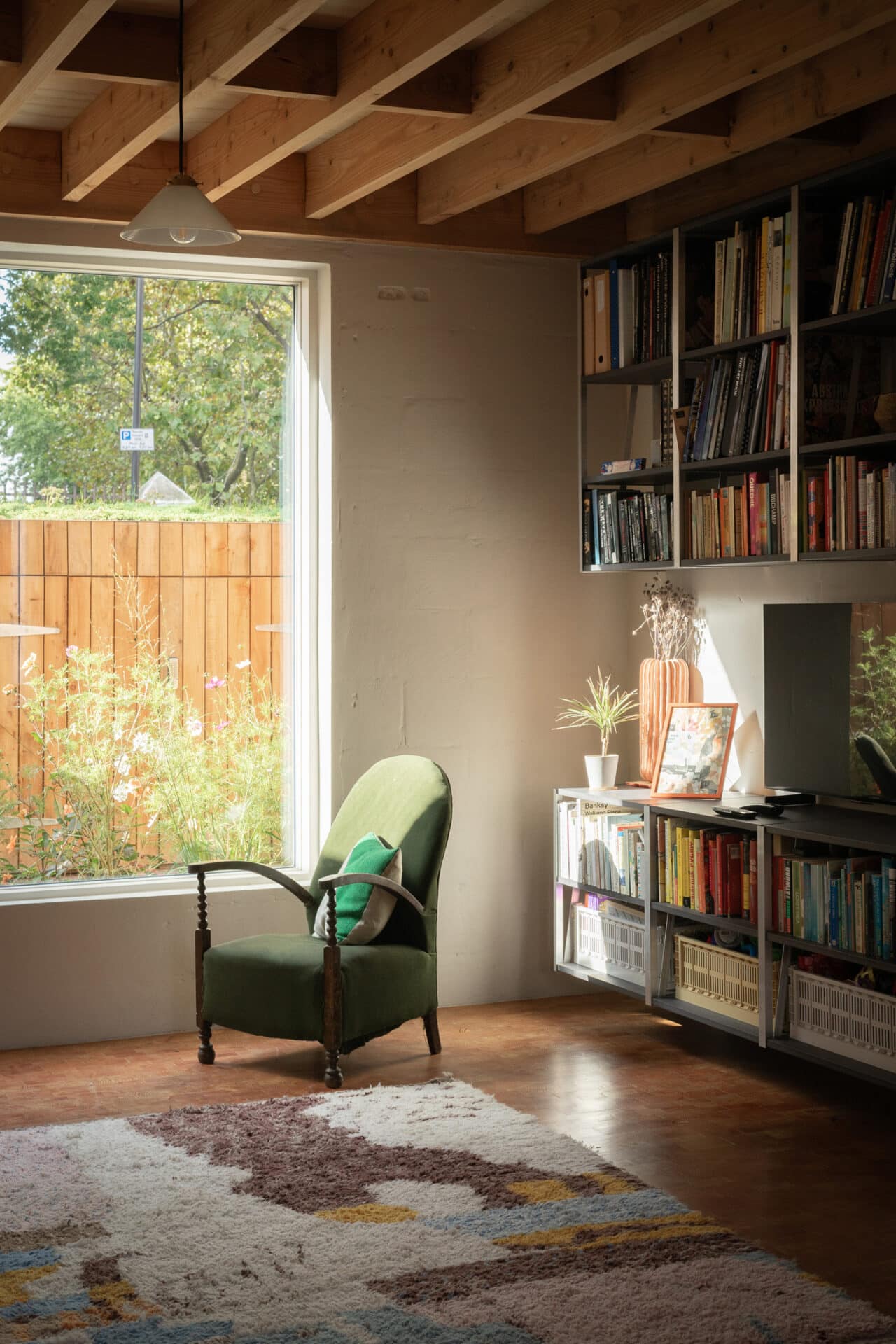
Today, the Peckham house is a compact but generous family home, carefully tuned in to its urban setting. “It’s functioning well,” Percy says. “We enjoy living there. The big ideas were right – the layout of the rooms, the windows, the materials. There are always minor things you might have done differently, but that’s part of the learning experience.”
Inside, he admits to one particular indulgence. “We bought a nice sofa,” he says. “We’d only ever had cast off sofas before. When we moved in, we just thought, ‘We’re not bringing that old sofa in here.’ So we decided we were actually going to spend some money on a proper sofa. That was the big splurge.”
On the question of cost, however, he’s more guarded. “I’d rather not put a headline cost out there,” he says. “It was cheaper because we did so much ourselves, and it’s hard to quantify. I wouldn’t want people to think they could get the same thing for the same price – that figure was contingent on me spending almost two years on site.”
Would he do it all again? “As a business, we’re interested in building more houses,” Percy says. “If I were to do another self-build, I’d try not to be on site quite as much. It was an amazing experience, but the business really suffered.”
Timeline
Plot purchased: June 2018
Planning Permission pre-application submitted: June 2018
Planning Permission pre-application granted: Nov 2018
Revised Planning application submitted: June 2020
Final Planning Approval granted: Sept 2020
Build start: March 2021
Move in: Christmas 2022
Landscaping complete: May 2023
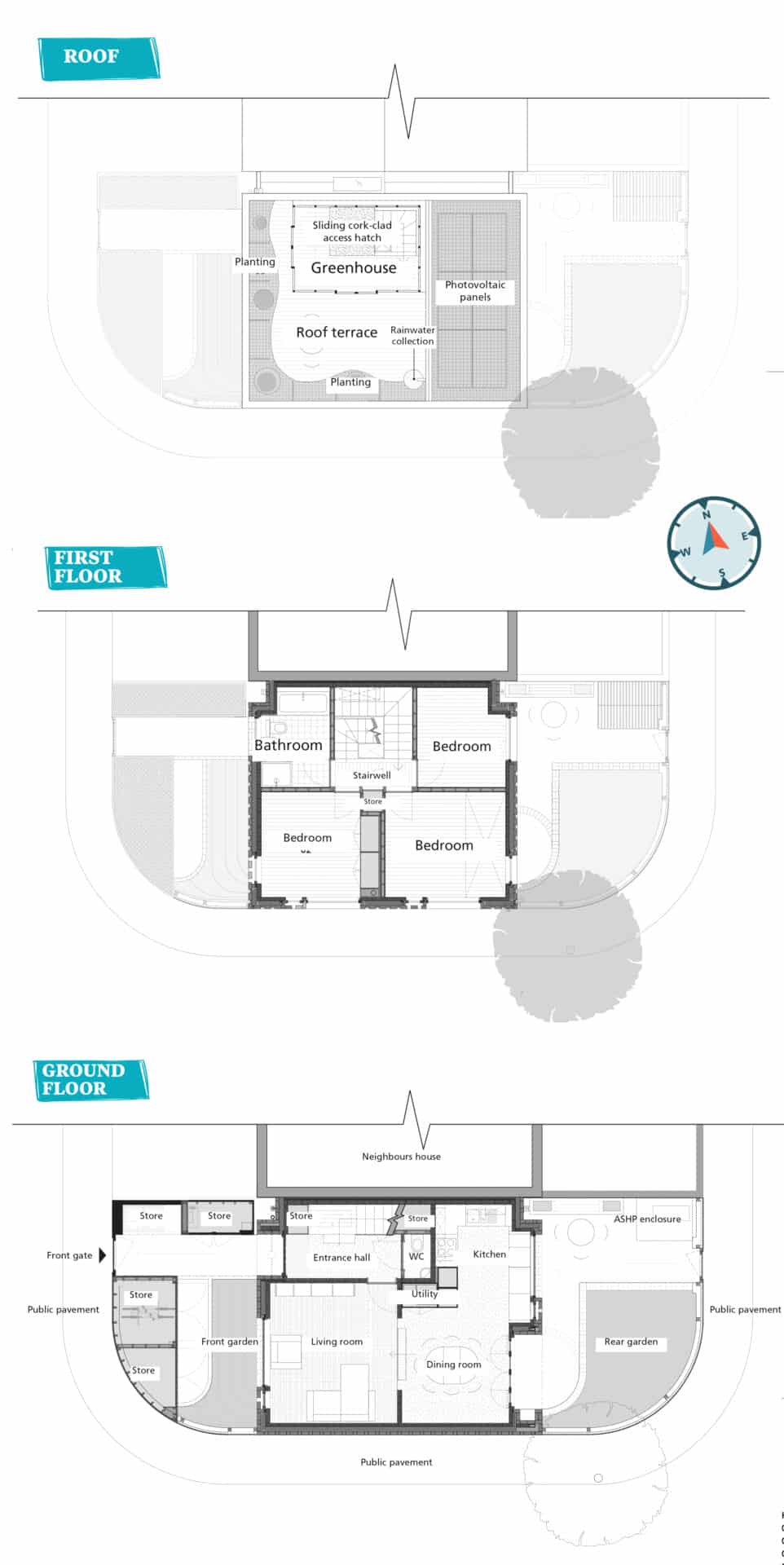
Peckham self-build floor plans
Spec
Construction method
Floor: Piled reinforced concrete slab
Walls: Masonry cavity wall
Roof: Timber warm roof with single ply membrane
Insulation type and thickness
Roof: Tapered PIR insulation 240 – 120mm – u value 0.11
Walls: PIR Full fill insulation 140mm – u value 0.13
Floor: PIR 150mm u value 0.12
Windows: Triple-glazed, aluminium/wood – u-value 0.8
Suppliers’ list
Architect: Surman Weston
Design team: Percy Weston, Tom Surman and Hilly Murrell
Project architect: Percy Weston
Structural engineer: Structure Workshop
Services engineer: Peter Deer and Associates
Planting design: Lidia D’Agostino Garden Design
Contractor: Surman Weston
Photography: Jim Stephenson, Percy Weston