
In this article we cover:
- How to set a realistic self-build budget from the outset
- The difference in costs between using a main contractor and self-managing
- What your budget should include beyond the core build cost
- Expert tips to avoid underestimating construction costs

A self-build budget is about far more than a cost per square metre. The real challenge is understanding everything that sits behind that headline figure and making sure you have allowed for it properly.
After years of working on residential projects across the UK, I’ve seen how easy it is for costs to drift when early assumptions are too vague or important items are missed.
Here’s how to build a realistic budget, understand the main cost drivers and give your project the best possible financial start.
The first step in any construction project is defining the scope and strategy for your build. Will you hire a main contractor to manage your project, or take a self-managed route and directly oversee works yourself? Your choice here has a major impact on your budget:
- Main contractor builds: If you hire a main contractor, you must factor in their overhead, profit and what are known as ‘preliminaries’- costs like a site manager, quantity surveyor and the contractor’s own project team.
- Self-managed builds: Managing the project yourself can reduce some of these costs, but it comes with increased responsibility and a need for diligent oversight.
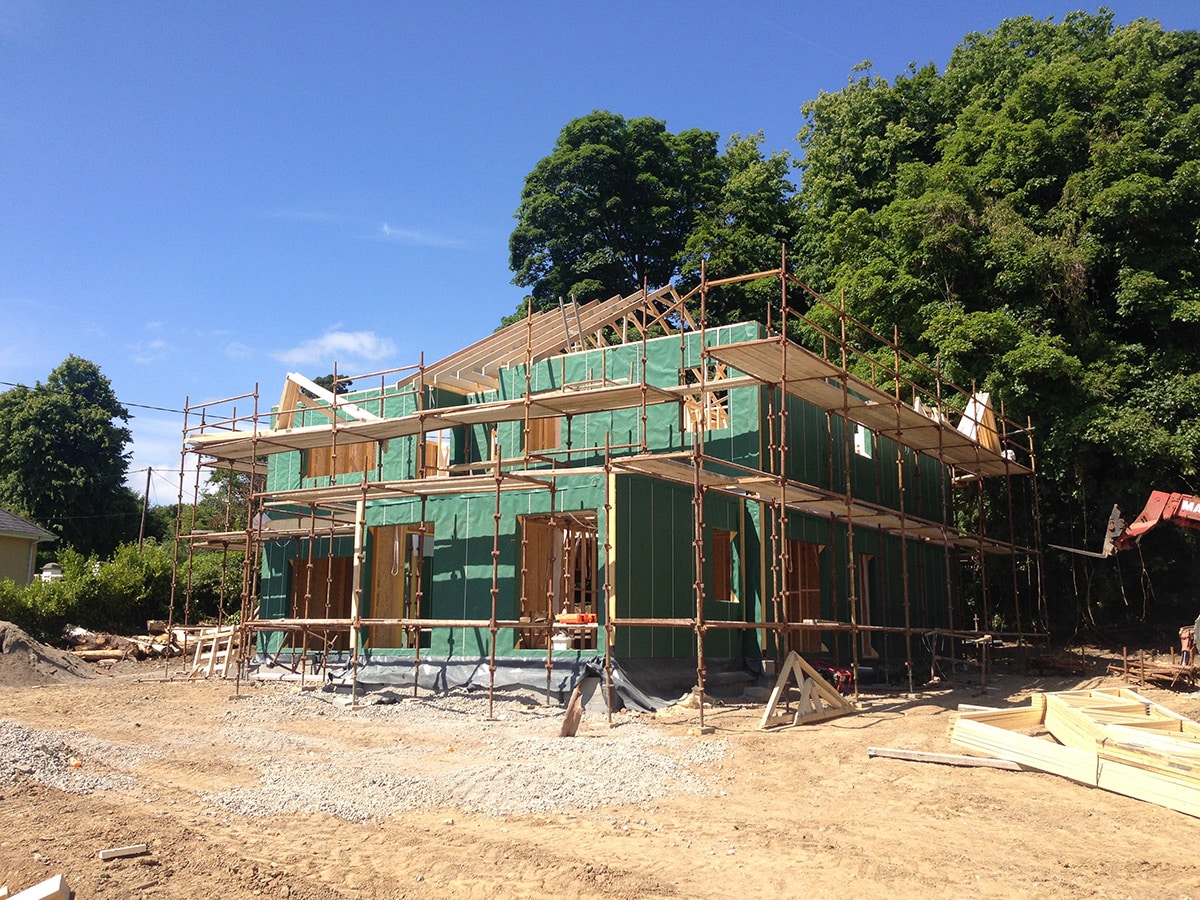
Currently, a sensible starting point for budgeting a modest self-build in the South Coast region is approximately £3,000 per square metre. This figure represents a middle-of-the-road specification – not a bare-bones basic, nor a full luxury fit-out. It serves as a useful benchmark, but always seek local advice as prices can fluctuate significantly by region and due to market conditions.
Keep in mind:
- Some people may claim to build for less, while others spend considerably more.
- Benchmark your expectations using both expert guidance and comparable recent projects in your area.

What should your budget include?
You need to remember that the headline figure rarely tells the whole story. For a truly comprehensive budget, you’ll need to include (or at least make allowances for) the following:
- Core build costs: The main construction work, materials and labour.
- External works: Items such as drainage, driveways, landscaping – these costs are often left out of headline figures.
- Demolition & ground remediation: If your site needs clearing or special ground preparation, these costs can be high.
- Land acquisition: Purchasing land sits outside the per-square-meter figure but must be included in your overall financial planning.
- Professional fees: Architect, quantity surveyor, structural engineer and any applicable planning fees are essential but not always present in rough estimates.
- VAT: Tax treatment varies:
- New builds are usually zero-rated for VAT.
- Conversions may be offered a reduced 5 per cent rate.
- All other works could be subject to 20 per cent VAT- consult a tax expert!
- Contingency fund: Always include a contingency allowance (often 10–15 per cent) to cover unforeseen issues or changes during the build.
Tips for accurate budgeting
Start with research: Talk to local builders, visit similar projects and gather recent, regionally relevant data.
Involve professionals early: Engage both an architect and a quantity surveyor (QS). Architects focus on design, while a QS provides cost expertise – both are invaluable in the early stages.
Benchmark & validate: Cross-check your emerging budget against industry benchmarks and completed projects.
Plan for the ‘unknowns’: Every project faces surprises; a robust contingency protects you from cost overruns.
Review regularly: As design develops and tenders return, update your budget to reflect the latest information.