In this article we cover:
- How to spot potential in a dated house
- Why a side garden can be ideal for an extension
- How early design decisions shaped the finished home
- What to consider before going fully open plan
- How to work with neighbours during planning
- The pros and cons of using timber frame construction
- Budget lessons from a £180k renovation and extension
- Why living arrangements can make or break a renovation
- The key advice the homeowners would give other renovators
- Floor plans, suppliers and build specs
What was your first impression of the house, and what made you see its potential as a renovation and extension project?
Claire: We loved the village. It’s semi-rural, yet well connected, with a doctor’s surgery, school, shop and a great pub. The house was tucked away at the back of a cul de sac – it felt hidden away and had a huge side garden which screamed out for an extension.
The house had been a happy family home, with the same owners since 1971, and because of that it was very dated. The kitchen and bathroom were the worst rooms.
When we moved in, we were gifted a second-hand oven, fridge and freezer, and we joined the local Bannatyne Health Club & Spa so we could have a functioning shower every day, which also helped our fitness.
All the carpets had to be removed before we could move in. We even borrowed my mum’s 35-year-old sofas from her shed and technically ‘glamped’ in the house.
What did you want the house to be like once the work was done?
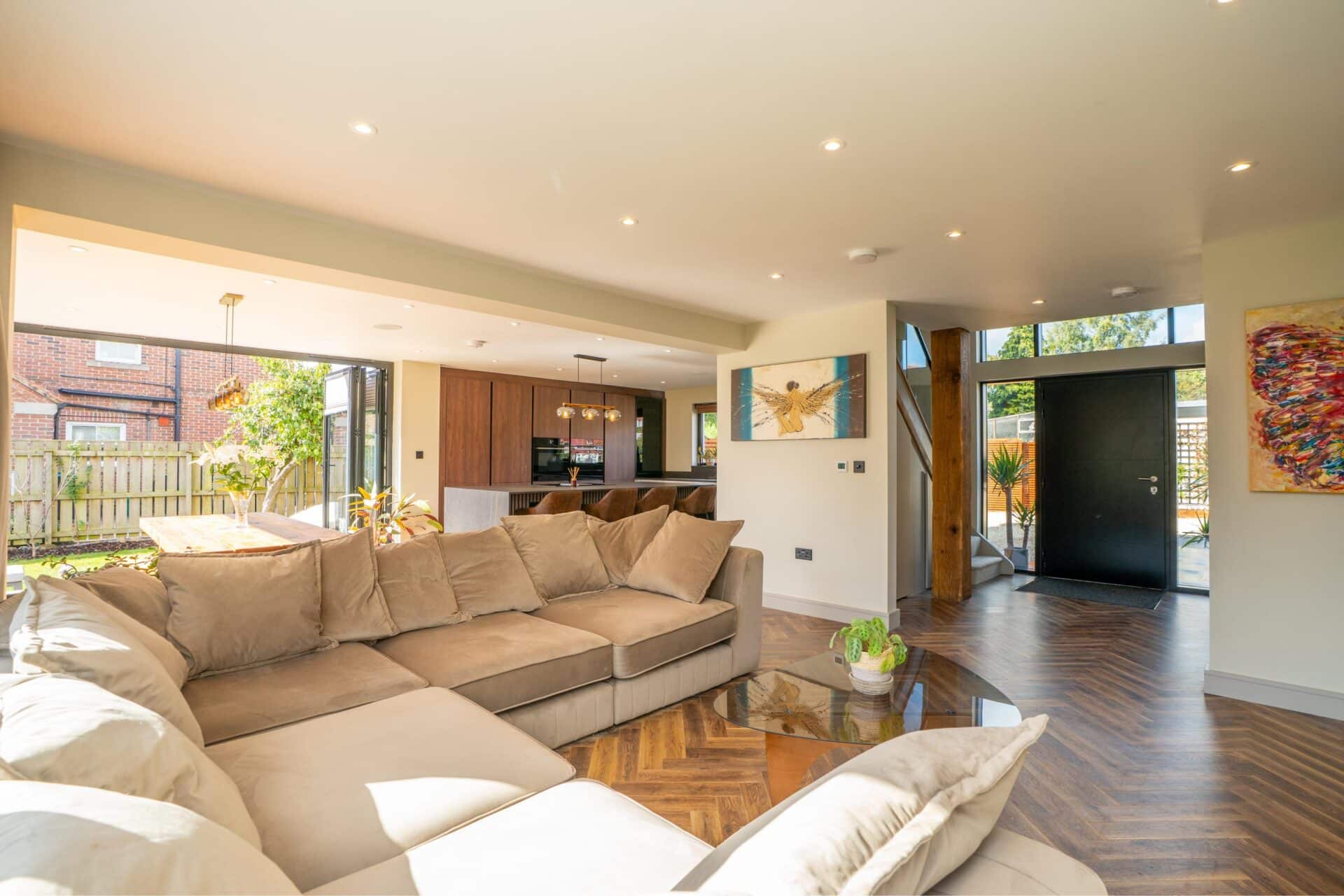
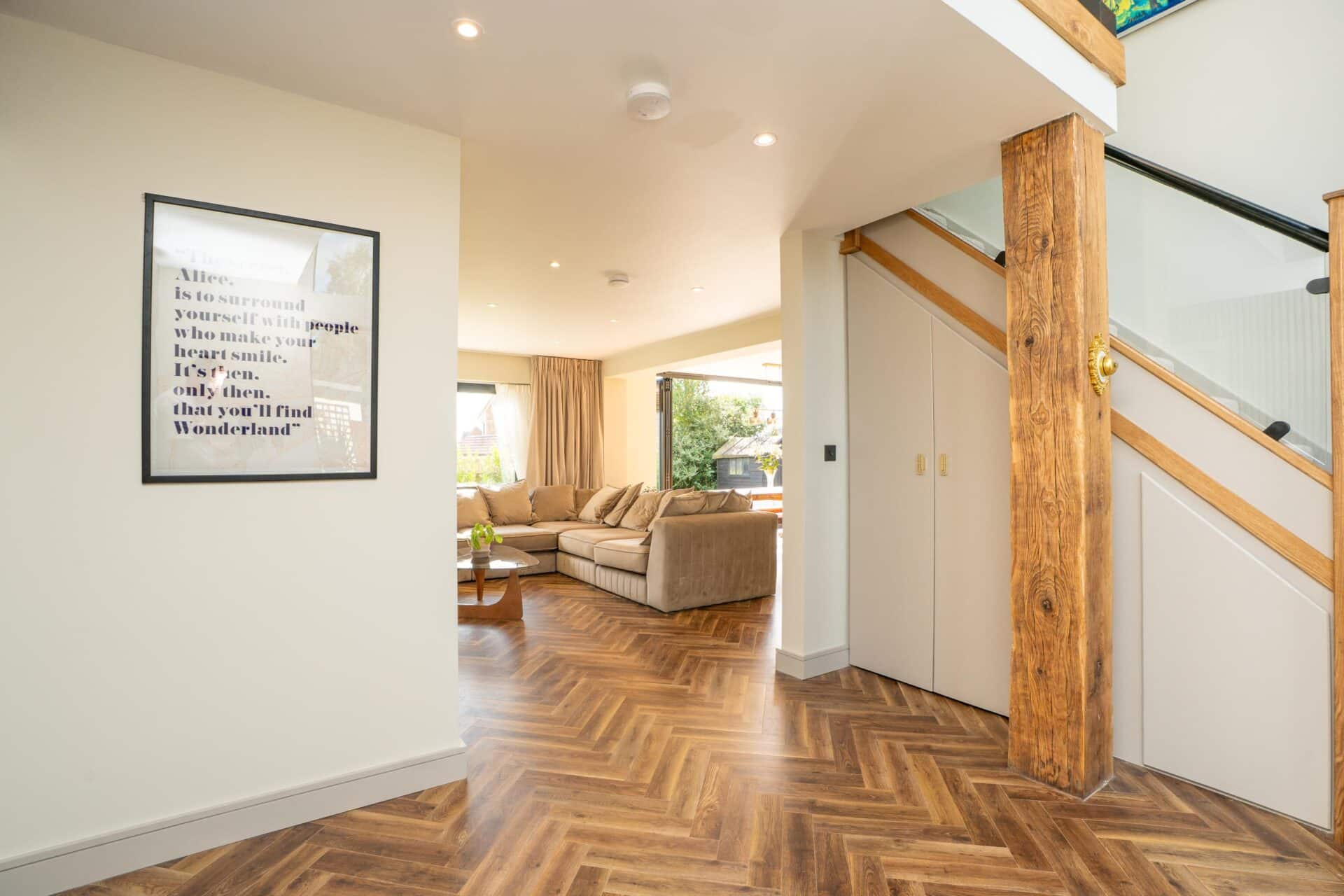
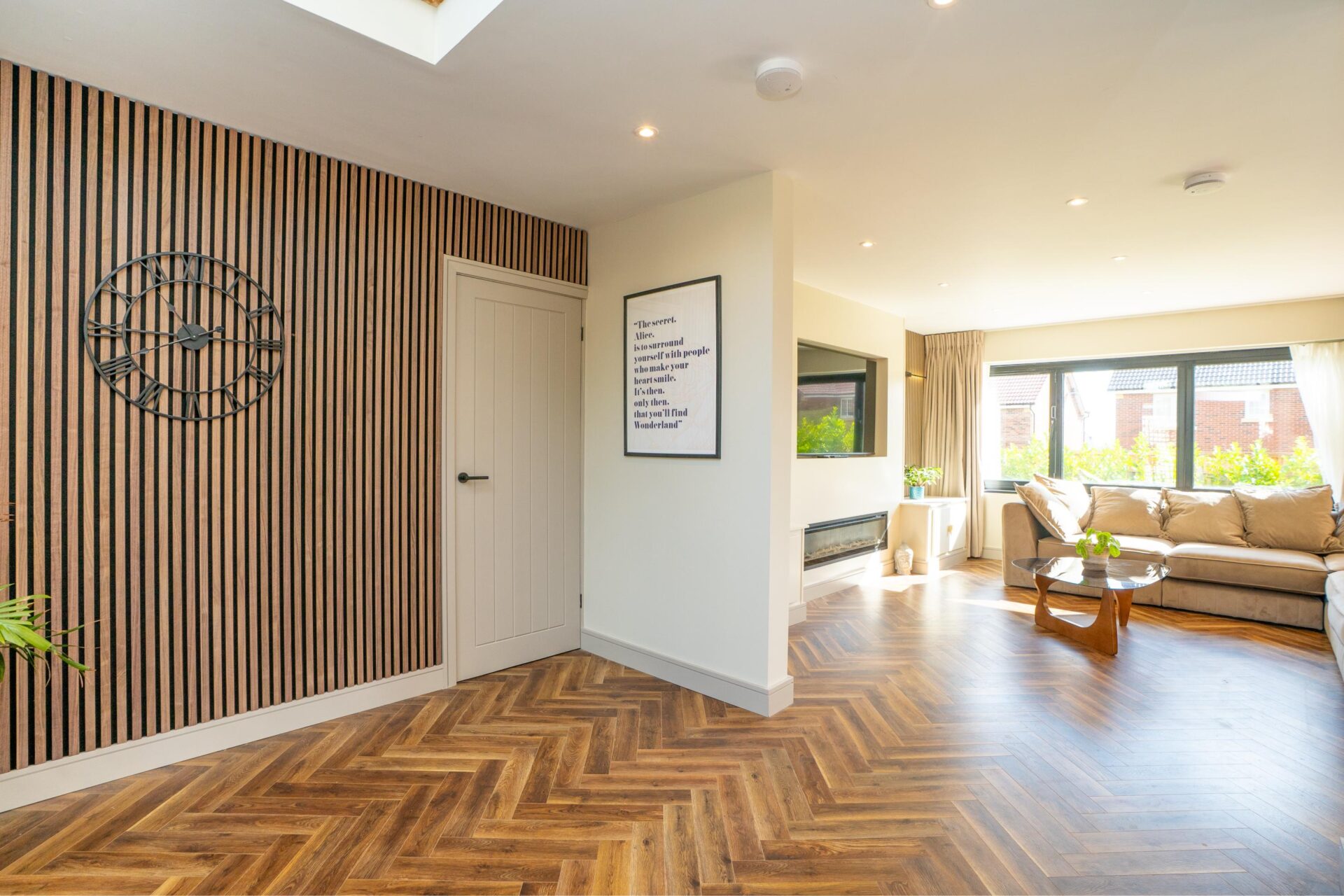
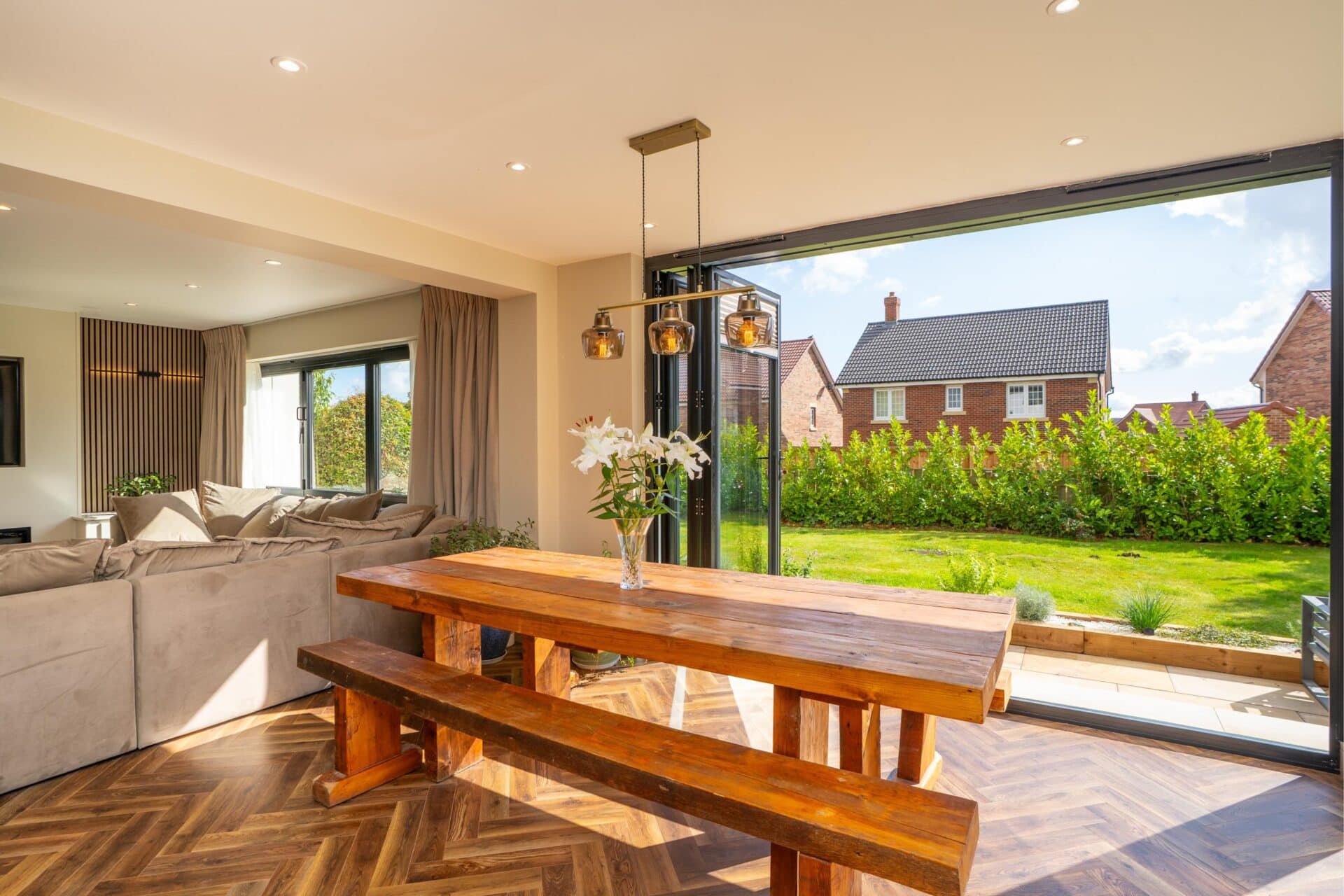
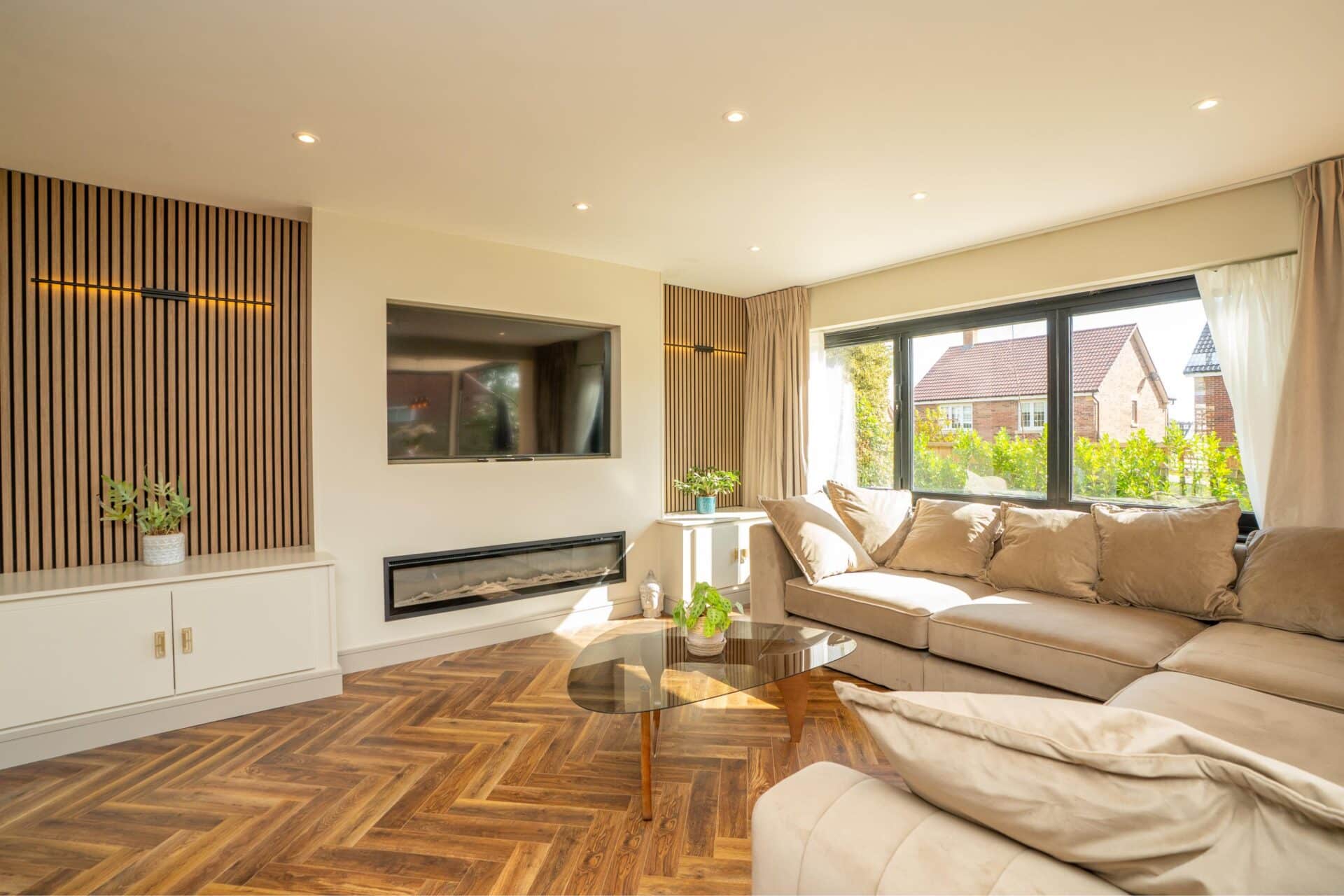
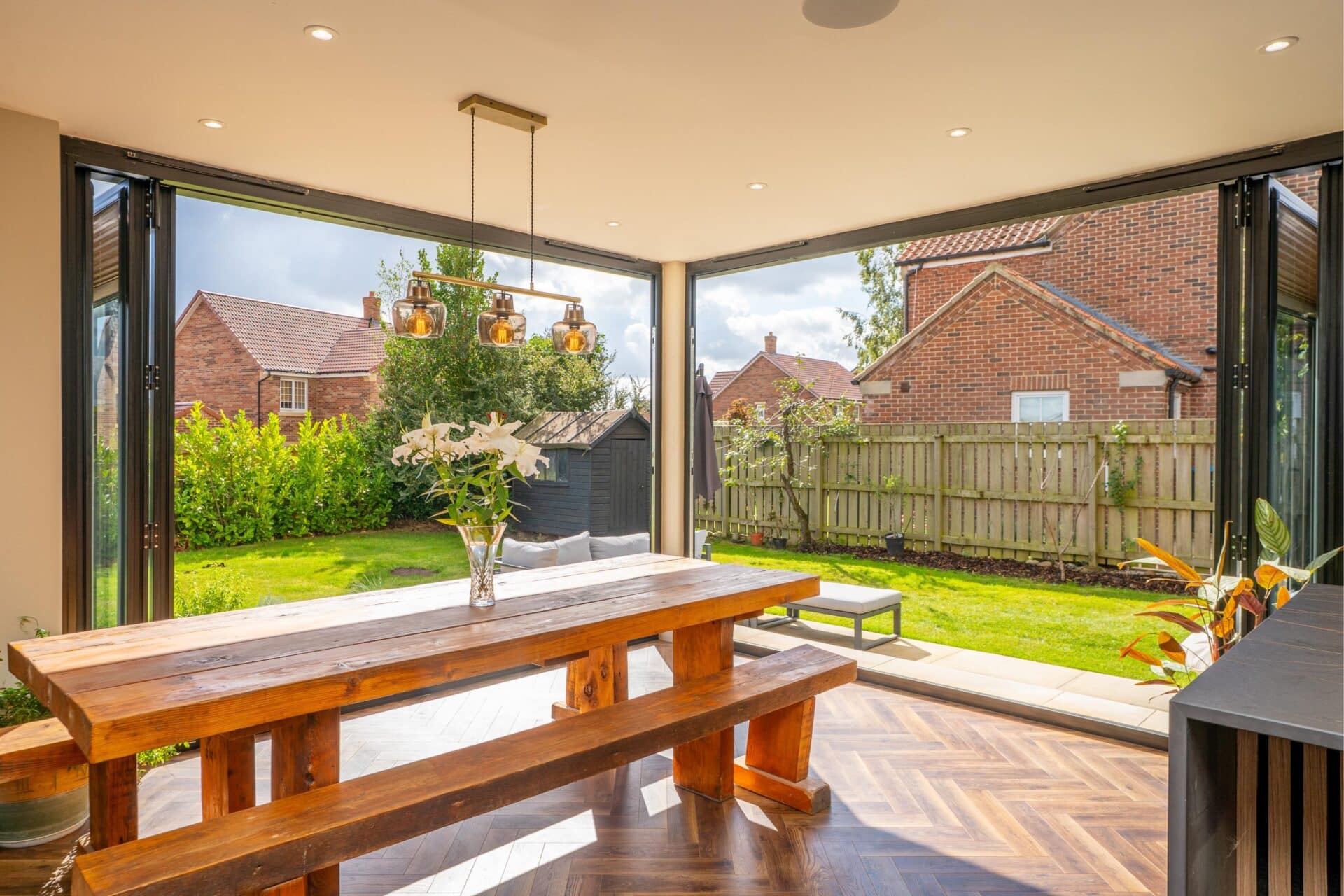
Claire: We wanted to create a flexible space centred around the kitchen, with lots of windows and doors to bring the outside in. Once the build was underway, we decided to go fully open plan with the kitchen, living and dining area because we loved the flow of the main room and wanted to keep that space open.
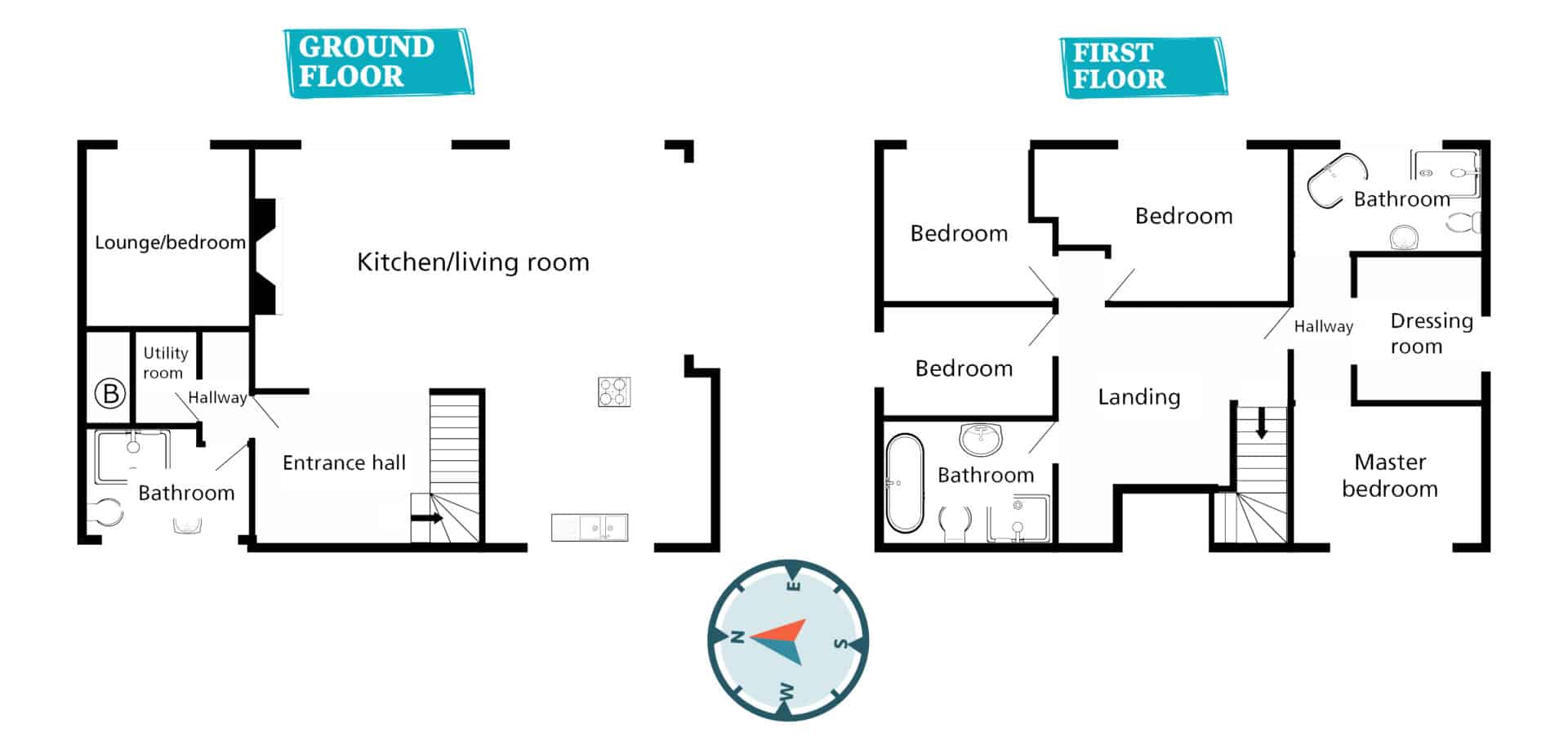
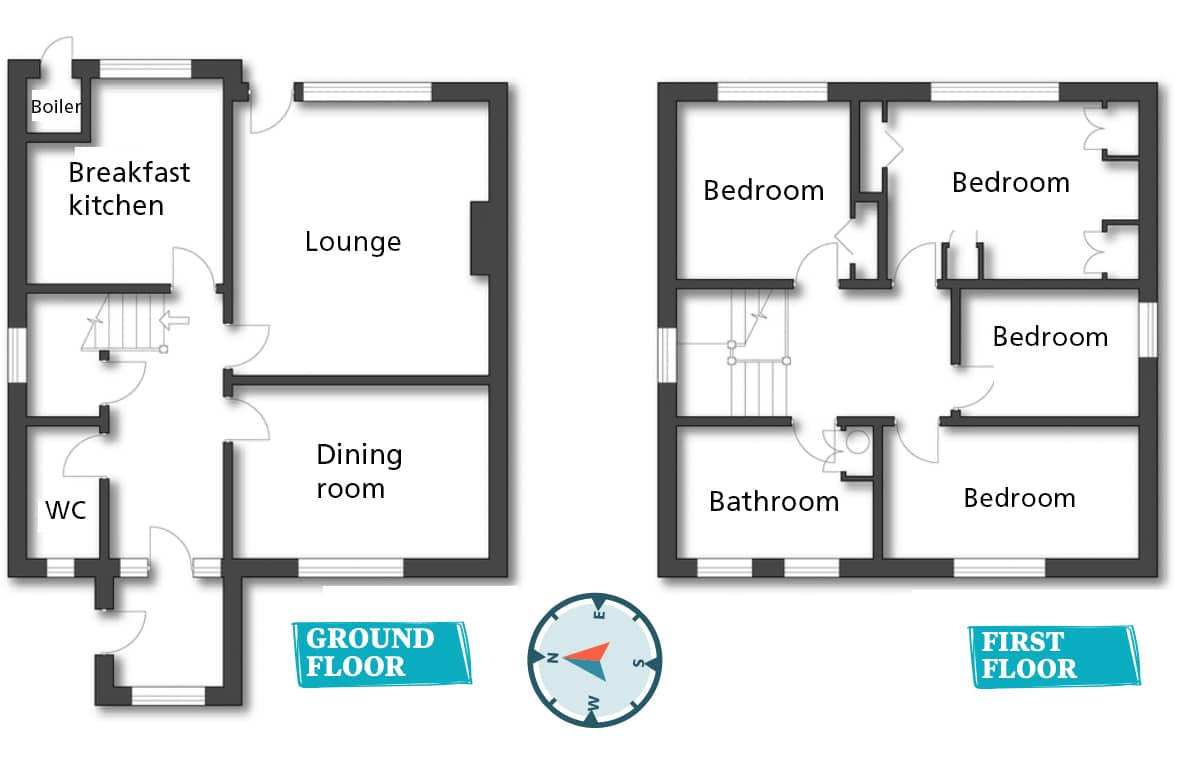
We created a downstairs snug/fifth bedroom with a washroom and shower room where the original entrance was, to give us some flexibility if needed. That room is super cosy and we use it as a games snug.
How did the planning process affect the project, and were there any decisions made at that stage that had a lasting impact?
Christine: The planning application sailed through. Our architect, Andrew, knew the planning team and handled the application for us. We made sure to talk openly with our neighbours about our plans, so they understood how long it would take and what impact it would have. I think this helped us hugely, as we had the whole street on board with us and received no objections. Our local parish councillor, who lives at the bottom of the street, took the time to tell us the Parish Council had reviewed the plans and unanimously agreed it was a lovely project that would really lift the street. She wished us the best of luck and even offered us her shower when she realised we were ‘glamping’.
Who did you work with on the design, and how did those early decisions shape the finished house?
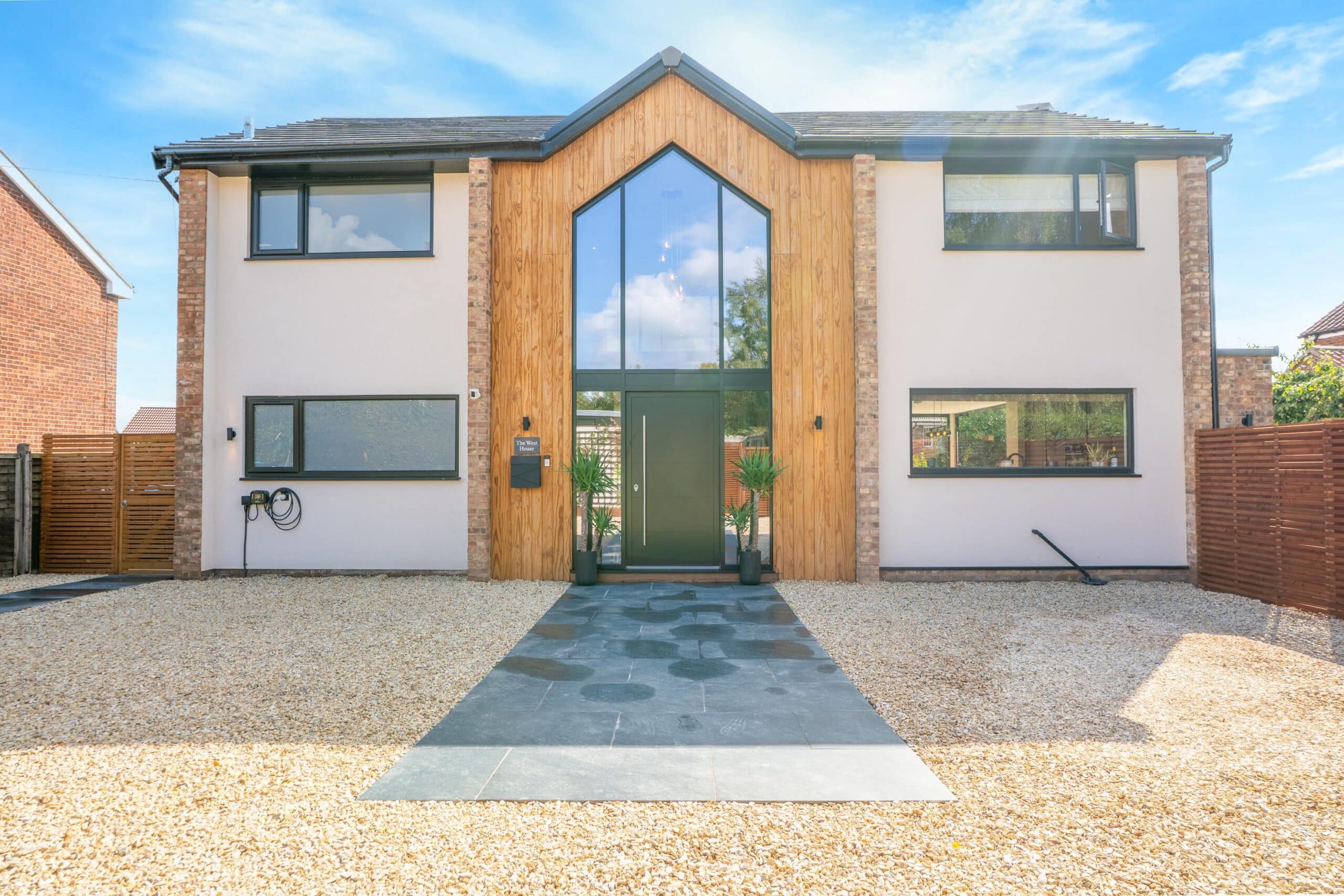
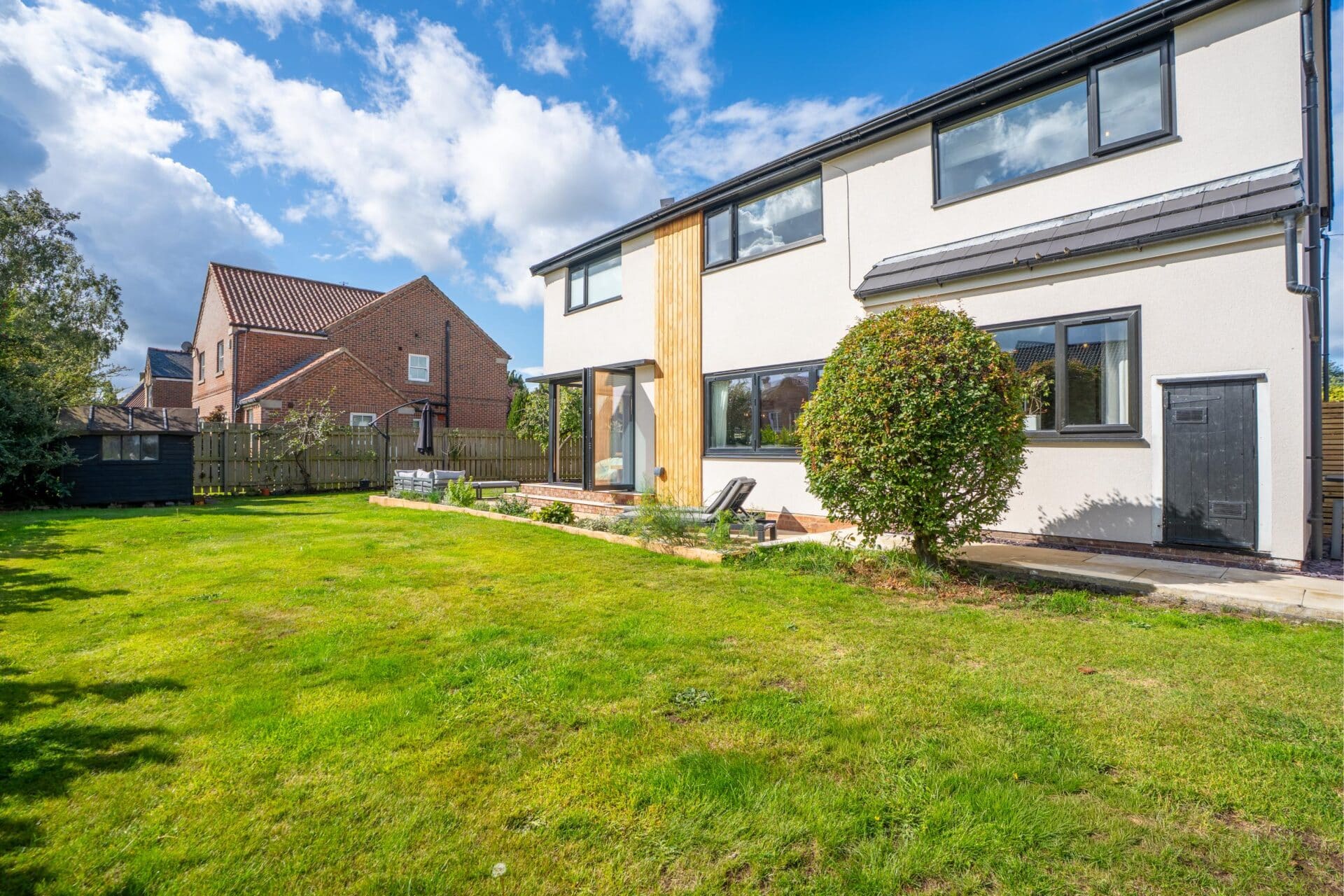
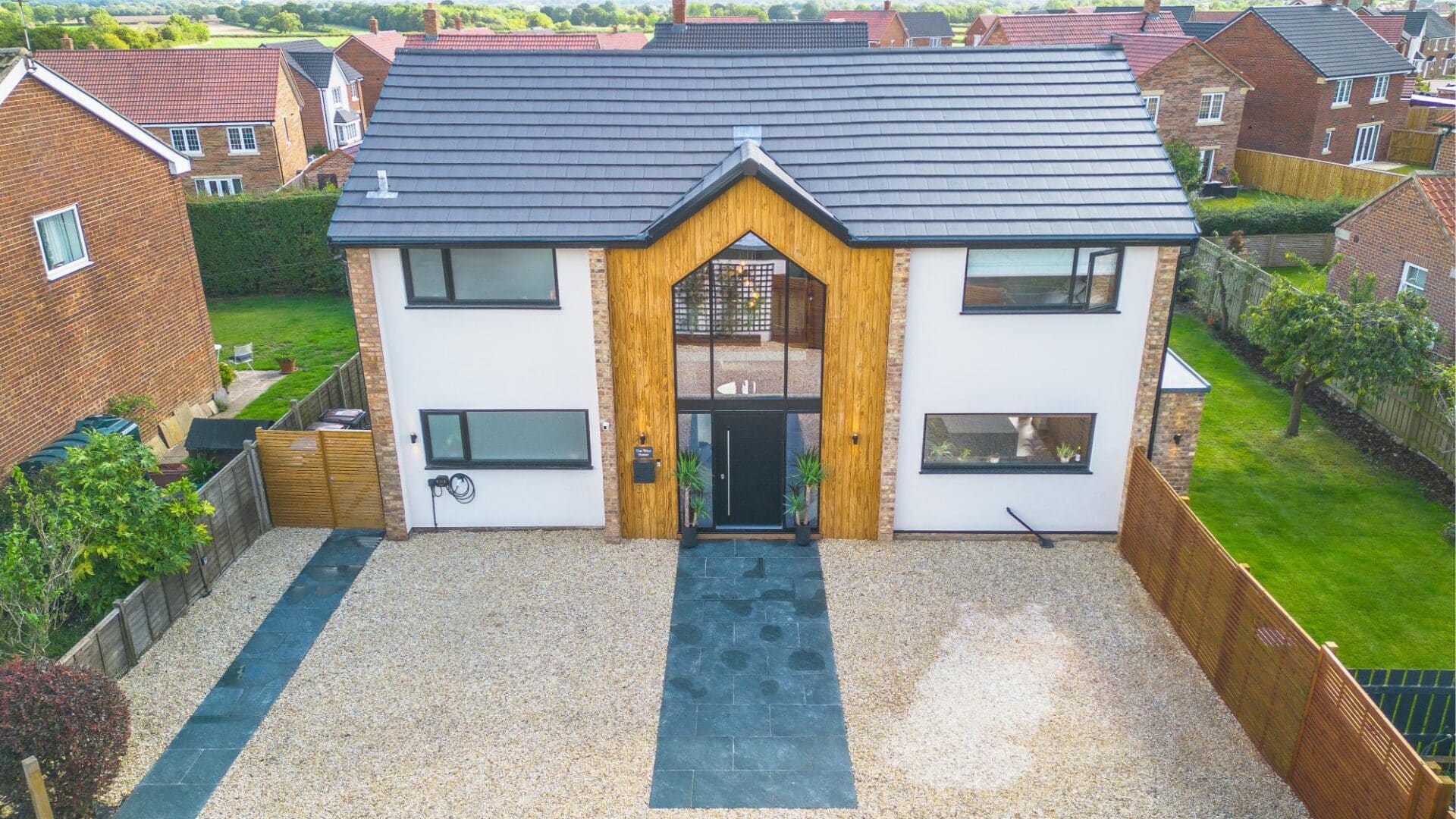
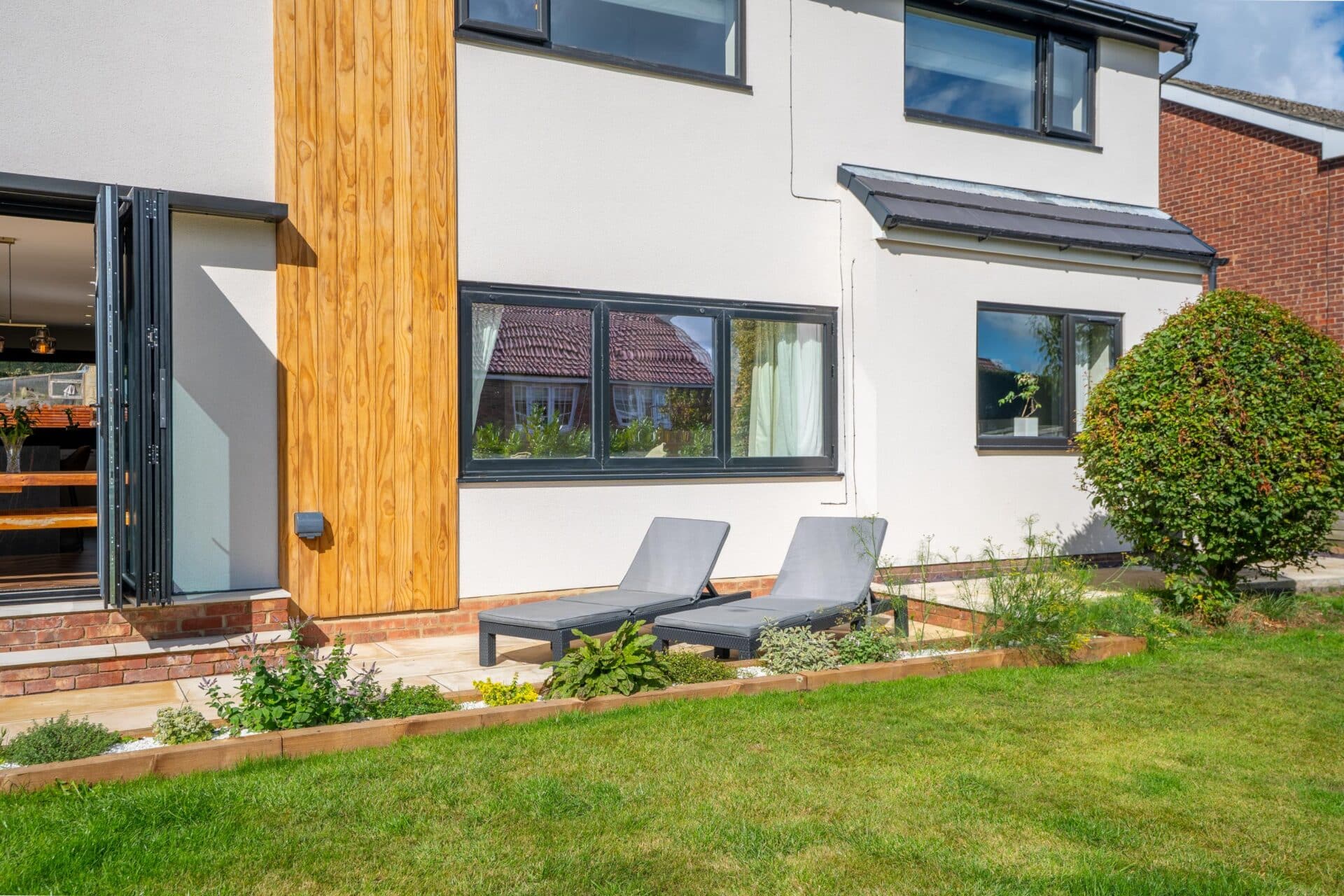
Claire: Our architect, Andrew, came to walk the plot with us. We talked through what we wanted and the overall vision. I knew I wanted lots of glass and bifolds on two sides, as well as render and a more modern-looking building. I also mentioned the idea of apex glazing. That evening, he sent us a WhatsApp with a rough sketch of what he had in mind, and we loved it.
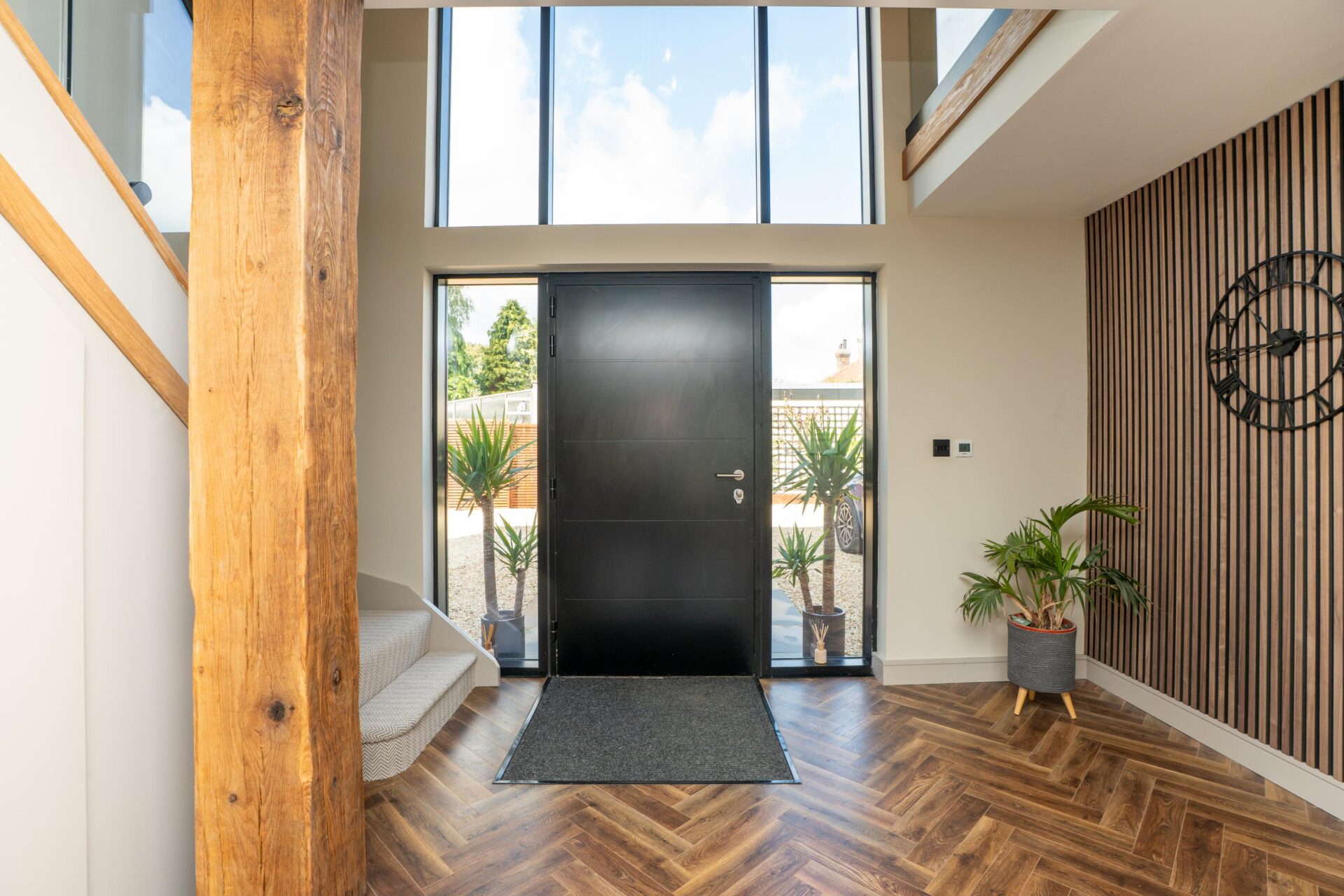
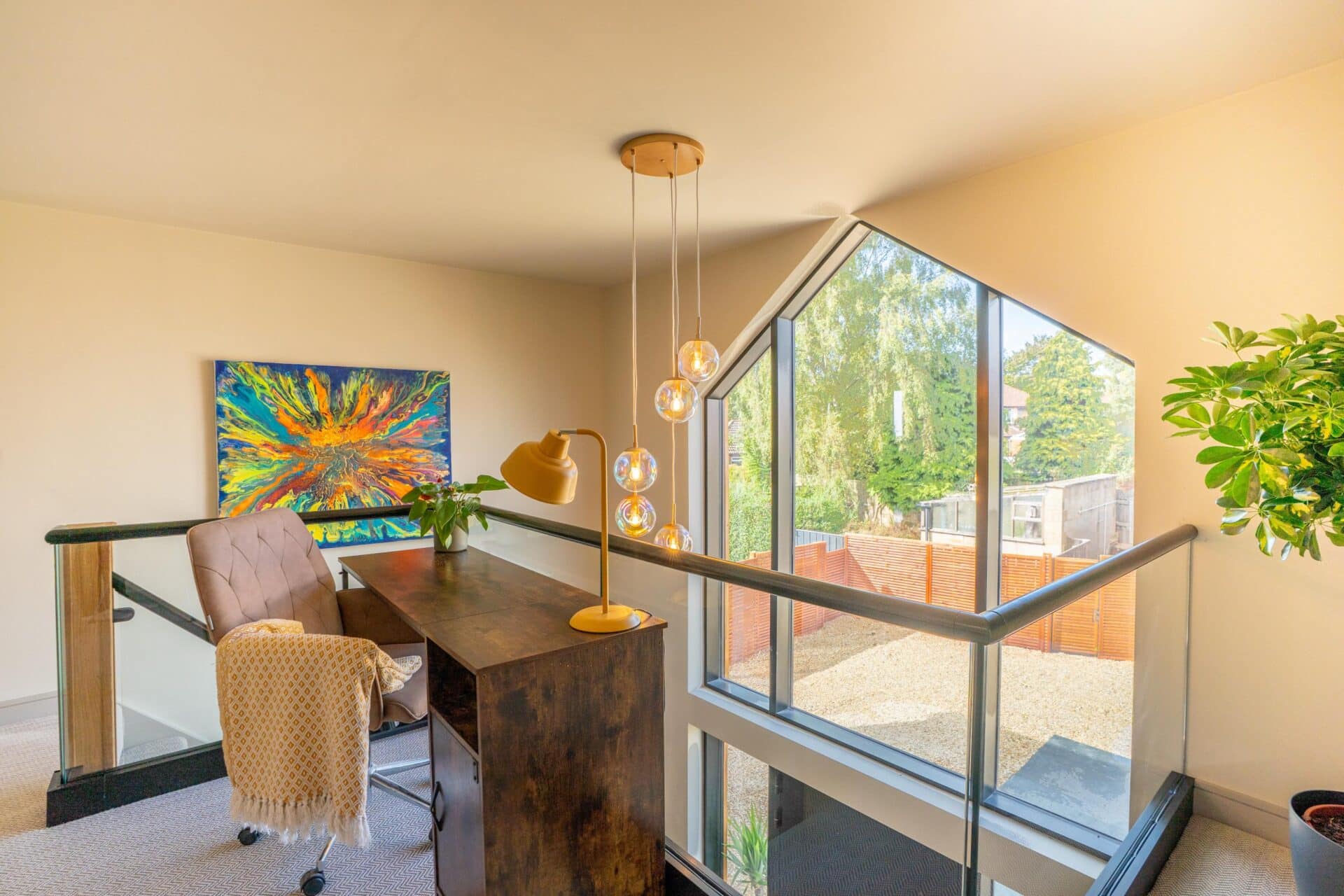
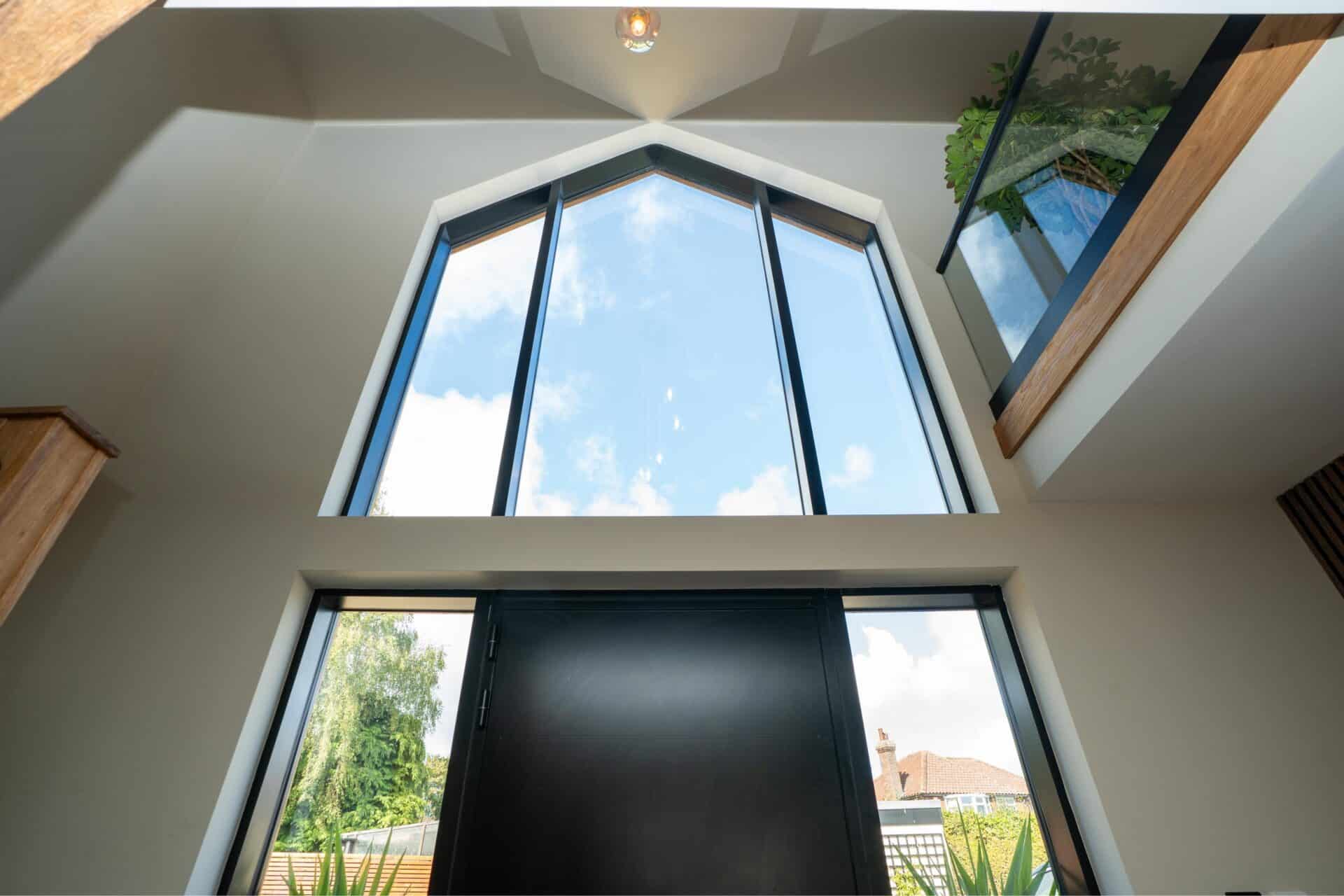
Looking back, the front elevation was the main focal point and, much as we love the entrance, the double-height space felt like wasted space during the build. We decided to extend the landing out and create a mezzanine, which now works as a lovely office space. We may still change it in the future to create another bedroom, as the space could probably be used more effectively. For now, though, it’s a great place to work from home, with a lovely view and a west-facing aspect, so watching the sunset from there is dreamy.
How did you manage the renovation and extension, and what worked well – or not so well – along the way?
Claire: Homebuild Ltd managed the build. It’s our own building firm, so being in the trade meant we kept a very close eye on the project from start to finish. All of the subcontractors had worked with us before, so there was a strong level of trust from the outset and we knew the standard of work would be top notch. Alistair and the build team always work as if they’re building for themselves, and the sub contractors have the same ethos – great communication and no cutting corners. It was never about profit margins; it was about quality and building our dream home.
The worst delay was waiting for the glazing. The front door is a custom aluminium 1.2 metre design and on the way to us it got stuck in customs in Greece. This delayed the build being watertight by eight weeks, which then had a knock on effect on the internal schedule with the plastering etc. But the lads worked efficiently around it and did what they could, but it happened in November and so we didn’t have the weather on our side.
What were the main materials and build methods used, and how did you tie the new extension in with the original house?
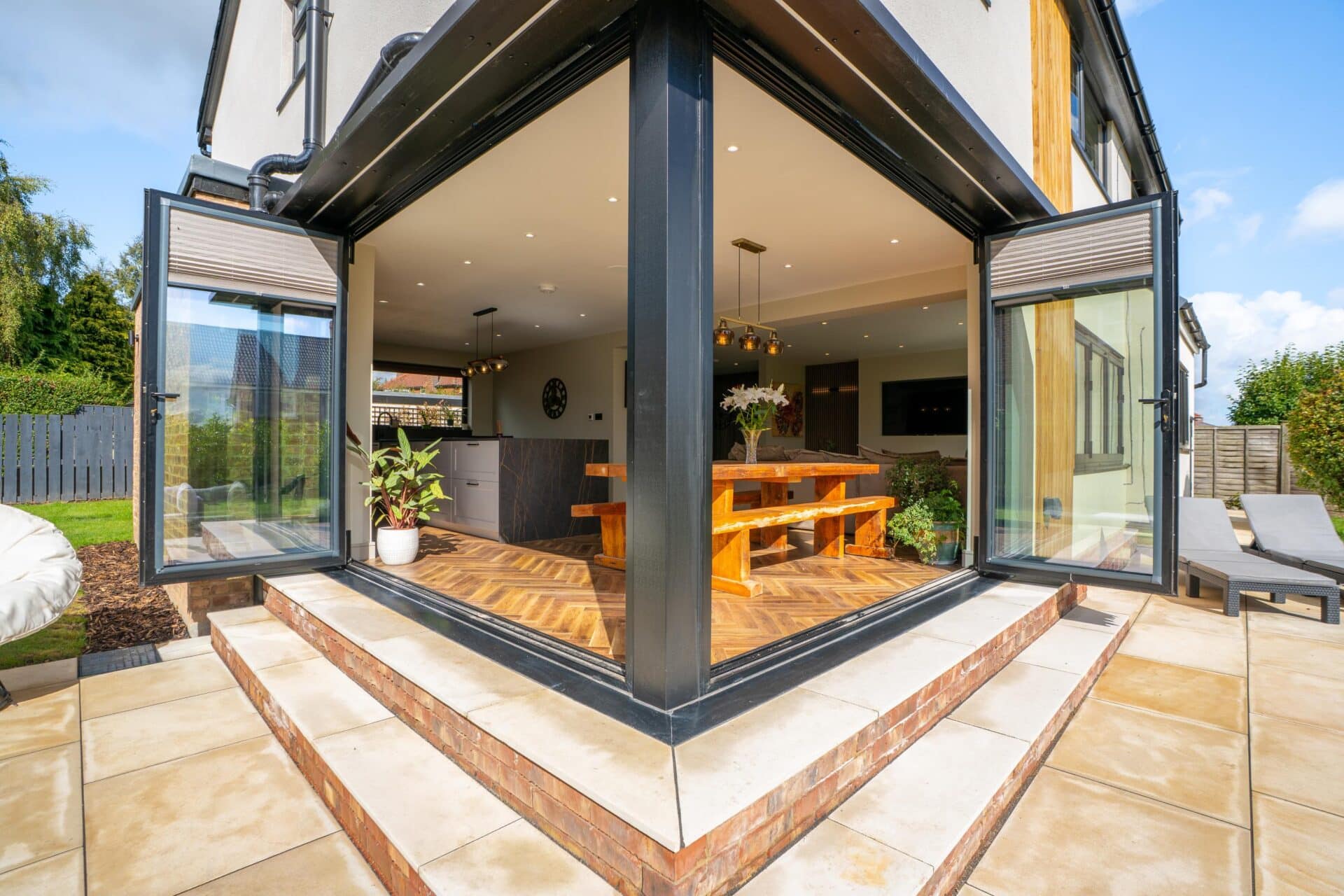
Claire: We took the original house back to brick and replaced everything from water pipes, to a full rewrire, new plaster throughout and a whole new roof. This stripping back really helped tie in the timber frame extension which went up in just six hours. We set up a camera and filmed the installation. It was unbelievably fast and accurate, and cut weeks off the build time. I would recommend it 100 per cent. Once the new roof was on and the glazing was in, you would hardly know it was an extension.
What changes did you make to the heating, insulation and services, and what difference have they made to comfort and running costs?
Claire: There is no gas in the village and we were relying on an ancient oil boiler, so we decided to make use of the government grants and install a full wet underfloor heating system powered by a Panasonic air source heat pump. Each room has its own thermostat to control the temperature and when the heating comes on and off, and once we got past the first few learning curves with the technology, we really came to love the system. Our oil bills were around £1,500 a year and our electricity came to about £2,200. Now, even with an EV and charger added in, we are paying around £3,700 a year – so about the same overall cost, but with a much more efficient system and no ugly radiators.
How did the renovation change the layout of the house, and what guided your choices on finishes, lighting and interiors?
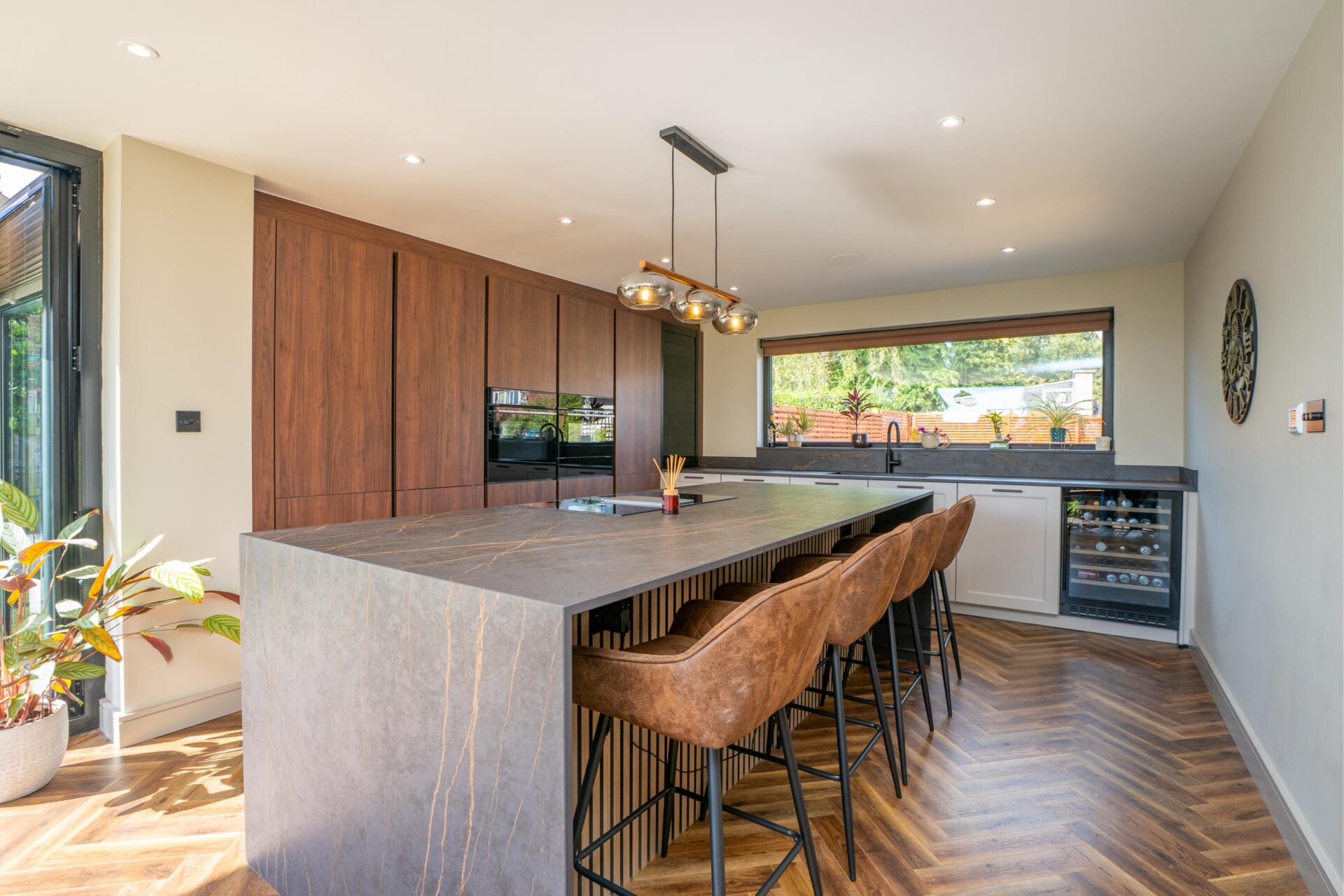
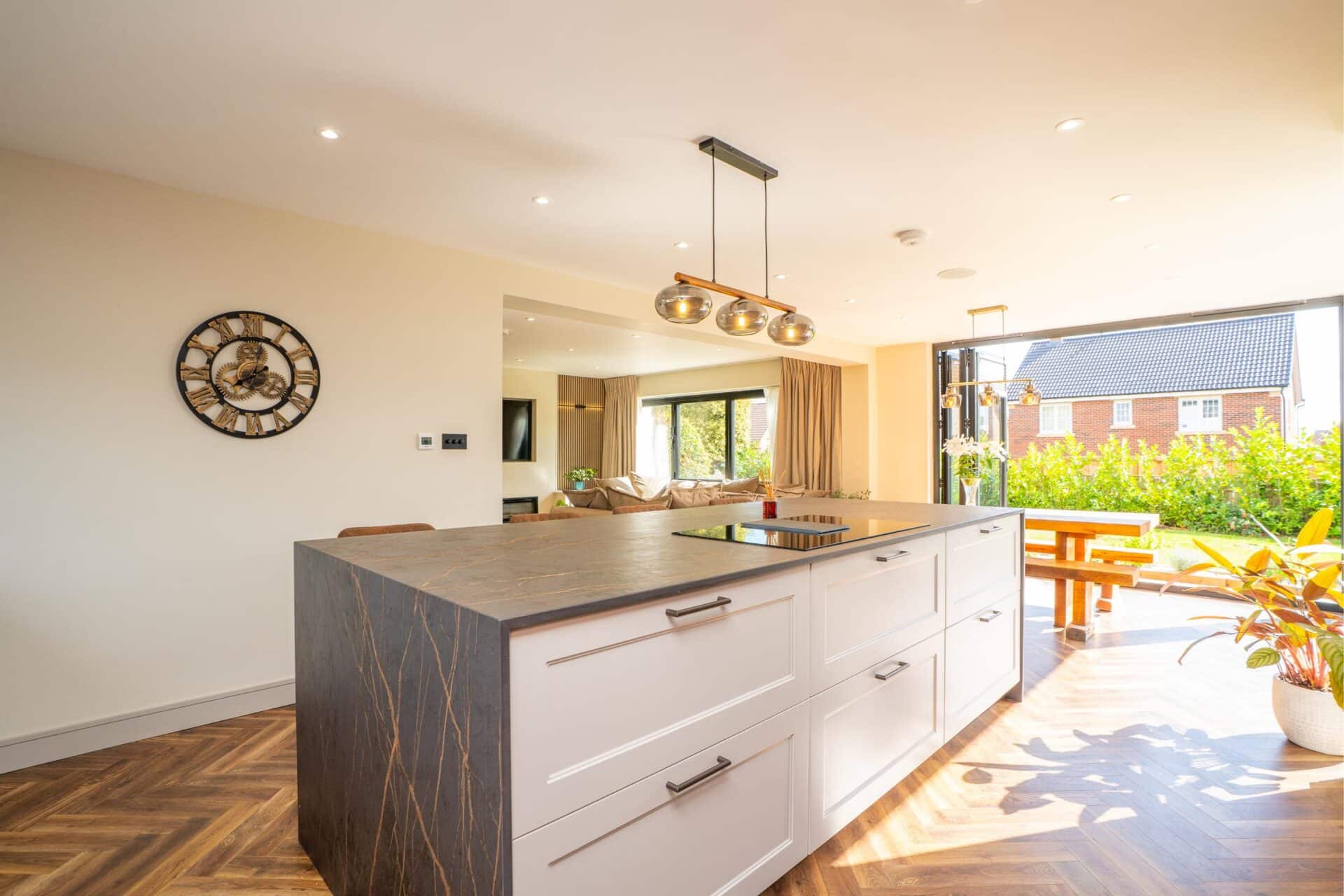
Claire: I wanted a calm but practical space, and the whole design of the house really centred around the kitchen. We worked with Marc at KuchenStore in Harrogate, who helped me design it. We had the kitchen built with an external nib on the extension so we could fit flush cabinetry inside and get a really clean finish.
From there, we chose tall walnut cabinets, but I was keen to have a two-tone kitchen, so Marc suggested stone-coloured base units to contrast with the walnut. We finished it with a dark Dekton waterfall island, with an overhang for seating underneath, and walnut acoustic panelling.
It’s a real show-stopper. I was a bit worried at first that it might feel too dark, especially with the dark flooring as well, but the space can take it because there’s so much natural light coming in from the 1.8m kitchen window, six metres of bifold doors and three metres of bifold windows. To complement it, we added smoked glass pendants.
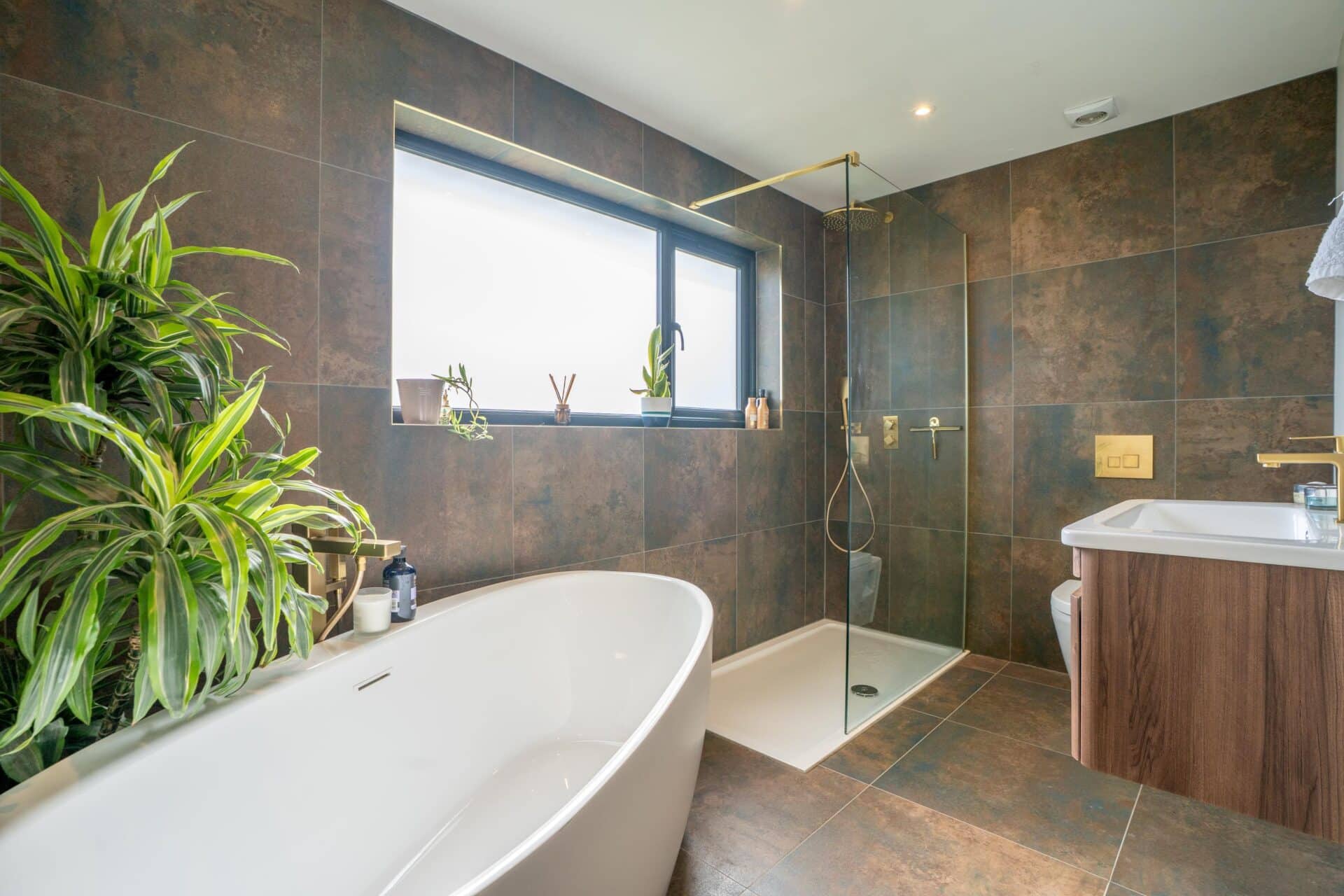
I loved doing the bathrooms – all three are different. The en-suite off the principal bedroom is the most bouji and definitely my favourite, with huge African slate-effect tiles, gold trim, an enormous freestanding bath and a floating walnut sink unit. It feels super luxurious.
In the main bathroom, I found some gorgeous floor tiles and decided to use them on both the floor and walls – lovely one metre by one metre tiles in a calming neutral tone, with a complementary feature-tile wall. I loved the bath in the en-suite so much that I splashed out on one for the main bathroom too, which meant we had to rejig the layout to make it fit, but it was worth it. I finished the space with black taps and accents to offset the softer beige tones.
The downstairs shower room is very multi-functional – it works as a loo, a place to wash the dogs and somewhere to dry the laundry, so it is more practical than fancy. It is fully tiled with a rustic brick-effect floor, which is hard-wearing enough to cope with all the traffic.
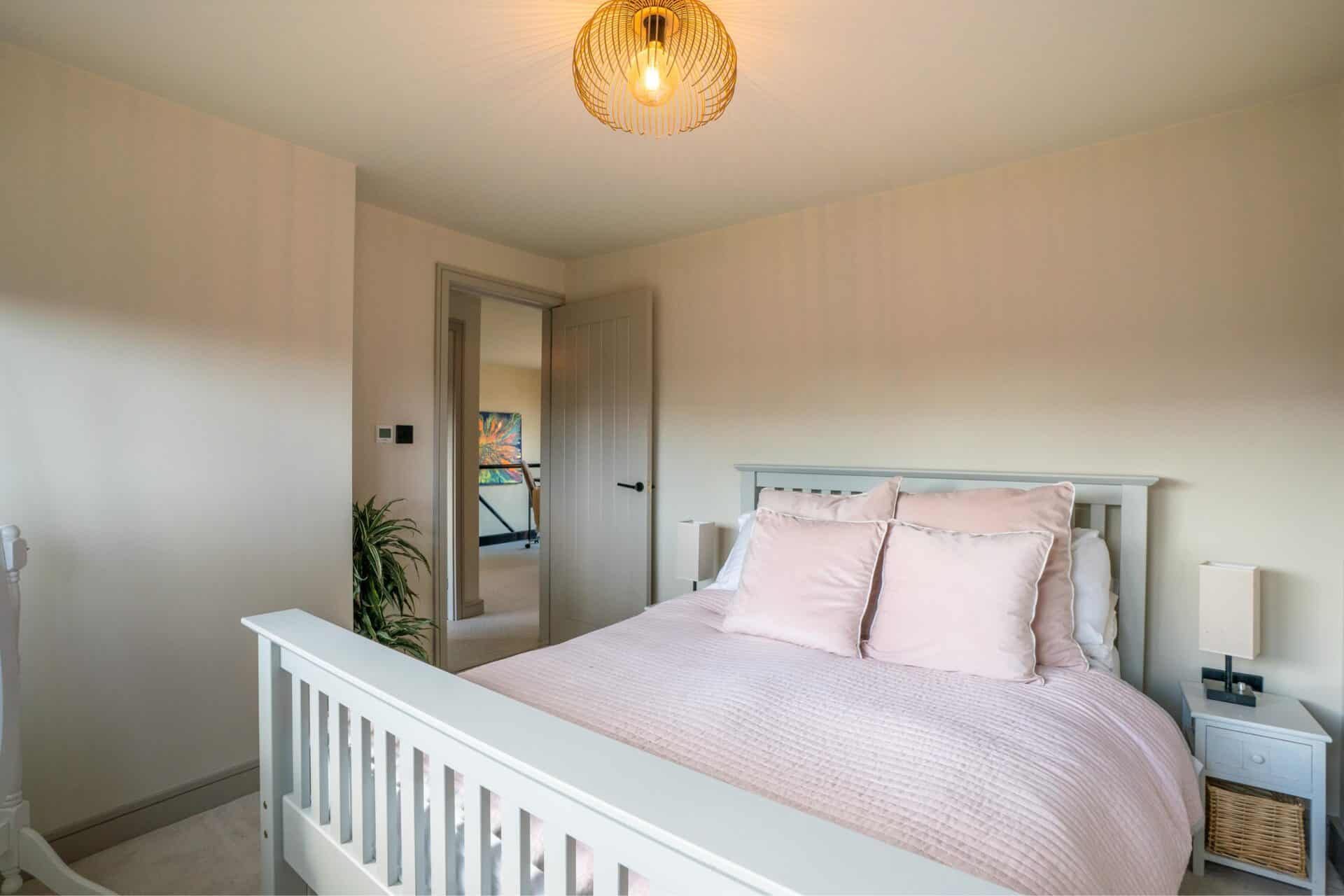
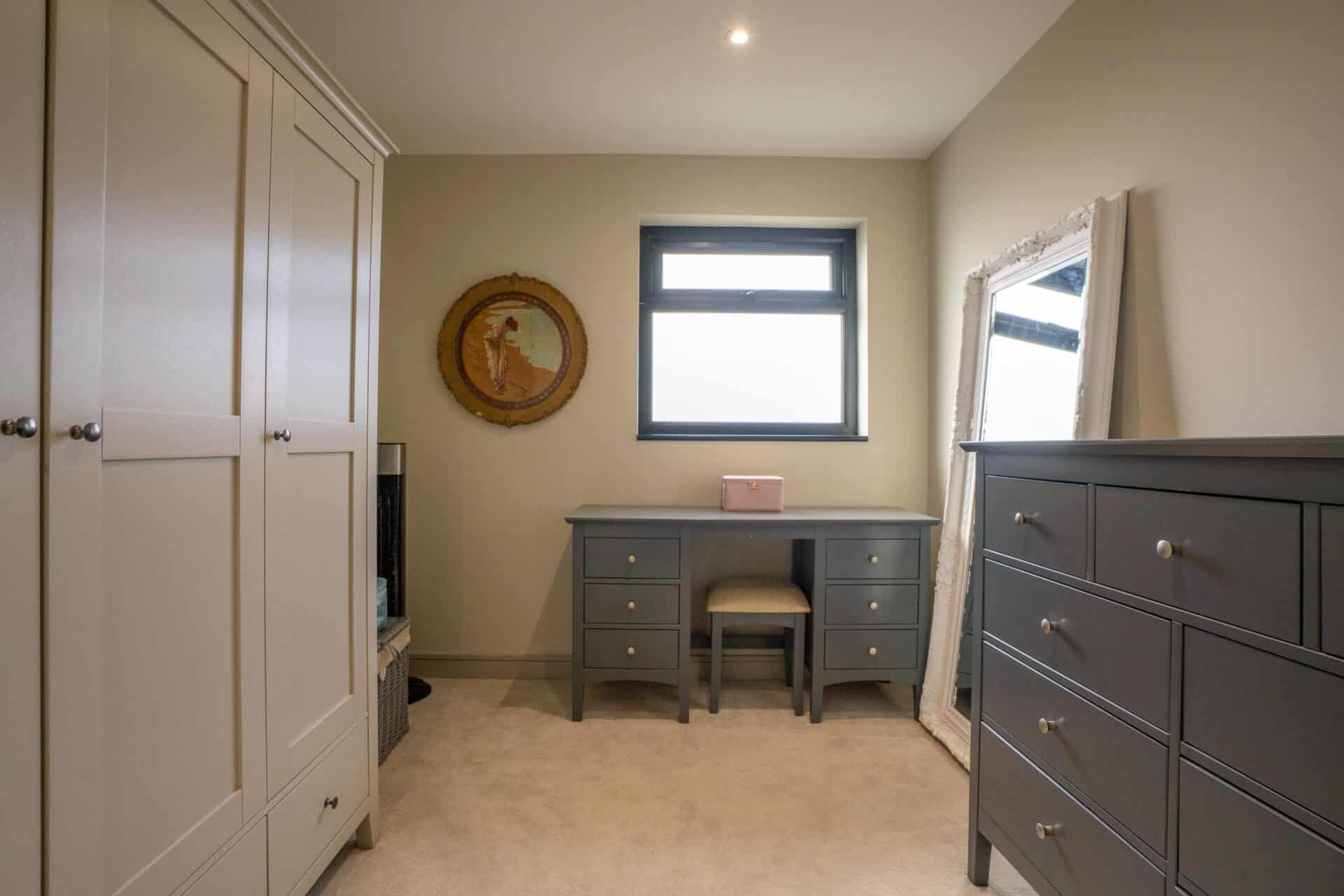
We painted the house throughout in neutral tones, using Baby Fawn by Benjamin Moore on the walls and Pashmina on the architraves and skirting, which gives a lovely contrast.
We will probably add some wood panelling and wallpaper in the future to bring in more colour and character, but we did not want to rush that part.
What role did energy efficiency and sustainability play in the project, and how much did it influence your decisions?
Claire: We wanted to make the house as energy efficient as possible and improved it from an EPC E to a C, almost a B, although the light fittings let us down a bit.
We have managed to keep our energy costs roughly the same despite adding a significant amount of extra floor space and charging an electric car. The house is now very energy efficient and holds its heat
What were the biggest challenges or surprises during the build, and how did they affect the budget and timeline?
Claire: We managed to stay on budget, although it was tight, so we mashed the project to the penny. There were a couple of changes, keeping it all open downstairs saved us a few quid, which I then spent on upgrading the bath in the house bathroom.
The air source heat pump had a high upfront cost, but once it was signed off and we received the government grant, we got £7,500 back, which meant it ended up costing us £2,500.
As I mentioned earlier, the biggest delay was with the apex glazing and front door, which stalled the build for eight weeks because the house was not watertight enough for the plasterers.
That said, we started the build on October 6, moved out on November 1, and were back in by February 9. In that time, we moved between friends’ houses and Airbnbs – nine different places in 14 weeks. That was probably the most exhausting part of the whole build. Looking back, we wish we had put a caravan on site or created a garden room from the start.
We moved back in with the kitchen hob and en-suite in place, but we still had around 70 per cent of the interior work left to do.
We had the build complete by end of August 2025, so 10 months which could have been eight without the delays. So, super pleased.
Now that the project is finished, how does the house work for you day to day, and what advice would you give to someone taking on a similar renovation?
Claire: Living in the house you notice the bits you would change. For example, last Christmas we got the big, fancy tree and realised we hadn’t put a plug in the hallway, so the tree went up on the landing instead. The electrician is booked in to rectify this!
We thought we would use the downstairs snug and games room more, but in reality we spend most of our time in the kitchen, dining and lounge area.
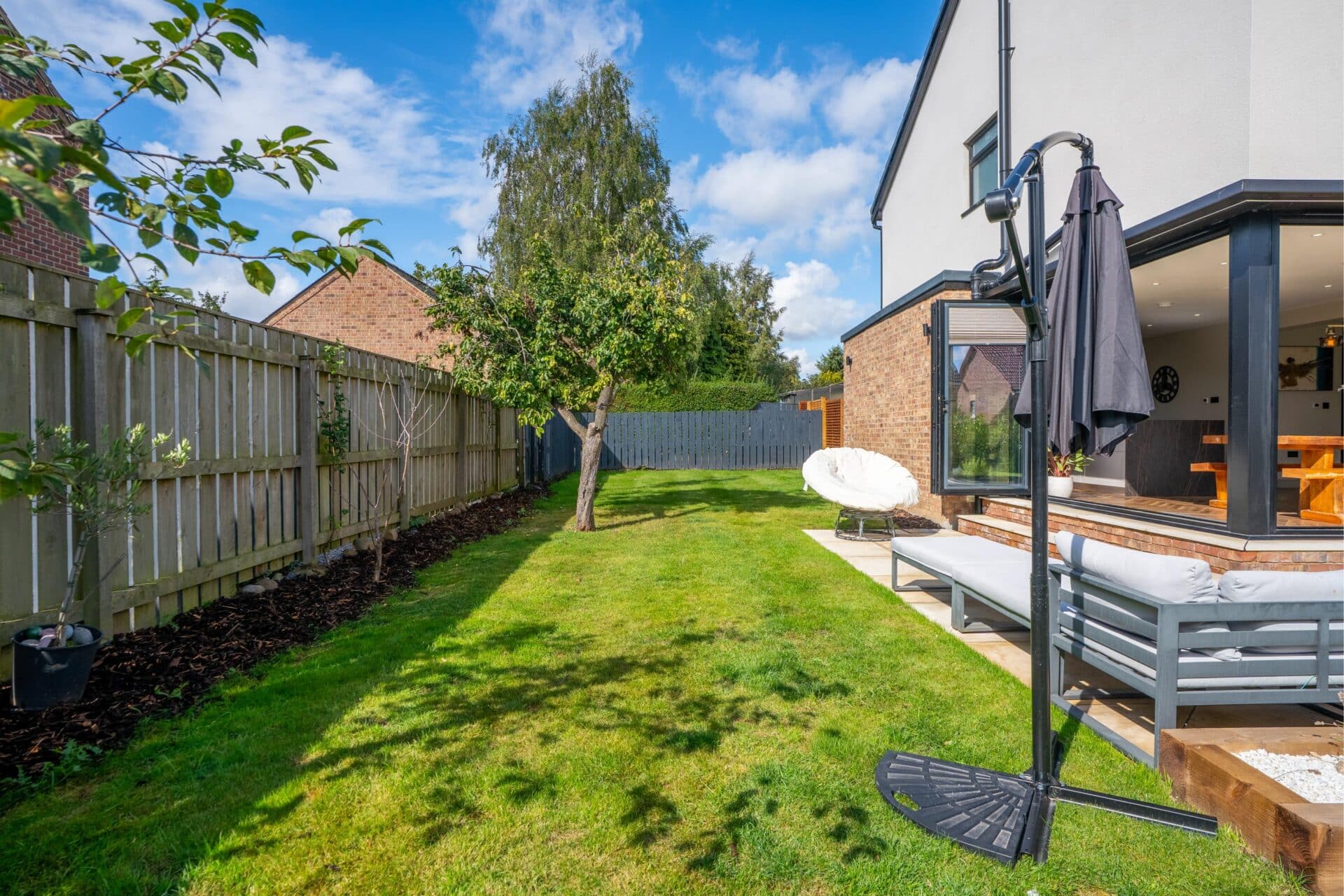
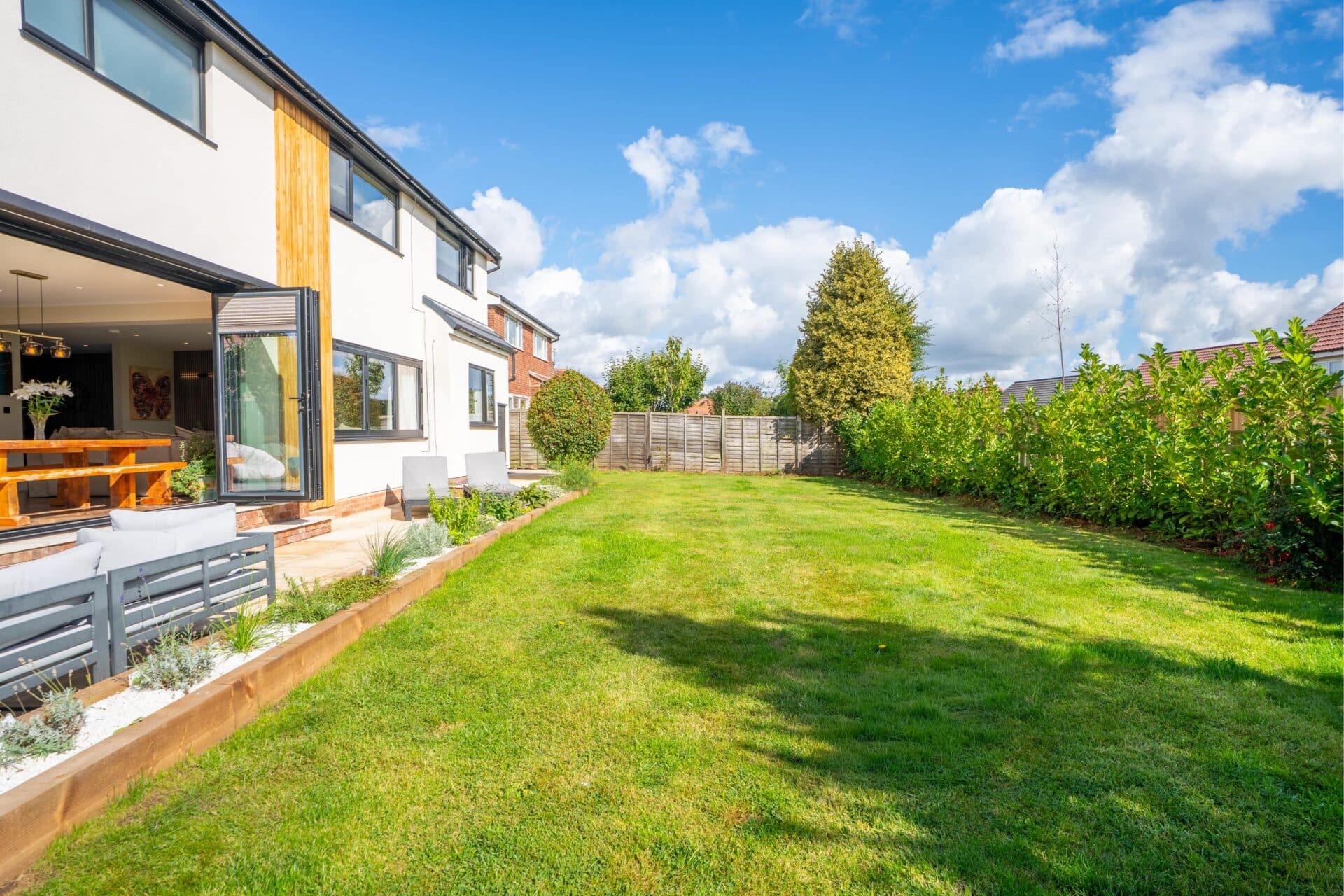
We have also added a patio and really enjoyed using the garden over the summer, and we are planting laurel bushes to give us more privacy over time.
My advice to anyone doing this is to manage your budget hard. Cost everything up, get multiple quotes and use a builder who cares about the details. Also think early on about practical living (where your plug sockets will go for the Christmas tree, for example) and how rooms will look with wardrobes. But enjoy the ride – it’s stressful but amazing to look back at how far you’ve come… We still pinch ourselves when we say ‘we live here!’
Q&A with Claire
What is your favourite design feature?
The apex window to the front!
What would you change or do differently now that you have experienced living in the house?
Probably use that space to create a big front bedroom, with smart glass.
What surprised you?
Getting grey hairs!
What single piece of advice would you give a friend who’s looking to embark on a project similar to yours?
Have a separate base to live in from the day you start renovating, either an on site caravan, or a 6-month rental close by.
Would you do it again?
Absolutely!
Overview
Location: North Yorkshire
Size of house before extension (sqm):115sq m
Size of house after extension (sqm):180sq m
Number of bedrooms:4
Build cost: £180k
Current house value: £650k
EPC: B/C
Heating system: Air source heat pump underfloor heating throughout both floors.
Ventilation system: Neutral
Build method: Timber frame
Build specs
Timber frame wall: Glass mineral wool slabs in between joists, 50mm PIR over stud, same in roof space.
Floors: 150mm mineral wool insulation between joists, routed insulation overlay boards over joists
Windows: Double glazed, aluminium windows, aluminium bifold windows and doors in black.
Floor plans
Suppliers
Timber frame
Timberstruc, Wakefield
Architect
Andrew Edwards at EDG Architecture
Builder
Homebuild Ltd
Kitchen
KuchenStore, Harrogate
Plumbing
Marc Gillingham at Aqua Plumbing & Heating, Harrogate
Electrics
Andy Barber at Orange Electrical, Harrogate
Groundworks
Connor McDaid at McDaid Groundworks Solutions, Harrogate
Plasterer
Micky Wright Plastering Services, Leeds
Painting & decorating
Infinite Property Services